Greenland Shark Discoveries Are Changing Everything We Thought We Knew
Greenland shark discoveries are reshaping how scientists understand one of the ocean’s most mysterious animals. For years, researchers described the species as blind, slow, and primitive. New evidence now challenges those assumptions and reveals a predator far more capable than once believed.

Marine scientists increasingly argue that the Greenland shark remains deeply misunderstood. Each discovery exposes how little humans know about life in the coldest and darkest parts of the ocean.
Greenland Shark Discoveries and Long-Standing Myths
Greenland sharks rank among the least studied large predators on Earth. They live in icy waters that limit human access and long-term observation. Because of this, scientists relied on brief encounters and indirect data.
Researchers often mistook slow swimming for weakness. Many assumed cloudy eyes meant blindness. Others linked cold water to extreme ageing and minimal activity. https://www.youtube.com/watch?v=HCXJO8BQ2hA
However, stomach content studies told a different story. Scientists found remains of seals and other large animals. These findings raised doubts about the idea that the sharks only scavenge.
Greenland Shark Discoveries Show They Can See
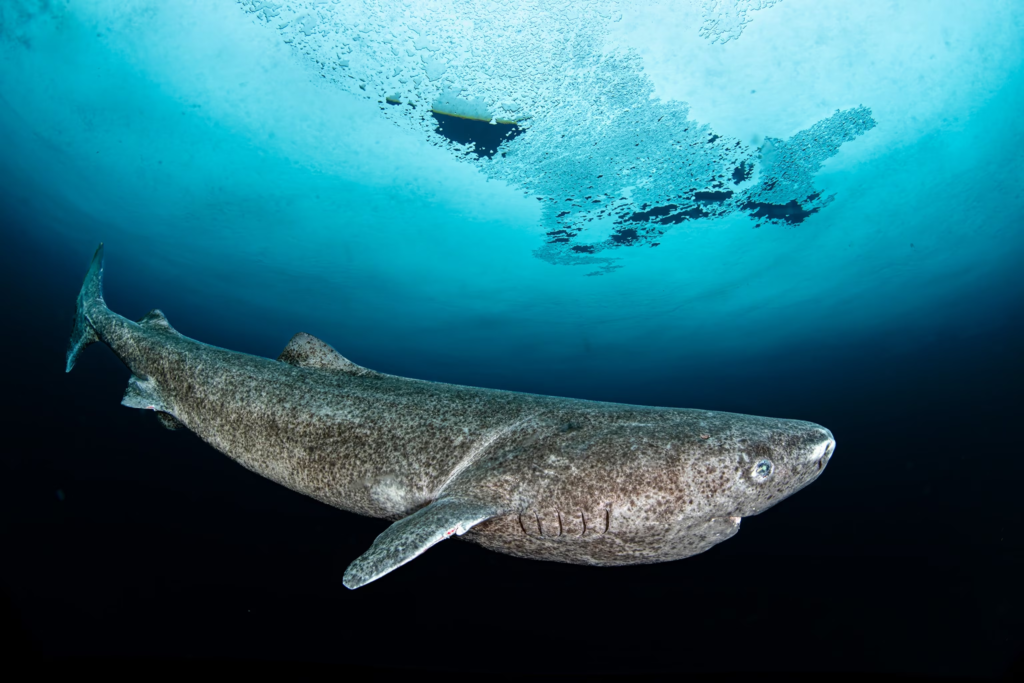
One of the most important Greenland shark discoveries overturns the belief that the species is blind.
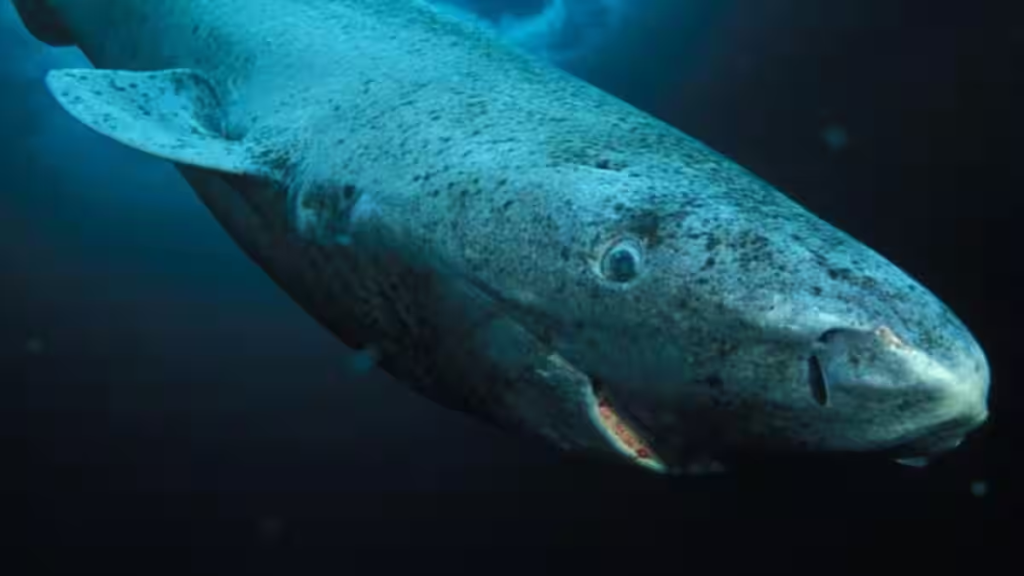
Although parasites attach to many sharks’ eyes, retinal studies reveal healthy internal structures. Scientists examined eye tissue, genetics, and molecular function. They found retinas capable of detecting light and contrast.
These results suggest that the parasites do not destroy vision. Instead, Greenland sharks likely use sight alongside other senses to hunt and navigate.
Active Hunters, Not Drifting Relics
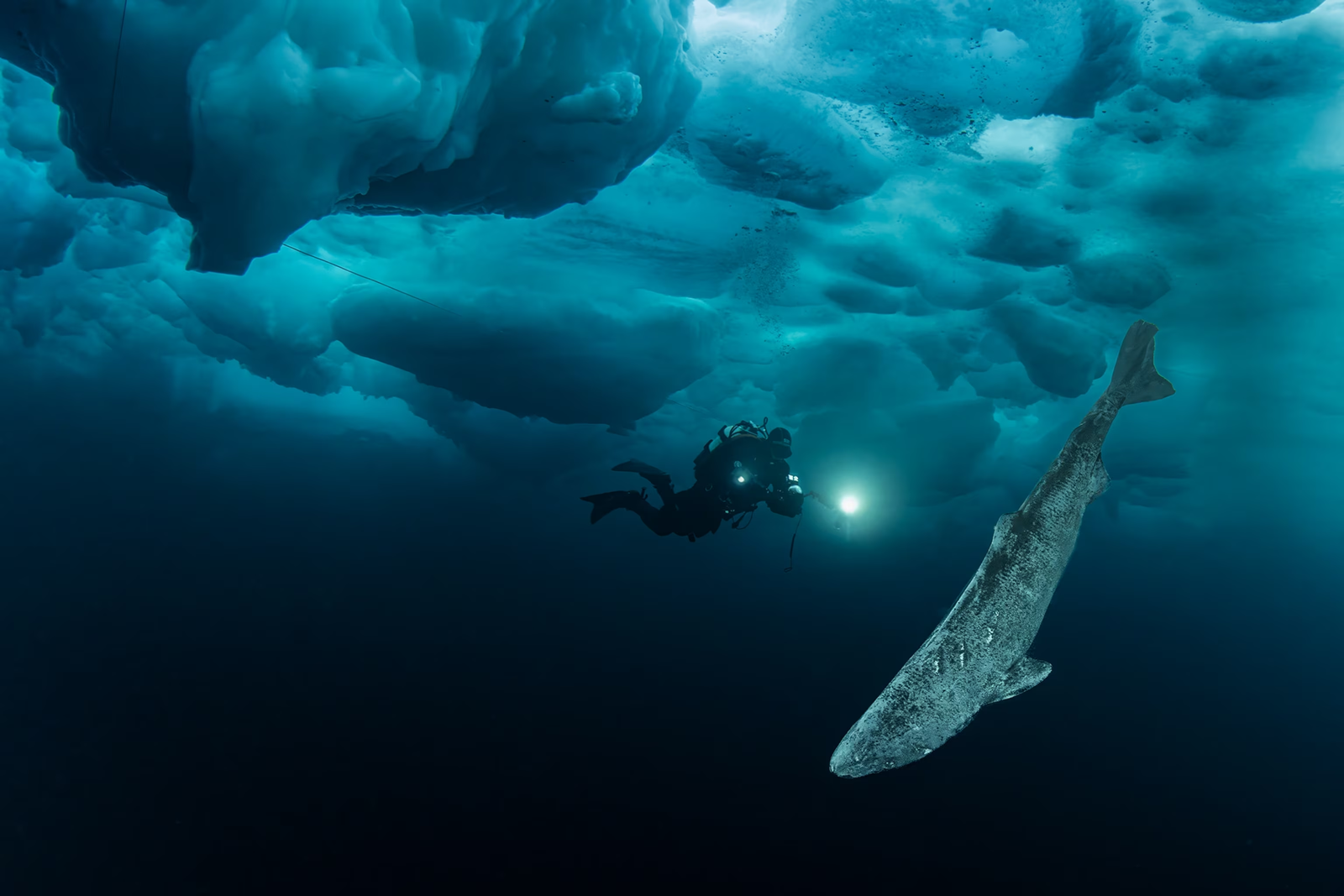
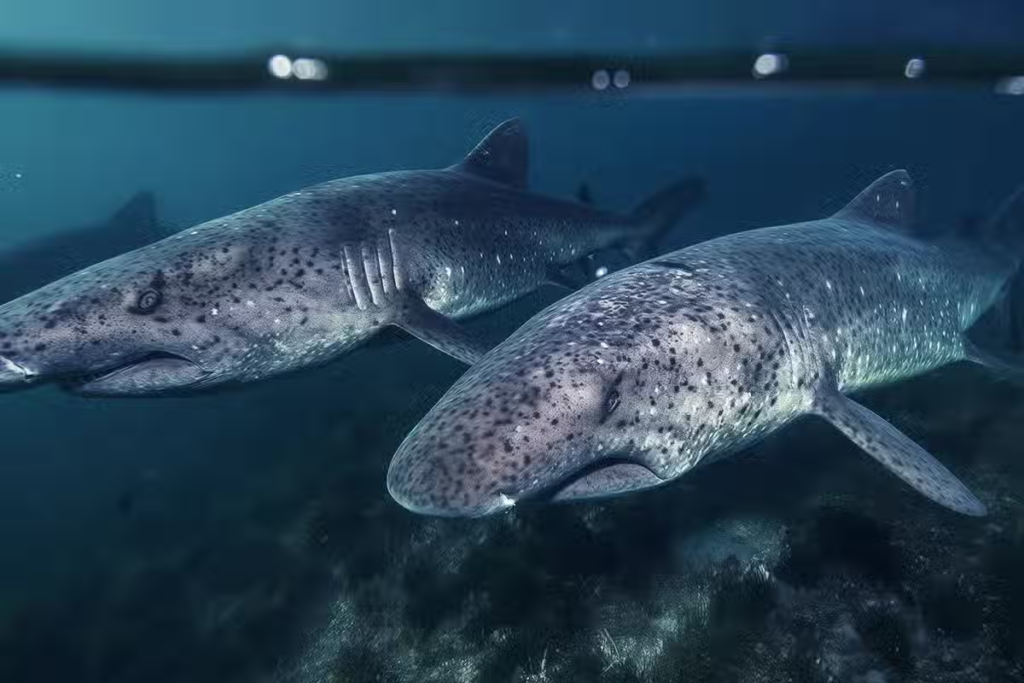
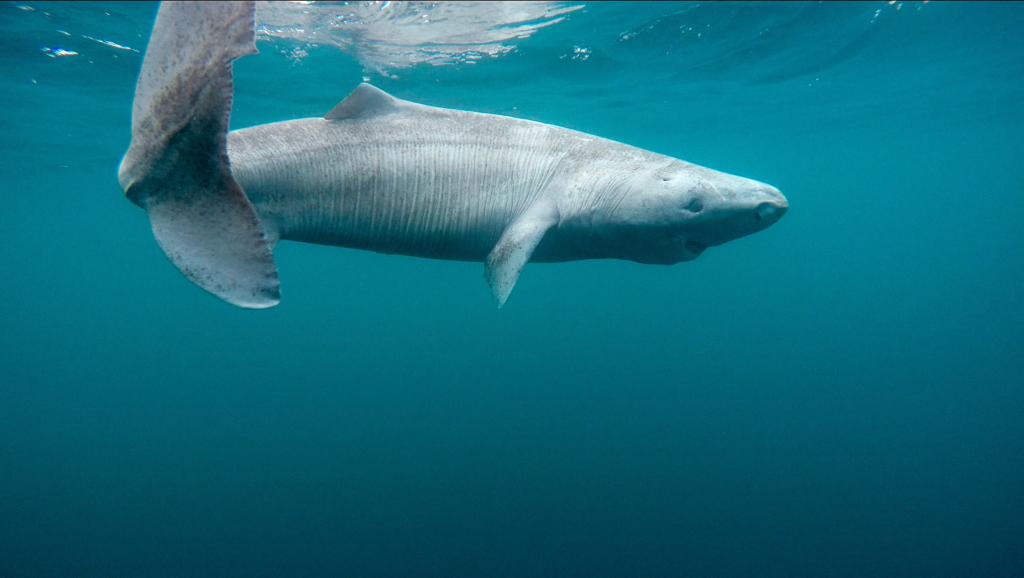
New observations show Greenland sharks behave with intention. Submersibles and underwater cameras captured sharks moving vertically through the water column.
Researchers also recorded controlled fin movements. These motions resemble those of marine mammals that rely on precision rather than speed. This behaviour challenges the idea of clumsiness.
Greenland shark discoveries now point to energy efficiency as a survival strategy. In cold environments, conserving energy matters more than chasing prey.
Rethinking the Age of Greenland Sharks
The claim that Greenland sharks live for 500 years gained global attention. Scientists based the estimate on radiocarbon dating of eye tissue.
Some experts now question that precision. Radiocarbon methods work best over long geological timescales. They become less accurate over a few centuries.
Greenland shark discoveries suggest long life spans remain likely. Still, scientists cannot yet confirm an exact maximum age.
Greenland Sharks Live Far Beyond the Arctic
Despite their name, Greenland sharks do not stay near Greenland alone. Cold water allows them to inhabit shallow northern seas. Tracking data also places them at extreme depths in warmer regions.
These findings suggest the species travels enormous distances. A single shark may cross entire ocean basins during its lifetime.
As a result, Greenland shark discoveries raise serious conservation questions. Protection efforts may require international coordination.
Climate Change Raises New Questions
The Arctic warms faster than any other region on Earth. This rapid change adds urgency to Greenland shark research.
The species appears flexible in diet. However, scientists know almost nothing about reproduction. No confirmed record of a pregnant female exists in recent decades.
Without this information, researchers struggle to predict how environmental change will affect future populations.
What Greenland Shark Discoveries Teach Us
Greenland shark discoveries highlight the danger of scientific assumptions. For decades, appearance shaped perception more than evidence.
Researchers now suspect the species is cautious, intelligent, and highly adapted. Each study reveals another gap in human understanding.
As exploration technology improves, scientists expect more surprises. The Greenland shark may prove not ancient and fragile — but resilient, strategic, and still full of secrets.ion is becoming clear — the Greenland shark is not a living fossil drifting through time, but a sophisticated animal still holding many secrets beneath the ice.