Xi Jinping Visit: Southeast Asia Strategy, Trade, and Diplomacy

Charm Offensive or Strategic Chess? The Xi Jinping Southeast Asia visit has drawn global attention—not just for its optics, but for its power moves, diplomacy, and strategic positioning. As tensions between the U.S. and China escalate in the ongoing trade war, Xi’s stops in Vietnam, Malaysia, and Cambodia were far from routine. Experts call this tour a calculated charm offensive. Xi aims to strengthen regional partnerships and counter growing American influence. The visit came as the U.S. tightens alliances through AUKUS and the Quad. In response, Xi is reasserting China’s presence across ASEAN. From infrastructure promises to trade deals and soft-power messaging, Xi framed China as a stable, growth-focused ally—one offering support without the political strings often attached to Western aid. Xi Jinping’s Visit to Hanoi: Symbolism and Strategic Messaging   Xi’s first stop was Hanoi—a visit full of symbolism. It came just as Vietnam narrowly avoided new U.S. tariffs. The timing wasn’t accidental. China is eager to pull Vietnam closer, especially as U.S. relations become more uncertain. In public remarks, Xi called for unity against “unilateral bullying.” While he didn’t name names, it was a clear jab at the U.S. and its trade policies. His message? China is a reliable regional force, offering incentives, investment, and non-interference—while subtly warning against leaning too far toward Washington. “It’s a very smart strategic move.” — Stephen Olson, former U.S. trade diplomat   The Xi Jinping visit underscores China’s broader regional ambitions and the shifting geopolitical landscape in Southeast Asia, where economic ties are growing stronger.  What This Visit Signals: A push to steer ASEAN away from U.S. influence Rebranding China as a stabilizer, not a disruptor A diplomatic counter to U.S. tariffs and trade barriers “Unilateral Bullying” and the Free Trade Message   In a high-profile meeting with Vietnam’s Secretary-General To Lam, Xi doubled down. He repeated his stance against “unilateral bullying” and called for defending multilateral trade systems. Again, he didn’t name the U.S., but the message was clear. This ties directly into China’s global narrative: champion of open markets, defender of economic order—while painting the U.S. as the unpredictable one. Hanoi, with strong ties to both powers, served as the ideal stage for this diplomatic messaging.   “The U.S. is acting like a reckless rogue nation.” — Stephen Olson   Xi’s Core Talking Points:   Support resilient supply chains Defend multilateral trade Present China as a global economic anchor Trump Fires Back: “Trying to Screw the U.S.”    In Washington, former President Donald Trump responded with his signature bluntness. Speaking at a rally, he dismissed Xi’s diplomatic push—especially the Hanoi leg—as an attempt to “figure out how to screw the United States.” His comments added fire to an already tense global backdrop. They also challenged President Biden’s leadership, questioning whether enough is being done to push back against China’s rise. Meanwhile, the U.S.-China trade war is heating up. The U.S. recently imposed a 145% tariff on a wide range of Chinese goods. China responded quickly with 125% duties on American imports. The tit-for-tat is rippling through global supply chains. Adding to the confusion, U.S. Customs initially exempted smartphones from the new tariffs. But in a surprising twist, Trump later contradicted that directive—leaving companies scrambling for clarity. “That’s a beautiful meeting… how do we screw the U.S.A.?” — Donald Trump Trade War Timeline: U.S.: 145% tariffs on Chinese goods China: 125% in retaliation Smartphones: Initially exempt, now under review Vietnam’s Balancing Act: Between Superpowers Vietnam stands at the center of this great-power tug-of-war. As manufacturers move away from China, Vietnam has become a top destination. Its growing role in the global supply chain has attracted investment—and geopolitical attention. The U.S. sees Vietnam as a vital Indo-Pacific partner. Yet, China remains its largest trading partner and powerful neighbor. This means Hanoi must navigate both relationships carefully, maximizing gains without taking sides. Xi’s visit included symbolic gestures like a stop at the Ho Chi Minh Mausoleum. These moves signaled unity and shared ideology. But underneath the diplomatic pageantry, Vietnam remains wary. Experts agree: while Vietnam may accept China’s offers, it won’t get too close. Issues like the South China Sea dispute, fear of economic overdependence, and the desire for sovereignty keep Hanoi cautious. “The U.S. is as well vital a accomplice to put aside.” — Lowy Institute – Susannah Patton Vietnam’s Strategic Balance: Solid U.S. exchange and defense ties Chronicled and ideological joins with China Maintaining a strategic distance from arrangement in great-power competition The Xi Jinping Southeast Asia visit highlights China’s effort to increase its influence in the region, with a clear focus on reshaping economic and geopolitical relations with key ASEAN nations like Vietnam. Conclusion: A Regional Power Shift in Motion   Xi Jinping’s Southeast Asia visit marks a critical moment in the region’s political recalibration. It’s more than symbolism—it’s a strategy to reshape the regional order, weaken U.S. leverage, and project China as a stabilizing anchor. Analysts agree that the Xi Jinping Southeast Asia visit was designed to reshape regional alliances and influence ASEAN countries’ foreign policy choices. For ASEAN countries, especially Vietnam, the challenge is clear: how to balance economic opportunity with strategic autonomy in a rapidly changing world. https://youtu.be/tP2_9UGn9PM?si=vPNUJ1BcXLm58wtS
Read More

Trump Blames Zelensky After Sumy Attack: Political Fallout

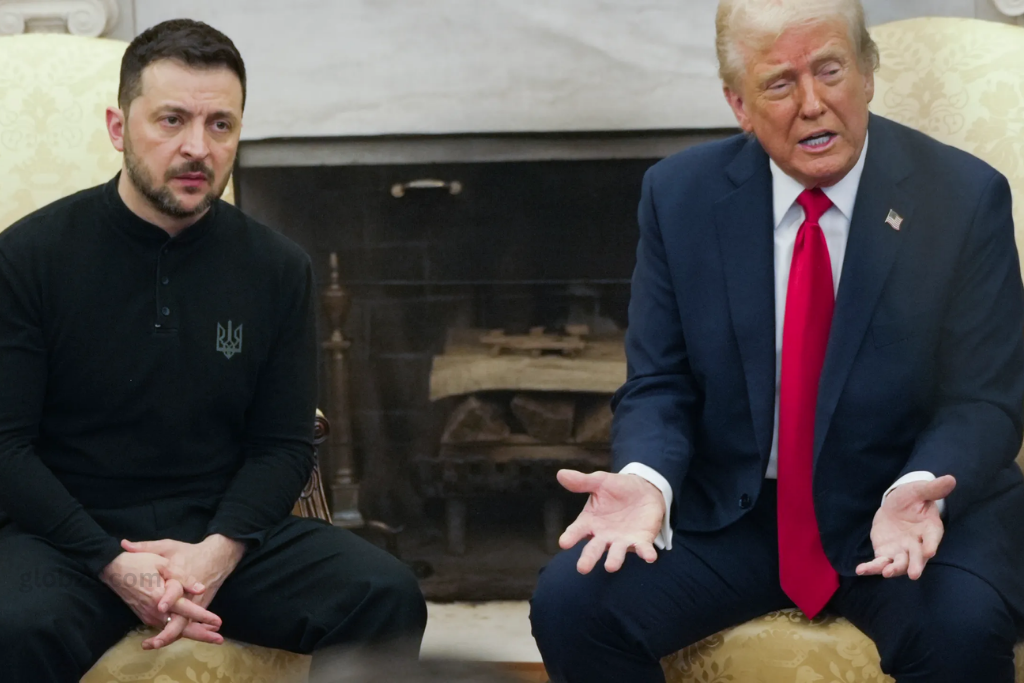
A Devastating Assault as Trump Blames Zelensky Sparks Global Turmoil     Trump blames Zelensky following a brutal Russian rocket strike on the Ukrainian city of Sumy, where at least 35 civilians were killed and over 100 injured. His controversial remarks came just hours after the attack and immediately ignited a global political storm. The Sumy assault, one of the deadliest of 2025, shocked the world—not only for its devastation but for the explosive rhetoric that followed from the former U.S. president. President Volodymyr Zelensky called it a “dark chapter” in Ukraine’s war history, while world leaders condemned the attack and urged urgent support for Ukraine. Trump Blames Zelensky After Sumy Attack, Triggering Global Condemnation Less than a day after the Sumy tragedy, former U.S. President Donald Trump blamed Zelensky for prolonging the conflict. “You don’t start a war against someone 20 times your size and then expect people to give you rockets.” — Donald Trump This remark ignited an international backlash. Critics accused Trump of echoing Kremlin talking points and dismissing Ukraine’s sovereign right to self-defense. The suggestion that Zelensky shares blame stunned many, especially given the ongoing civilian toll. “Millions of people dead because of three individuals: Putin, Biden, and Zelensky.” — Trump Foreign policy analysts warned that Trump blaming Zelensky sends a dangerous signal—implying that countries under attack may share fault for their own suffering. The Impact of Trump Blaming Zelensky: A Risky Diplomatic Gamble   Although Trump called the Sumy attack “terrible,” he speculated—without providing evidence—that it could have been an accident by Russian forces. By lumping Putin, Biden, and Zelensky into a shared blame narrative, Trump blurred moral lines. Many worry this rhetoric encourages authoritarian aggression and undermines democratic alliances. Trump further accused Zelensky of rejecting peace opportunities and “gambling with World War Three,” though he failed to provide a viable peace framework. Key Takeaways:   Trump claimed a “great” phone call with Putin. He hinted at a peace deal but revealed no concrete terms. His envoy Steve Witkoff reportedly met Putin to discuss “permanent peace.” Zelensky Responds as Trump Blames Him for War’s Escalation   Just days before the Sumy tragedy, Zelensky made a personal appeal to Trump, urging him to visit Ukraine and witness the devastation firsthand. “Come see the people, the hospitals, the churches, the children destroyed or dead.” — Zelensky He warned against political deals forged without understanding the real cost of war. Zelensky insisted that true peace must uphold justice and sovereignty—not be built on territorial concessions or appeasement. “Peace cannot be built on the graves of our children.” — Zelensky Trump’s Position on Zelensky Alarms NATO Allies     Trump’s comments sent shockwaves through NATO. Earlier this year, the U.S. made headlines by voting with Russia on a symbolic U.N. resolution, raising alarms about changing allegiances. Now, Trump blaming Zelensky after the Sumy attack is testing NATO’s unity and resolve. Russia’s ongoing demands include:   Recognition of occupied Ukrainian territories A permanent NATO ban for Ukraine Ukraine has firmly rejected these terms, asserting its right to self-determination. Meanwhile, reports suggest Trump’s envoy discussed NATO’s Article 5 with Russian officials—stirring concern in Brussels. “Partnerships create stability.” — Steve Witkoff, Trump’s envoy Final Thoughts   The fallout from Trump’s statements continues to unfold. As Ukraine reels from one of its darkest days, the world watches closely. Trump blaming Zelensky isn’t just a headline—it’s a test of where global leaders stand when democracy is under fire. A Significant Year: Europe Promises €21bn Military Help to Reinforce Ukraine’s Defenses – See More https://youtu.be/ppyKt8934GA?si=MqJtoBne6EM6rJxj

Read More

“China Urges ‘Mutual Respect’ as Response to Trump’s 125% Tariff Hike on US-China Trade”

  China Strengthens Ties with EU and ASEAN in Response to U.S. Tariffs Amid escalating trade tensions, China is seeking to build strategic partnerships with the European Union (EU) and member states of the Association of Southeast Asian Nations (ASEAN) to counterbalance the United States’ latest tariff escalation. The move follows a sharp increase in import duties by U.S. President Donald Trump, who recently announced a sweeping 125 percent tariff on a wide range of Chinese goods. In a direct response, Beijing announced that it will impose an 84 percent tariff on selected U.S. imports, set to take effect on Thursday. The European Union has also reacted to Washington’s protectionist measures by authorizing retaliatory tariffs of up to 25 percent, further intensifying the trade standoff. According to a statement released by China’s Ministry of Commerce (MOFCOM), both China and the EU have reaffirmed their commitment to defending the multilateral trading system anchored by the World Trade Organization (WTO). The statement emphasized the shared resolve to uphold fair trade principles and ensure global economic stability. High-level discussions between Chinese Commerce Minister Wang Wentao and European Commissioner for Trade and Economic Security Maroš Šefčovič took place via video conference earlier this week. The dialogue focused on strengthening China-EU economic collaboration and formulating a coordinated response to the U.S. measures, which both parties described as “reciprocal tariffs” in breach of international trade norms. China and the EU, being each other’s largest trading partners, have expressed mutual concerns over the impact of unilateral U.S. policies on the global economic system. Minister Wang stated that Washington’s actions “seriously infringe upon the legitimate rights of other nations, violate WTO regulations, and threaten the integrity of the rules-based international trade order.” The outreach to ASEAN nations, although not detailed in the official statement, is part of a broader Chinese strategy to consolidate support among regional trade partners who may also be adversely affected by shifts in global trade policy initiated by the U.S. As geopolitical and economic uncertainties persist, China’s pivot toward multilateralism and its emphasis on diplomatic engagement with other major economies reflect a desire to mitigate the fallout from the ongoing trade conflict and prevent further fragmentation of the global trade system. Chinese Foreign Ministry Responds To Trump’s Tariffs   European Markets Surge Following Temporary Pause in Trump’s Tariff Escalation European stock markets rallied on Thursday morning, recovering from steep losses after U.S. President Donald Trump announced a temporary suspension of aggressive tariffs on most countries. The surprise move came just hours after a global market downturn prompted by the latest escalation in U.S.-China trade tensions. In early trading, Germany’s DAX in Frankfurt soared more than 7 percent to 21,124.44 points. France’s CAC 40 in Paris rose 7.3 percent to 7,362.06, while London’s FTSE 100 climbed 5.3 percent to 8,089.72. The recovery follows similar gains seen in U.S. and Asian markets overnight. Wednesday had seen global markets falter, with European indices dropping approximately 3 percent following the implementation of new U.S. tariffs and China’s subsequent retaliatory duties. However, Trump’s partial reversal, which excluded all countries except China from the steeper levies, triggered a wave of renewed investor optimism. While the U.S. administration has maintained a 10 percent universal tariff as a baseline, the suspension of additional duties was perceived by markets as a sign of de-escalation—at least for now. However, Trump simultaneously intensified economic pressure on China by raising tariffs on Chinese imports to 125 percent, reinforcing the divide between Washington and Beijing. Analysts have cautioned against assuming long-term stability. A report by Deutsche Bank highlighted ongoing concerns regarding policy consistency, stating: “While there has been understandable relief… the genie is still out of the bottle on policy unpredictability.” The report further emphasized that the introduction of a baseline 10 percent tariff across all imports represents the most significant increase in trade barriers in decades. “This move adds to an already uncertain global trade environment, with little clarity on the criteria the U.S. would use to assess or negotiate future trade agreements,” the analysis concluded. Though markets are momentarily buoyed by the tariff pause, the broader implications of a prolonged and unpredictable trade stance by the U.S. remain a key concern for global investors. Pakistan Plans Diplomatic Push as U.S. Delays New Tariff Measures Pakistan is preparing to dispatch a high-level delegation to Washington in the coming weeks to engage in talks over newly proposed U.S. tariffs, government officials confirmed, following a partial delay in the measures announced by U.S. President Donald Trump. The planned visit comes in response to Washington’s recent move to impose a 29 percent tariff on Pakistani imports, part of a broader wave of U.S. trade actions targeting multiple partners and stirring uncertainty in global markets. In a late development on Wednesday, President Trump announced a 90-day postponement for the implementation of the increased tariffs. However, a universal 10 percent baseline tariff will still apply to all countries, including Pakistan, during the review period. The office of Prime Minister Shehbaz Sharif confirmed the decision to send a delegation, underscoring Islamabad’s intent to address the potential economic impact of the new trade policies through diplomatic engagement. A source within the Ministry of Commerce, speaking anonymously to AFP on Thursday, affirmed that the visit remains on schedule despite the temporary delay. “A high-level government delegation is scheduled to depart for Washington in the coming weeks to hold talks with U.S. officials,” the official stated. Trade between Pakistan and the United States remains a critical component of Pakistan’s export economy. According to the Office of the United States Trade Representative, bilateral trade between the two countries totaled $7.3 billion in 2024. U.S. imports from Pakistan amounted to $5.1 billion, with cotton and textile products forming a significant portion of the trade. As global markets continue to react to the evolving U.S. trade stance, Pakistan is seeking to mitigate any long-term disruptions through dialogue and negotiation.   Trump Tariffs Live Updates: Despite an escalating trade standoff, U.S. President Donald Trump voiced optimism on Thursday…

Read More

Trump UK Trade Uncertainty: New Tariffs Shake British Economy

Trump UK Trade Uncertainty: New Tariffs Shake British Economy   The phrase “Trump UK trade uncertainty” is now echoing throughout Westminster. As Donald Trump resumes power in the White House, the UK must quickly adjust to the changing global climate. Within hours of Chancellor Rachel Reeves presenting the Spring Statement, new challenges emerged, highlighting just how unstable global conditions have become. UK Export Industry Faces Tariff Pressure   Trump’s recent 25% tariff on all imported cars has caused alarm. The move directly affects UK carmakers, who rely heavily on access to the American market. The United States ranks as the UK’s second-largest car export destination, just behind the EU. Because of the tariff, British cars may become too expensive to compete in the U.S. Many manufacturers fear job losses, reduced revenue, and long-term damage to the industry. As a result, pressure is growing on the UK government to respond. Learn more from SMMT’s latest auto trade stats and UK government export policy.   Government Response to Trump’s Trade Policies   During her Spring Statement, Rachel Reeves signaled that the government would rethink spending priorities. She referred to a “changed world” and acknowledged how external factors, like Trump’s trade approach, demand fresh strategies. In Parliament, lawmakers from all parties are urging fast action. Some propose rebuilding trade ties with the EU, while others call for domestic investment to protect key sectors. Read the Spring Statement 2025 summary or explore how UK trade policy is evolving.   How Trump UK Trade Uncertainty Signals a Global Shift   The Trump UK trade uncertainty reflects more than just one tariff. It marks a shift in global alliances and economic priorities. For the UK, this means preparing for less predictable policies from a country long seen as a close ally. Furthermore, there are concerns about ripple effects across other sectors, such as defense and technology. Many experts warn this may be the beginning of a larger realignment in international cooperation. For global perspectives, visit the BBC’s trade coverage or The Economist’s global economy section. So far, the UK government’s approach has been one of cautious diplomacy—opting for private negotiations while avoiding public confrontation with Trump, wary of provoking his well-known volatility. Behind closed doors, officials have been working tirelessly to secure a UK-US trade deal that could provide some buffer against these sudden economic shifts. However, this situation highlights a broader challenge: uncertainty has become the new certainty in international relations, forcing UK leaders to constantly anticipate and react to potential upheavals. The Office for Budget Responsibility (OBR), the independent forecaster, has attempted to predict the impact of these changes, though it acknowledges the difficulty of making economic projections in such an unpredictable landscape. Its latest report examines possible outcomes if the US raises tariffs by 20 percentage points, including scenarios where other countries, including the UK, retaliate. The worst-case scenario—where global trading partners reciprocate with their own tariffs—could severely impact the UK’s fiscal plans, undoing the careful economic balancing act that Reeves has been managing. With Trump, Unpredictability is the UK’s Only Certainty   With Trump’s self-proclaimed “Liberation Day” just around the corner—when a fresh wave of tariffs is expected to be announced—intensive negotiations between the UK and US are in full swing. Reeves has confirmed that talks are ongoing to address tariffs on cars, steel, and other key sectors, stressing that the UK is keen to avoid a full-scale trade war. As the world continues to evolve unpredictably, UK policymakers remain in a reactive stance, trying to mitigate the fallout of Trump’s economic maneuvers while keeping the country’s financial stability intact. As Trump reasserts his influence on global trade, the UK must act quickly. With exports under threat and uncertainty rising, leaders are under pressure to adapt. The next few months will be critical for both British industry and foreign policy.

Read More

Trump Cautions China of Present day 50% Charge In the middle of Raising Trade Dispute

Former U.S. President Donald Trump has issued a stark caution to China, undermining to drive an additional 50% obligation on Chinese stock entering the Joined together States unless Beijing pulls back its as of late detailed 34% retaliatory tariff. This most later exchange takes after Trump’s questionable “Liberation Day” action, where he constrained a 34% commitment on Chinese imports and a slightest 10% assess on most other trading partners. In a social media post on Monday, Trump gave China a Tuesday due date to turn around its counter-tariff or stand up to the unused require. “Any country that counters against the U.S. with additional charges will be expeditiously met with in fact higher tariffs,” he wrote. If actualized, the include up to obligation burden on a few Chinese stock appear surge to 104%, figuring in the 20% commitments displayed in Walk and the afterward 34% increase. Such a move may truly irritate U.S.-China trade and create around the world monetary instability. The Chinese universal secure sanctuary in Washington responded unequivocally, censuring the U.S. of “economic bullying.” In a clarification, agent Liu Pengyu said, “China will immovably secure its bona fide rights and interests… Perils and weight are not the right approach.” Despite creating grandstand insecurity, Trump ruled out a delay on the around the world charges. “We’re not looking at that,” he told columnists. “We require sensible deals, and various countries are directly coming to the table to negotiate.”   The tit-for-tat obligations have as of presently shaken around the world budgetary markets. U.S. stocks opened lower on Monday a few time as of late recovering imperceptibly, while Europe’s major records, checking London’s FTSE 100, saw drops of more than 4%. Asian markets as well persevered, with Hong Kong’s Hang Seng Record tumbling over 13% — its most sharpened single-day rot since 1997. Be that as it may, a few recovery was seen on Tuesday. China’s key sends out to the U.S. — checking equipment, device, furniture, and toys — appear be hit troublesome if the advanced charges go into affect. In the intervals, American exchanges to China, such as country things, discuss dispatch, and pharmaceuticals, may in addition stand up to retaliatory barriers. Israel, a key US partner and a long-time adversary of Iran’s atomic aspirations, proceeds to see the circumstance as a major risk to territorial steadiness. Netanyahu resounded Trump’s opinions, expressing: “We and the Joined together States are joined together in the conviction that Iran must never get atomic weapons. If this can be anticipated carefully, all the better.” During a White House press briefing, Trump cleared out the entryway open for talks but made it clear that charges appear be a changeless establishment. “We have $36 trillion in commitment for a reason,” he said. “Now it’s America first.”

Read More

Trump: US and Iran to Hold Atomic Talks in Oman

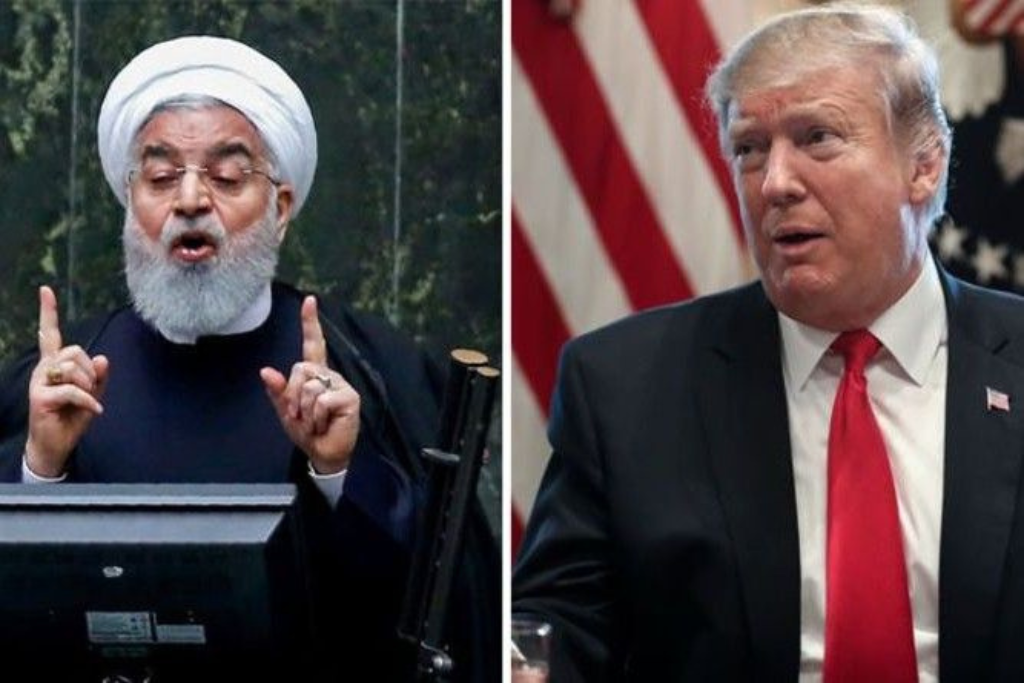
Former US President Donald Trump has uncovered that Washington and Tehran will lock in in dialogs over Iran’s atomic program this Saturday. Speaking amid a assembly with Israeli Prime Serve Benjamin Netanyahu at the White House, Trump expressed, “We have a exceptionally huge assembly on Saturday with Iran. We’re managing with them specifically. Possibly a bargain can be made — that would be great.” Iranian Remote Serve Abbas Araqchi moreover affirmed the up and coming engagement but depicted it as “indirect.” He posted on social media that the talks, set to take put in Oman on April 12, speak to both “an opportunity and a test.” He included, “The ball is in America’s court.” Trump emphasized the tall stakes included, caution that disappointment to reach an understanding would have genuine results for Iran. “If the talks aren’t effective, I think it’ll be a exceptionally awful day for Iran,” he said, emphasizing the US position that Iran must not secure atomic weapons. The declaration takes after increased pressures between the two nations. Fair weeks prior, Trump had debilitated conceivable military activity after Iran’s Incomparable Pioneer Ayatollah Ali Khamenei expelled a US offer to negotiate. Reports recommend that final month, Trump endeavored to start talks through an mediator from the UAE by sending a letter to Iran’s authority. Whereas the offer was at first rejected, Iranian authorities indicated at a eagerness to investigate dialogs by means of third-party channels. Curbing Iran’s atomic aspirations has long been a major center of US outside arrangement. In 2015, beneath President Barack Obama, a multinational bargain was come to to constrain Iran’s atomic movement in trade for facilitating financial sanctions. Be that as it may, Trump pulled back from that assention in 2018, criticizing it as flawed.   Since at that point, Iran has progressively damaged the terms of the unique agreement, with the Worldwide Nuclear Vitality Organization (IAEA) communicating concern over the nation’s developing stockpile of enhanced uranium — a fabric that can be weaponized. Trump has more than once coasted the thought of a unused bargain, whereas too cautioning that military alternatives stay on the table if strategy fails. Israel, a key US partner and a long-time adversary of Iran’s atomic aspirations, proceeds to see the circumstance as a major risk to territorial steadiness. Netanyahu resounded Trump’s opinions, expressing: “We and the Joined together States are joined together in the conviction that Iran must never get atomic weapons. If this can be anticipated carefully, all the better.” The result of Saturday’s dialogs seem demonstrate essential for future US-Iran relations and the broader Center East security scene.

Read More