North Korea warship launch

North Korea Warship Launch Now Declared a Success

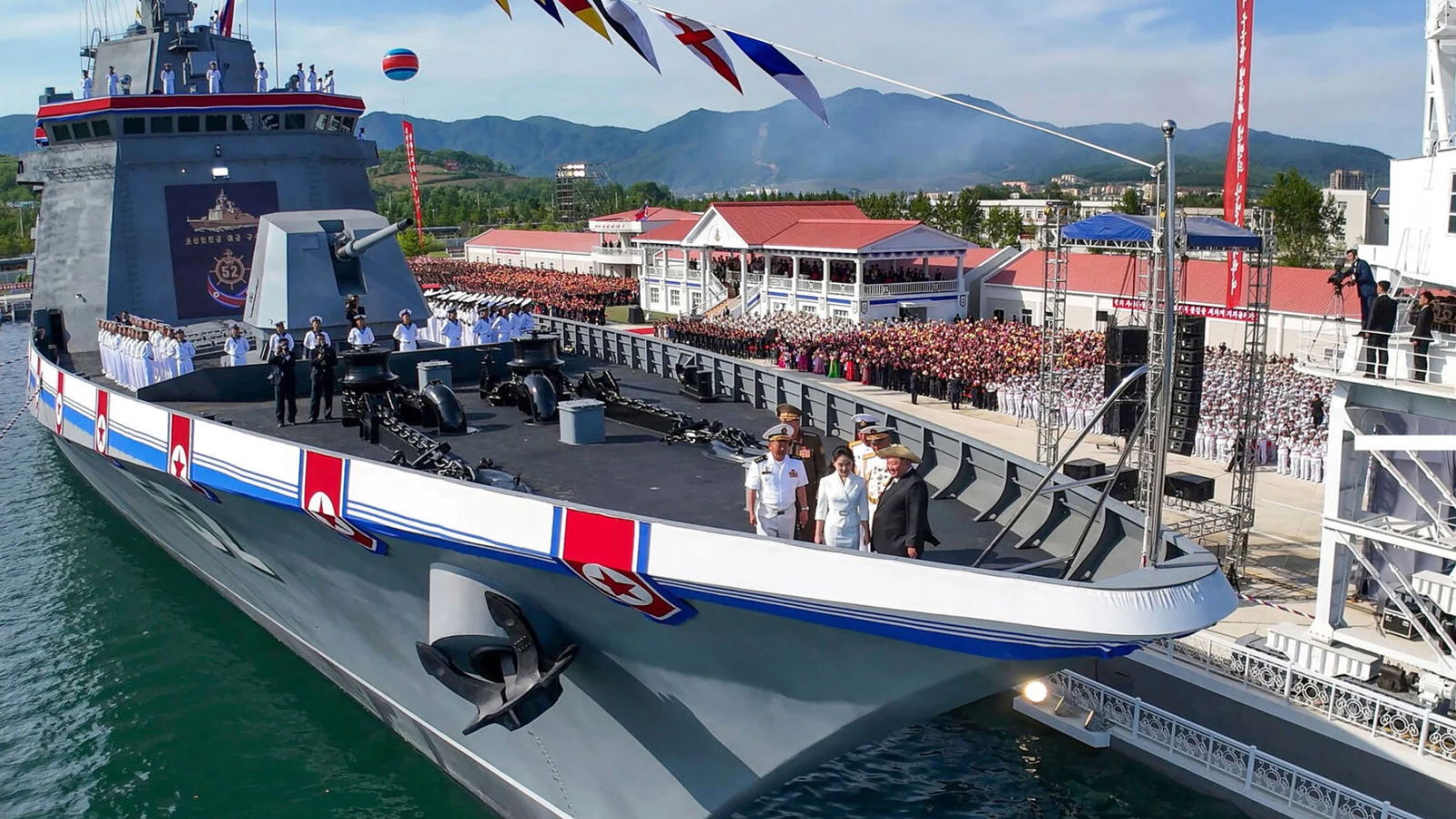
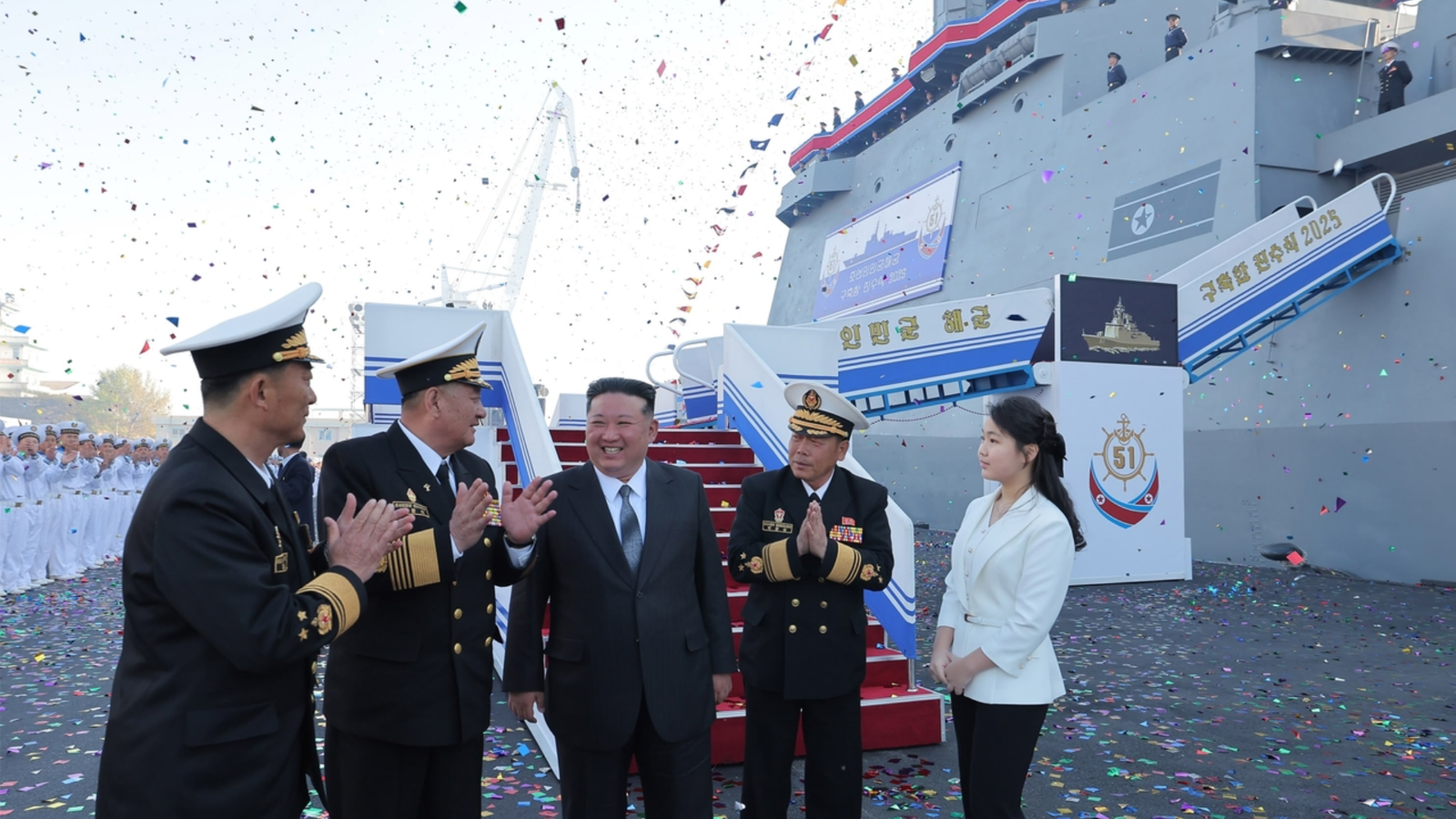
Introduction: North Korea Warship Launch Back on Track North Korea warship launch efforts appear to be back on course after state media reported a successful second attempt at launching a new 5,000-ton naval destroyer. This comes less than a month after the vessel capsized during its initial debut. North Korean leader Kim Jong Un, accompanied by his daughter Kim Ju Ae, personally oversaw the relaunch at Rajin Port in the country’s north, signaling renewed confidence in the country’s naval modernization drive. The destroyer, one of two newly constructed warships of this size, marks a major leap in Pyongyang’s maritime capabilities. It also highlights Kim’s ambition to build a nuclear-capable navy as part of a broader military buildup. First Attempt Fails: North Korea Warship Launch Capsizes In May, North Korea’s pride in its military engineering took a hit when its brand-new 5,000-ton destroyer capsized shortly after launch. The incident occurred under highly secretive conditions, but satellite imagery later confirmed the ship had overturned in the harbor. Leader Kim Jong Un was reportedly furious with the failure. According to intelligence sources and confirmed by North Korean state media, at least four officials were arrested, including three shipyard engineers and one senior military planner. The North Korean government demanded immediate repairs, setting an unusually aggressive timeline to restore the vessel to operational condition. Relaunch at Rajin Port: Second Warship Launch Attempt Succeeds On Tuesday, June 11, North Korean state media outlet KCNA reported that the destroyer had been fully repaired and successfully relaunched. Photos published by KCNA show Kim and his daughter observing the ship at Rajin Port during the event. Despite the regime’s assurances, analysts are skeptical. “Given the scale of damage likely caused by the capsize, a full restoration in under four weeks raises serious doubts,” said a senior defense analyst at the International Institute for Strategic Studies (IISS). Kim Jong Un’s Role in the North Korea Warship Launch The North Korea warship launch is part of Kim Jong Un’s greater ambition to transform his country’s naval force into a nuclear-capable fleet. Over the past year, North Korea has rolled out two 5,000-ton warships—the largest in its navy—capable of, in theory, launching ballistic missiles, including those with nuclear payloads. Kim has publicly announced plans to build two more destroyers within the next year, indicating a clear strategic shift toward maritime deterrence. This comes amid rising tensions in the region and escalating U.S.-South Korea military drills, which Pyongyang views as provocative. Nuclear Ambitions: What the North Korea Warship Launch Signals Independent satellite imagery reviewed by maritime analysts shows a clear timeline of the ship’s status post-capsize: This aligns with KCNA’s claim of a rapid repair and re-launch, though questions linger about the ship’s long-term seaworthiness and combat readiness. Official Remarks: Kim Warns of Regional Power Projection During the re-launch ceremony, Kim Jong Un delivered a fiery speech, reaffirming North Korea’s commitment to its naval modernization program. He dismissed the initial failure as a minor setback and warned adversaries to prepare for a show of strength. “Soon, enemies will experience how provocative and unpleasant it is to sit and watch the ships of an adversary run rampant on the fringes of sovereign waters,” Kim was quoted as saying by KCNA. His comments are being interpreted as a thinly veiled threat toward South Korea, the United States, and Japan—all of which have expressed concern over North Korea’s increasing missile and naval capabilities. International Reaction: Wary Eyes on Pyongyang So far, international reactions to the relaunch have been measured but cautious. Several military experts have pointed out that the warship’s exact missile capabilities remain unclear, but if nuclear-enabled, the regional security dynamics could shift dramatically. Military Capabilities: What We Know About the Warship According to limited information from North Korean media and external intelligence analysis, the new destroyers are equipped with: These warships are not just symbolic. If armed as claimed, they represent a major advancement in North Korea’s asymmetric warfare strategy. Internal Politics: The Fallout of Failure The arrests following the failed May launch highlight the pressure on North Korean officials to meet ambitious military timelines. While the state strives to show strength externally, internal accountability measures—often harsh—reveal the regime’s intolerance for setbacks. Some defectors and analysts argue that these purges serve both as punishment and deterrent, keeping military and engineering personnel in a constant state of pressure. Looking Ahead: What This Means for Global Security The successful North Korea warship launch, even if rushed, signals Pyongyang’s persistence in expanding its military reach. The move has several implications: Conclusion: Symbolism, Strategy, and Suspicion While the re-launch of the 5,000-ton destroyer may be seen as a symbolic recovery from failure, it also reflects a larger strategic pivot in North Korea’s defense doctrine. Kim Jong Un’s focus on naval capabilities, particularly those with potential nuclear applications, raises serious alarms for regional and global security. As North Korea warship launch events unfold, analysts, allies, and adversaries alike will continue to scrutinize Pyongyang’s next move—on the sea and beyond.
Read More
Israel Targets Iran’s Nuclear

Israel Targets Iran’s Nuclear Facilities in Attack

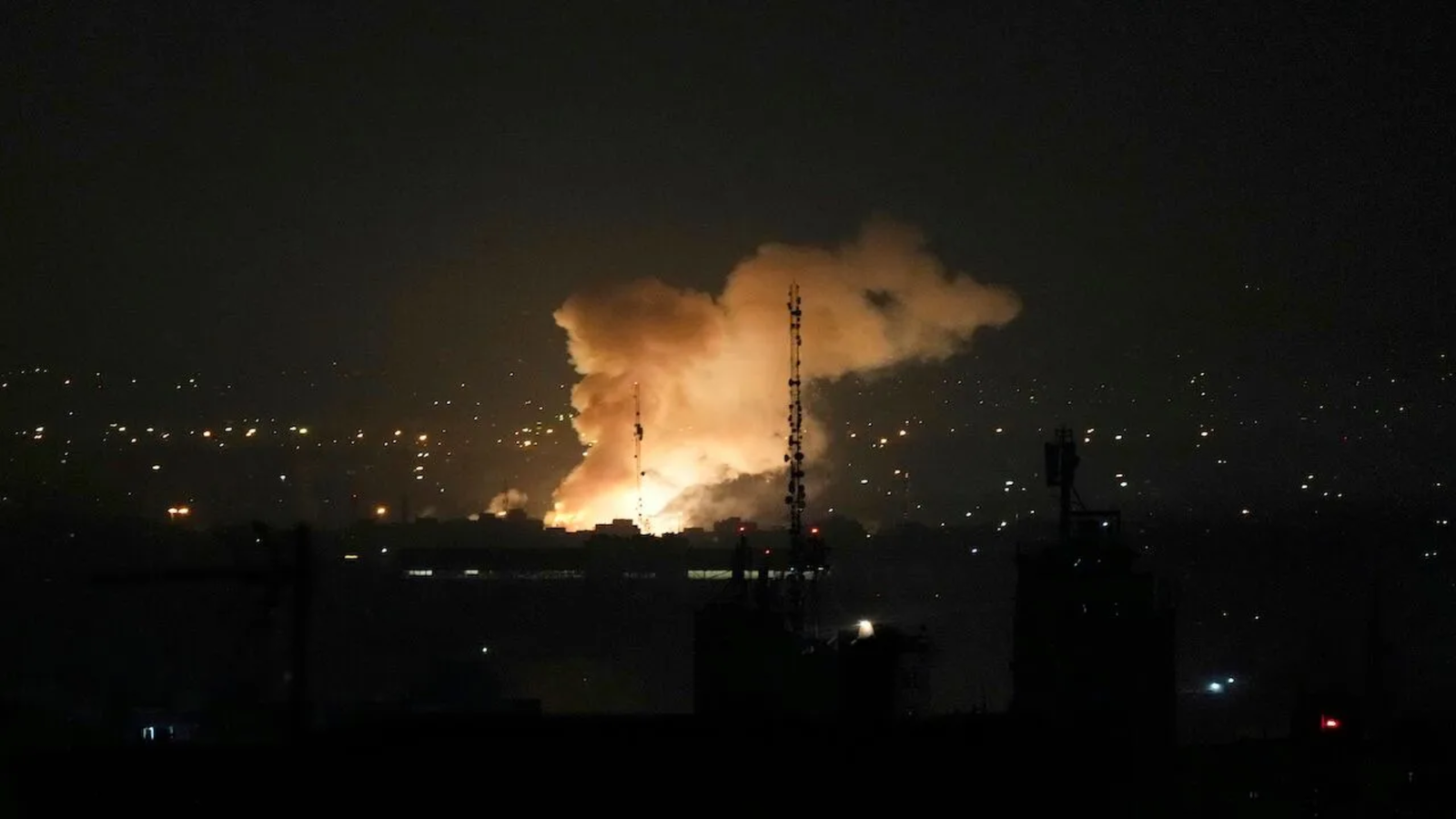
Why Israel Targets Iran’s Nuclear Program Israel targets Iran’s nuclear program once again, intensifying their decades-long rivalry with a bold military strike. The tense relationship between Israel and Iran is rooted in political, religious, and strategic divisions. Since Iran’s Islamic Revolution in 1979, the country has positioned itself as one of Israel’s most vocal adversaries, routinely denouncing its legitimacy and supporting militant groups like Hezbollah and Hamas. One major flashpoint in their ongoing conflict is Iran’s nuclear program. While Tehran claims its efforts are for peaceful energy production, Israel and many Western powers suspect ambitions to develop nuclear weapons. For Israel, a nuclear-capable Iran is an existential threat — and Israeli leaders have long vowed to prevent that outcome, even through preemptive military action. Inside the Attack: How Israel Targets Iran’s Nuclear Sites and Military Leaders According to credible intelligence reports, Israeli forces executed a coordinated attack on Iranian nuclear enrichment facilities. These included high-profile sites near Natanz and Fordow. These locations are critical for uranium enrichment, which is a key process in potential weapons development. Moreover, Israeli missiles reportedly struck Iranian military commanders. These leaders are said to be instrumental in shaping Iran’s regional strategy. The operation made use of advanced drone systems and precision-guided munitions. As a result, the goal was to limit civilian casualties and avoid triggering wider conflict.This is not the first time Israel targets Iran’s nuclear infrastructure, but the scope and precision of this strike mark a significant escalation. Strategic Motives: Why Israel Struck Iran’s Nuclear and Military Assets Israel had several objectives behind this high-risk strike: 1. Delay Nuclear Progress:By damaging equipment and infrastructure, Israel aims to slow Iran’s nuclear timeline. This is a direct attempt to buy time for diplomatic or strategic alternatives. 2. Deter Further Development:The strike sends a clear message to Tehran and other regional powers. Israel is willing to act decisively against any perceived nuclear threat. 3. Disrupt Command Structure:Targeting top military personnel weakens Iran’s ability to coordinate responses. This move also disrupts Iran’s influence over proxy forces in the region. 4. Shape Global Diplomacy:By taking action, Israel places pressure on the international community. The hope is to push key players toward enforcing stricter terms in nuclear negotiations. Global Response: World Reacts as Israel Targets Iran’s Nuclear Ambitions The attack has triggered a global wave of diplomatic reactions. Here’s how the world is responding: United States:U.S. officials acknowledged Israel’s right to self-defense. However, they also urged restraint to avoid further regional instability. Washington continues to support diplomatic engagement with Iran. European Union:The EU expressed deep concern about the escalation. In response, EU leaders have called for a renewed push to revive the 2015 Joint Comprehensive Plan of Action (JCPOA). Russia and China:Both countries condemned the strike. They view it as a violation of international law and a step backward for diplomacy. Moreover, they emphasized that dialogue—not military action—is the only sustainable path. Middle Eastern Nations:Responses across the region have been mixed. Gulf countries such as Saudi Arabia and the UAE, while not openly supportive, appear to tacitly endorse efforts to check Iran’s power. Conversely, nations like Iraq and Syria fear broader conflict as a result of the strike. Iran’s Next Move: Retaliation After Israel’s Nuclear Strike Iran’s leadership quickly denounced the attack. Officials described it as an act of war and pledged retaliation. There are several possible forms this could take: 1. Direct Military Action:Iran may attempt strikes on Israeli targets. However, such moves risk drawing in global powers and escalating into full-scale war. 2. Proxy Attacks:Tehran could direct its regional proxies—such as Hezbollah or the Houthis—to carry out retaliatory attacks. This option allows Iran to strike back indirectly. 3. Cyber Warfare:Iran is capable of executing sophisticated cyber attacks. In fact, previous incidents have already demonstrated its capability to disrupt Israeli infrastructure. 4. Diplomatic Maneuvers:Iran might limit international inspections or ramp up uranium enrichment. These steps would undermine remaining diplomatic agreements and raise global alarm. Consequences for Middle East Stability and Global Security The ripple effects of this strike are already being felt throughout the region. Here’s what’s at stake: Escalation Risks:If Iran retaliates directly, it could trigger a broader war. Such a conflict might involve the U.S., Gulf countries, and NATO allies. Oil Market Volatility:The Middle East remains a key supplier of global energy. Any regional instability threatens oil supplies and could cause spikes in prices. Nuclear Arms Race:Other regional powers may now consider accelerating their own nuclear programs. This would raise the risk of nuclear proliferation in an already fragile region. The Future of the Iran Nuclear Deal The JCPOA was once seen as a major diplomatic victory. It provided a structured way to monitor and limit Iran’s nuclear activity. However, the U.S. withdrawal from the deal in 2018, followed by renewed sanctions, weakened the agreement. Now, Israel’s military strike complicates things further. Trust is eroding fast. Here are the core questions: The answers remain unclear. However, it’s evident that future negotiations will be more difficult. Will There Be More Strikes or a Path to Peace? In the wake of this attack, speculation is rife. Many analysts wonder whether Israel is preparing for further action. Likewise, Iran’s next moves are being closely monitored. To prevent a full-blown conflict, international players must intervene swiftly. Talks must resume, even under tense conditions. Without diplomacy, the region could plunge into deeper chaos. A Critical Turning Point in Israel-Iran Relations Israel’s targeting of Iran’s nuclear facilities and military leadership marks a defining chapter in their ongoing conflict. While it may delay Iran’s nuclear capabilities, it could also trigger unpredictable consequences. The global community faces a stark choice—either push harder for peace or prepare for escalating violence. For the sake of regional stability and global peace, it is essential that all sides commit to de-escalation. Dialogue, not war, must prevail.As Israel targets Iran’s nuclear capabilities and top military figures, the region faces a defining moment that could reshape its geopolitical future.

Read More
North Korea warship launch

North Korea naval destroyer launch succeeds after failed attempt

Indeed, the North Korea naval destroyer launch success marks a significant turnaround in Pyongyang’s evolving military ambitions. Initially, the first launch attempt ended in failure when the ship capsized in May. However, after a period of rapid repairs, state media now reports that the vessel has been relaunched successfully. Despite this, many experts remain cautious about the actual readiness and seaworthiness of the 5,000-ton destroyer, particularly given how quickly the relaunch was carried out. Background on the Capsized Launch In early May, North Korea attempted to launch a 5,000-ton naval destroyer—but the ship capsized during launch into the harbour. This incident generated international attention. Then‑leader Kim Jong Un was reportedly furious. Within weeks, reports confirmed that at least four officials had been arrested—three from the shipyard and one senior figure—for their roles in the mistake. Fast Repairs and Successful Relaunch Remarkably, the ship was refloated, moved to a dry‑dock and underwent urgent restoration. Shortly afterward, state media announced that repairs were completed and the vessel was relaunched—this time successfully. The speed of work has raised questions: were shortcuts taken? Was there proper structural and systems testing? Kim Jong Un’s Response & the Arrests According to KCNA, Kim expressed furious disappointment after the initial wreck, and demanded immediate repairs. His anger led to the arrest and public shaming of the four officials. Their swift removal demonstrates the high stakes of failure under his leadership. Features of the New 5,000‑Ton Destroyers These vessels, the largest ever built by Pyongyang, are roughly 5,000 tons displacement, and are reportedly capable of carrying nuclear-tipped missiles. The first was launched in April; this second one capsized but is now afloat. Both destroyers represent North Korea’s push for a nuclear-capable navy. Strategic Implications of the Naval Upgrades With Kim Jong Un’s priority on nuclear-armed sea forces, these destroyers could change regional naval balance. Their presence in sovereign waters would present direct threats to neighboring states, while being potent symbols of deterrence. Expert Skepticism Over Repair Quality Given the speed of relaunch—within weeks—analysts question whether proper welding, stability, and weapons-systems integration were conducted. They warn that internal systems may not be fully functional, and the hull may have unseen stress damage. Satellite Imagery: Tracking the Restoration Commercial satellite imagery from late May and early June shows the capsized destroyer, followed by its removal to a repair yard, refloatation, and safe mooring at Rajin Port. These visuals confirm the timeline of events. Future Fleet Expansion Plans KCNA reports Kim plans two more 5,000-ton destroyers within the next year. If completed, that would bring Pyongyang’s fleet to four such vessels—suggesting an upcoming strategic class of ships. Public Messaging & Diplomatic Signaling The relaunch ceremony, held at Rajin Port, was overseen by Kim and his daughter, Kim Ju Ae. It carried clear messaging: failure will be punished, success will be celebrated, and nuclear-equipped naval power is non-negotiable. Regional Security Repercussions In conclusion, this North Korea naval destroyer launch turnaround conveys significant messages: the regime’s resolve, the risks from rushed shipbuilding, and the possibility of a new nuclear–armed fleet. Regional actors will be watching closely.

Read More
United States trade policies

United States Trade Policies: Tariffs, Spending, and Political Shifts

Trump’s New United States Trade Policies Stir Global Concerns The United States trade policies took a bold turn this week. Former President Donald Trump announced a dramatic increase in tariffs on imported steel and aluminum. The rates jumped from 25% to 50%. “This is how we protect American workers and industries,” Trump said during a speech in Ohio. “Other countries have taken advantage of us for too long.”United States trade policies As expected, the announcement sparked global criticism. Leaders from the European Union and Asia called the decision unfair and damaging to free trade. Business Sector Reacts to Shifting U.S. Trade Policies Many U.S. business leaders expressed alarm. While some welcomed the move as pro-industry, others fear it will do more harm than good. Dr. Alicia Bowman, a trade economist at Georgetown, explained: “Tariffs might help producers in the short term. But in the long run, they disrupt supply chains and increase production costs.” The U.S. Chamber of Commerce agreed. It released a statement warning of long-term risks. “Excessive tariffs reduce competitiveness and may invite retaliation,” it said. Elon Musk Criticizes U.S. Trade and Economic Policy Shifts Meanwhile, Elon Musk made headlines for criticizing a major federal spending bill. The legislation includes investments in green energy, infrastructure, and healthcare. However, Musk strongly disapproves. He tweeted: “This bill is a disgusting abomination. It adds $2.5 trillion in debt. Reckless and irresponsible.” Musk’s comments received mixed reactions. Some praised his candor. Others accused him of protecting his own interests. The bill could impose new taxes on corporations, including Musk’s companies. Stefanik Launches PAC Amid U.S. Political Realignments While economic issues dominate the headlines, political developments are also reshaping the landscape. Congresswoman Elise Stefanik launched the Empire Values PAC this week. The goal? Boost Republican fundraising in New York. At her launch event in Albany, Stefanik said: “This is about bringing conservative leadership back to New York. We need bold ideas, not failed liberal policies.” Political observers believe the move signals Stefanik’s interest in running for governor in 2026.  Public Divided Over Trump’s Trade Policies and Economic Vision American voters are split over the changes in trade and fiscal policies. A recent CBS News/YouGov poll revealed: 52% of Republicans support the new tariffs 61% of Democrats believe the tariffs harm global trade 48% of independents are unsure what to think Clearly, the debate reflects deep partisan divisions. Social media hashtags such as #AmericaFirst and #TradeWarRisk are trending, highlighting the contrast in public opinion. Global Leaders Respond to Changes in United States Trade Policies Foreign governments responded quickly. EU Trade Commissioner Karin Jansen said the tariffs violate World Trade Organization rules. “These actions threaten fair trade. The EU will consider countermeasures if needed,” she stated. Canada, South Korea, and Mexico also voiced their disapproval. Some even hinted at retaliatory tariffs on U.S. goods. The World Trade Organization announced it will hold emergency discussions in response. Wall Street and Market Response Financial markets reacted negatively. The Dow Jones Industrial Average fell by 1.6% after Trump’s announcement. Investors fear instability in trade relations. Janet Paulson, an analyst at Goldman Sachs, warned: “Markets dislike unpredictability. These tariff hikes increase economic uncertainty.” Corporate leaders in sectors like automotive and construction also voiced concern. Many rely on imported steel and aluminum. The Bigger Picture for United States Trade Policies This is not the first time Trump has used tariffs to shake up the global system. However, doubling them in 2025 has intensified fears about protectionism. The Biden administration has yet to respond formally. Insiders suggest they are weighing diplomatic options. Officials may try to defuse tensions without confronting Trump’s base directly. At the same time, the Republican Party is reshaping itself. Stefanik’s rise shows how local power shifts could influence national politics. What Comes Next? With elections approaching, the future of United States trade policies is uncertain. Trump’s aggressive stance will likely become a key campaign issue. On the other hand, Democratic leaders may push for global cooperation and multilateral trade talks. Investors, voters, and allies will all watch closely. Meanwhile, legal experts warn of more lawsuits and trade disputes. The question remains—will these policies protect the U.S. economy or isolate it? Conclusion: America at a Crossroads The combination of high tariffs, ballooning debt, and political power shifts paints a complex picture. Supporters of Trump’s trade policies argue that America is regaining control. Critics worry that the U.S. is distancing itself from global allies. With internal divisions growing and global reactions intensifying, the United States stands at a critical moment. Choices made in the coming months will shape not only economic growth but also the nation’s global reputation.

Read More
Judicial independence in Mexico

Judicial Independence in Mexico: Post-Election Concerns

Judicial Independence in Mexico: A Landmark Moment in Legal History In a transformative moment for Mexico’s democracy, the country held its first-ever national judicial elections on June 2, 2025. Nearly 900 federal and state judges were elected directly by voters in an unprecedented effort to reshaping the judiciary and challenging the future of judicial independence in Mexico. The elections took place in 19 of Mexico’s 32 states and were the centerpiece of a sweeping judicial reform initiated by former President Andrés Manuel López Obrador and implemented by his successor, President Claudia Sheinbaum. While the reform was introduced under the banner of anti-corruption and public accountability, early results suggest that the ruling Morena party has swept a majority of key judicial posts. This outcome has ignited a national and international debate about the future of judicial independence in Mexico. Why Judicial Independence in Mexico Needs Reform The judicial independence in Mexico has long been under threat due to perceptions of corruption, elitism, and lack of transparency. Critics argued that traditional appointment processes allowed political elites to control the courts from behind closed doors. To combat this, the Morena government proposed direct elections of judges by the public—arguing that transparency and accountability would increase if citizens could choose who interprets the law. President Sheinbaum described the reform as a “democratic milestone that brings the judiciary closer to the people.” However, legal experts say it may do the opposite by allowing partisan politics to infiltrate what should be a neutral, independent branch of government. Morena’s Stronghold and Its Impact on Judicial Independence in Mexico Preliminary data shows that more than 70% of the winning judicial candidates are either affiliated with or endorsed by the Morena party, which already controls both houses of Congress and the presidency. This raises alarming questions about the erosion of judicial independence in Mexico and the concentration of power in the hands of one political movement. Key highlights from the results: In Mexico City, all 27 judge seats went to Morena-endorsed candidates. In the states of Oaxaca and Veracruz, Morena swept over 85% of judicial races. Several judicial watchdog groups reported low transparency in candidate vetting processes. Market and Investor Reactions to Judicial Independence in Mexico The private sector has responded nervously to the election results. International investors and financial analysts fear that politicizing the judiciary could undermine property rights, contract enforcement, and legal certainty—all of which are vital to a stable investment climate. “Markets prefer rule of law and judicial independence. This new system introduces too much uncertainty,” said Luis Martínez, a senior economist at BBVA México. Stock markets in Mexico dipped 1.8% on the Monday following the election amid investor anxiety. Legal Community Concerns Over Judicial Independence in Mexico Lawyers, judges, and legal scholars have been among the most vocal critics. Many warn that turning the judiciary into an electoral battleground introduces populist pressures and short-term political agendas into a system that is meant to provide long-term stability and impartial justice. “We’re replacing backroom deals with popularity contests,” said Dr. Ana Laura Ramírez, a constitutional law professor at UNAM. “The risk is that voters may elect judges based on slogans, not legal expertise.” International Response to Changes in Judicial Independence in Mexico Reactions from international observers have been measured but cautious: United States: The U.S. State Department emphasized the importance of “independent and impartial judicial systems” in upholding democratic norms. European Union: Called for “close monitoring” of how judicial rulings evolve under the new system. Human Rights Watch: Warned that “politically-driven courts may be more reluctant to challenge government overreach or protect marginalized groups.” Public Opinion: Divided and Cautious A Gallup México poll conducted post-election found the nation deeply divided: 45% support the election reform as a step toward transparency. 40% fear increased political interference. 15% remain undecided or unaware of the reform’s consequences. Many younger voters supported the idea of electing judges, while older and more urban populations expressed skepticism.  What’s Next for Mexico’s Judiciary? With the new judges expected to assume office in August 2025, legal observers will closely monitor: Whether newly elected judges uphold constitutional checks and balances. How the courts handle politically sensitive cases. Whether the election leads to real reform or further politicization. Additionally, civil society organizations are calling for oversight mechanisms and transparent evaluation systems to ensure that judges remain impartial and competent. A Democratic Innovation or Democratic Risk? Mexico’s 2025 judicial elections represent an ambitious, unprecedented experiment in legal democratization. While intended to root out corruption and bring citizens closer to justice, the early dominance of the Morena party raises red flags about the erosion of judicial independence. As President Sheinbaum moves forward with her broader political agenda, the world will be watching whether Mexico’s new legal system serves justice—or power.

Read More
South Korea North Korea Talks

South Korea North Korea Talks: Lee Jae-myung Pushes for Peace

A New Chapter Begins: South Korea North Korea Talks Back on the Table South Korea has entered a new political era as President Lee Jae-myung takes office with a powerful message of peace. In his first foreign policy speech on June 3, 2025, Lee declared, “Peace is always cheaper than war,” and pledged to reignite South Korea North Korea talks while reducing tensions on the Korean Peninsula. This marks a clear shift from previous hardline approaches and revives hopes for diplomatic progress after years of deadlock between Seoul and Pyongyang. Lee Jae-myung’s Foreign Policy Strategy: Peace Through Dialogue President Lee’s foreign policy vision is rooted in constructive dialogue, economic cooperation, and humanitarian exchange with North Korea. Throughout his campaign, he emphasized that lasting peace can only be achieved through mutual understanding and consistent engagement. His administration plans to: “My administration will do everything in its power to bring both Koreas back to the negotiation table. The time for peace has come,” said Lee. Historical Context: A Fractured Past The South Korea North Korea relationship has been shaped by decades of conflict, brief cooperation, and renewed tensions. The Sunshine Policy of the early 2000s offered a glimpse of reconciliation, but recent years have seen setbacks due to missile tests, diplomatic breakdowns, and leadership changes. Since the failure of the 2019 Hanoi Summit between the U.S. and North Korea, talks between Seoul and Pyongyang have stalled. President Lee’s administration aims to turn the tide. North Korea’s Response: Silent but Watchful As of early June 2025, North Korea has not officially responded to President Lee’s peace proposal. However, analysts believe that Pyongyang is closely monitoring the new government’s actions. Experts suggest that economic aid or sanctions relief could encourage Kim Jong-un’s regime to re-engage. Nonetheless, recent missile tests and military drills by North Korea continue to raise concerns about regional security. International Support for South Korea North Korea Talks President Lee’s peace initiative has drawn positive but cautious support from the international community: Domestic Reactions: Hope with Caution Public sentiment in South Korea shows a mix of hope, caution, and skepticism. A recent Gallup Korea poll revealed: Many South Koreans, particularly the youth, are eager for a peaceful and stable future, but remain wary due to North Korea’s track record of broken agreements. South Korea North Korea Talks for Long-Term Peace President Lee’s administration has made it clear that South Korea North Korea talks are more than a campaign slogan — they are a national priority. Through diplomacy and international cooperation, Seoul aims to: The quote “peace is cheaper than war” reflects a strategic recalibration toward diplomacy, trust-building, and sustainable security. A Hopeful Path Forward for the Korean Peninsula In conclusion, President Lee Jae-myung’s renewed commitment to South Korea North Korea talks signals a fresh opportunity for peace. Despite ongoing challenges — including mutual distrust and military threats — the path to diplomacy is once again visible. With global support and public optimism, this initiative could redefine inter-Korean relations, offering a brighter, more peaceful future for the region.

Read More

South Korea Election: Key Facts & Leading Candidates

South Korea Election 2025: A Nation at a Crossroads South Korea is preparing for one of its most consequential political moments in modern history: the South Korea election on 3 June 2025, a snap presidential vote triggered by the impeachment and removal of former President Yoon Suk Yeol. This election will not only decide the country’s next leader for five years but also shape how South Korea navigates deep internal divisions, economic uncertainty, and tense foreign relations, particularly with North Korea, China, and an increasingly unpredictable United States under President Donald Trump. Let’s explore the context, candidates, key issues, and implications of the 2025 South Korea election. Why Is South Korea Holding a Snap Presidential Election? Yoon Suk Yeol’s Downfall and the Road to South Korea’s Snap Vote South Korea was not scheduled to hold another presidential election until 2027. However, this timeline changed dramatically after President Yoon Suk Yeol stunned the nation by imposing martial law for six hours on 3 December 2024, citing threats from “anti-state forces” and North Korea. The move, seen by many as an authoritarian overreach, sparked widespread outrage and protests. What followed was a rapid political downfall: Leadership in Turmoil: A String of Acting Presidents Since Yoon’s ousting, South Korea has seen three acting presidents in less than six months: This political musical chairs has only added to the sense of instability and urgency surrounding the upcoming vote. The Stakes of the Election: Why This Vote Matters Political Division and Crisis of Confidence Ahead of the South Korea Election The country is deeply polarized. Supporters of Yoon’s martial law argue it was necessary for national security, while critics view it as a dangerous abuse of power. The political drama has eroded public trust in institutions and underscored fragile democratic norms in a nation once seen as a model of East Asian democratic transition. Now, the South Korea election offers voters a critical chance to restore stability and redefine the country’s democratic path.. Economic Turmoil Amid Global Uncertainty Ahead of South Korea Election South Korea’s economy has suffered amid the leadership vacuum. Global investors are watching closely as the country grapples with: Compounding the problem is US President Donald Trump’s economic nationalism, including a 25% tariff on South Korean exports. Security Concerns on the Korean Peninsula Ahead of South Korea Election Tensions with North Korea remain a persistent concern. While 2025 has seen relative calm, 2024 was marked by high tensions, with both countries engaging in psychological warfare using drones and propaganda balloons. Diplomatic Balancing Act: US vs. China South Korea must also carefully navigate its relationships with two major powers: The next president must tread carefully to balance diplomacy, security, and trade, especially as geopolitical tensions grow in East Asia. Social Issues Ahead of South Korea Election: Declining Birth Rate and Aging Population South Korea has the world’s lowest birth rate at 0.75, sparking alarm about future labor shortages, economic sustainability, and social welfare systems. This demographic crisis is likely to be a key policy focus for whoever wins. The Leading Presidential Candidates in 2025 There are six official candidates in the race, but two are clear frontrunners: Lee Jae-myung and Kim Moon-soo. 1. Lee Jae-myung – Democratic Party of Korea Lee narrowly lost to Yoon in 2022 by just 0.73%, the closest margin in Korean electoral history. Many see this election as his redemption arc. 2. Kim Moon-soo and the People Power Party in the 2025 South Korea Election Kim aims to revive trust in the PPP after the Yoon scandal, promising a return to economic stability. 3.Lee Jun-seok and the New Reform Party in the 2025 South Korea Election Lee appeals to younger voters disillusioned with both major parties. 4. Kwon Young-guk – Democratic Labor Party While not a major contender, Kwon’s policies appeal to the progressive left. 5. & 6. Hwang Kyo-ahn and Song Jin-ho – Independent Candidates The Gender Gap in Presidential Politics This year marks a notable absence: no female presidential candidates for the first time since 2007. While Hong Suk-ja was the first woman to run in 1987 (later withdrawing), the 2012 election had four female candidates. The lack of female representation this year has drawn criticism from civil rights groups and women’s organizations. Election Day Logistics: What to Expect Ballot counting begins immediately after polls close. A winner is expected to be announced within 9 hours, similar to the 2022 election. Immediate Assumption of Office Unlike past presidents who had time to prepare during a transition period, the new president will assume office immediately. With no outgoing president in place, the winner will inherit a nation in need of urgent direction—politically, economically, and diplomatically. What Lies Ahead for Former President Yoon Suk Yeol? Facing Legal Reckoning After his removal, Yoon Suk Yeol became the first sitting South Korean president to be arrested. He was taken into custody in January after security forces breached his compound, though released weeks later due to a procedural technicality. He now faces: His resignation from the People Power Party in April is seen by analysts as a strategic move to protect the party’s chances, particularly that of Kim Moon-soo. Yoon’s political career is widely seen as over, though his legal saga is likely to dominate headlines for months to come. Public Opinion and Voter Sentiment Polls indicate a divided but highly engaged electorate. Major concerns among voters include: Youth Vote Could Be Decisive As in the 2022 election, young voters are likely to play a pivotal role. Their support was crucial in propelling Yoon to power, and they now represent a swing demographic that could tip the scale for either Lee or Kim. A Historic Vote With Global Implications South Korea’s 2025 snap presidential election is more than just a change in leadership—it is a referendum on democracy, governance, and the country’s direction in a volatile geopolitical landscape. With voters heading to the polls amid the fallout of a constitutional crisis, economic pressure, and security threats, the stakes have rarely been…

Read More

Trump on Russian Strikes: Kyiv Attack Timeline

Former U.S. President Donald Trump has broken his silence on the recent deadly Russian missile strikes on Kyiv, expressing clear disapproval by stating that he is “not happy.” This marks one of his most pointed criticisms of Russian military aggression since the full-scale war began. Trump on Russian strikes is a phrase now surfacing frequently across major media platforms as global analysts examine the implications of his latest comment. The response has triggered an avalanche of commentary, raising questions about Trump’s foreign policy stance should he return to the White House. The strikes on Kyiv resulted in the deaths of over 30 civilians and wounded dozens more. Residential complexes, schools, and hospitals were reportedly among the primary targets of the attack, heightening condemnation from international communities. Trump’s remarks came during a press event in Florida, where reporters pressed him about his opinion on Russia’s escalating military actions. His declaration, while brief, has reignited conversations around U.S. involvement, NATO’s response, and the geopolitical balance in Eastern Europe.  A Strategic Shift or Political Calculus? In the past, Trump has faced criticism for his perceived closeness with Russian President Vladimir Putin. However, his latest comment signals a potential pivot. Political observers suggest this could be a deliberate move to distance himself from Putin’s aggressive strategy in Ukraine and appeal to centrist voters. This statement might also indicate an attempt to align more closely with NATO member opinions, strengthening Trump’s international credibility. Trump on Russian Strikes: Kyiv Attack Timeline and Human Toll The deadly strike on Kyiv occurred in the early hours of a Monday morning. According to the Ukrainian Ministry of Defense, over 40 missiles were launched, some of which targeted civilian infrastructure. Ukrainian President Volodymyr Zelenskyy condemned the attack as a deliberate war crime, citing the United Nations’ definition of unlawful warfare. Hospitals treating pediatric cancer patients were hit, as confirmed by Médecins Sans Frontières. This resulted in immediate global outrage. Several humanitarian organizations have issued statements demanding a ceasefire and the opening of humanitarian corridors. Trump’s Historical Stance on Russia and Ukraine During his presidency, Trump was known for softening his tone toward Russia, often speaking about improving bilateral ties. However, critics have pointed to instances where his rhetoric seemingly undermined NATO or contradicted U.S. intelligence assessments on Russian interference. The recent statement contrasts these earlier positions, suggesting a shift in Trump’s geopolitical narrative. Analysts from the Council on Foreign Relations note that Trump’s comment may be an attempt to preemptively shape the conversation around his potential 2024 presidential run, especially in light of mounting Republican criticism of Biden’s handling of the Ukraine war. Trump on Russian Strikes: Domestic and Global Reactions Domestically, Trump’s words have drawn mixed reactions. While some Republican leaders praised his clarity, others questioned the timing and sincerity. Democratic leaders, meanwhile, have demanded a firmer stance against Russia beyond verbal disapproval. On the international front, NATO Secretary General Jens Stoltenberg welcomed Trump’s statement but urged for sustained U.S. leadership in deterring Russian aggression. European leaders echoed similar sentiments, calling for unity and firm resistance against ongoing violence. Trump vs. Biden: Foreign Policy Differences Highlighted President Joe Biden has consistently supported Ukraine through financial aid, arms supplies, and diplomatic backing. Trump’s position, however, has been more ambiguous, focusing on ending the war swiftly, though without concrete policy plans. The recent remarks about the Russian strikes may serve as Trump’s way of rebranding his foreign policy image. Trump on Russian Strikes: Kyiv Civilians Speak Out Survivors of the missile attacks have shared harrowing accounts. Natalia, a mother of two, described waking up to a deafening blast. Her children, huddled in a basement, cried in fear as the building above them shook. “I just want the world to hear us,” she said. “We need peace, not politics.” Expert Analysis: What This Means for Global Diplomacy Dr. Michael Roth, a geopolitical analyst, notes that Trump’s statement may affect international negotiations. “Even a brief condemnation from Trump can shift the diplomatic tone,” he explains. “It suggests that he might support more decisive action against authoritarian regimes.” Media Framing and Public Sentiment Media outlets have framed Trump’s comments both as a long-overdue moral stance and a strategic maneuver. Social media trends, including #TrumpOnStrikes and #StandWithKyiv, have shown increased engagement. However, the sentiment remains split along political lines. Conclusion: Trump on Russian Strikes—Symbolism or Substance? Trump’s “not happy” comment on the Russian missile strikes on Kyiv carries weight, not just as an opinion but as a geopolitical signal. Whether this marks a realignment of his international approach or is a calculated campaign strategy remains to be seen. What’s certain is that Trump’s voice still resonates, and his words will continue to influence both national debate and international policy.  

Read More

Kashmir Tourist Attack Triggers India-Pakistan Crisis

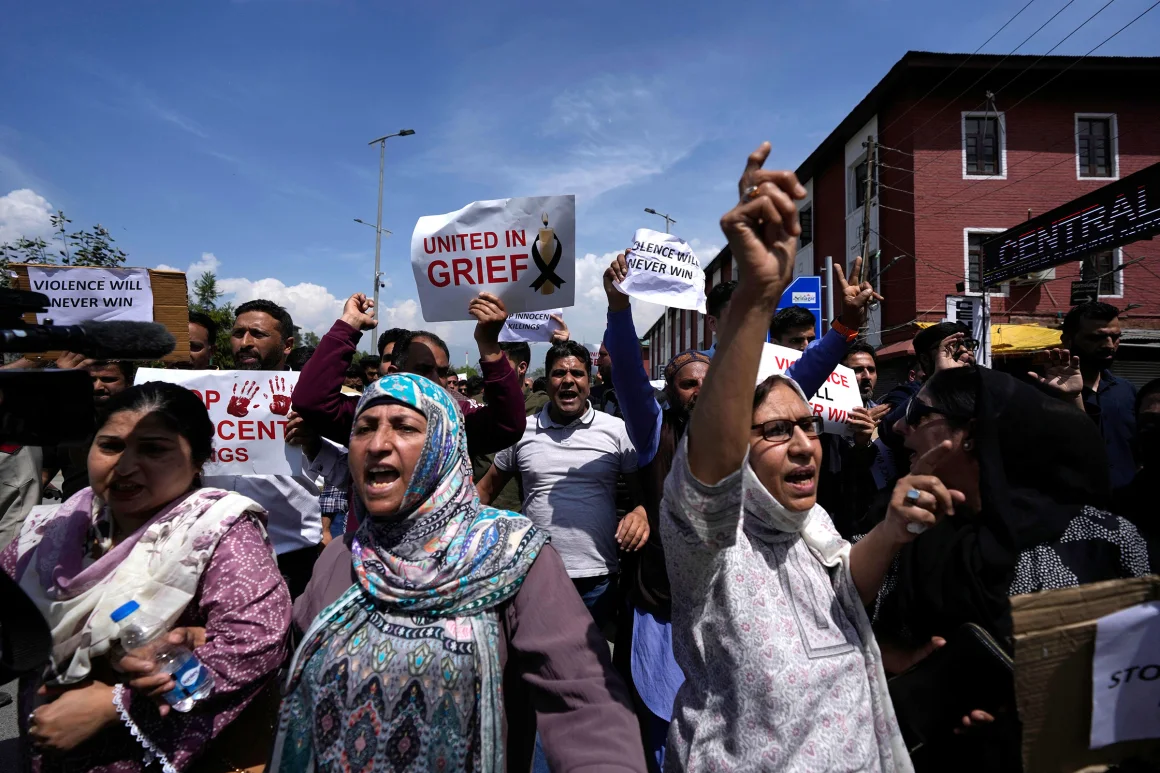
The Kashmir Tourist Attack That Shook the Subcontinent​ The Kashmir tourist attack has triggered one of the most significant crises in South Asia in recent years. As the region reels from the brutal massacre of 26 tourists, tensions between India and Pakistan have surged. The assault in Jammu and Kashmir not only devastated families but reignited a volatile conflict with global implications.   Pahalgam Massacre: What Happened? On Tuesday, the Kashmir tourist attack unfolded in the serene Baisaran Valley near Pahalgam, a popular destination in Indian-administered Kashmir. Heavily armed gunmen opened fire on groups of sightseers, killing 25 Indian citizens and one Nepali national. Survivors described the massacre as a nightmarish assault, leaving the region and the nation in deep mourning Photos of grieving relatives and bloodied meadows flooded social media, intensifying the emotional toll and sparking widespread outrage. According to eyewitness accounts, the attackers selectively fired on tourists and accused some of supporting Indian Prime Minister Narendra Modi before opening fire. Who Claimed Responsibility for the Kashmir Tourist Attack? The Resistance Front (TRF) — a relatively new militant outfit — claimed responsibility for the attack. Though unverified, the group’s statement framed the massacre as retaliation against “demographic change” in Kashmir due to increased settlement by non-locals. India swiftly linked TRF to Lashkar-e-Taiba, a banned terrorist organization notorious for the 2008 Mumbai attacks. Indian security forces have ramped up operations in the region, and three suspects — including two Pakistani nationals — were named by the Jammu and Kashmir police. India’s Response: Diplomatic Freeze and Threats of Retaliation Prime Minister Modi, during a fiery speech in Bihar, vowed to “track and punish every terrorist and their backers.” The Indian government has taken unprecedented steps, including: Downgrading diplomatic ties with Pakistan Expelling Pakistani military officials Suspending the Indus Water Treaty Shutting the Attari-Wagah border crossing Each move signaled a significant escalation in India’s foreign policy stance, drawing both domestic applause and international concern. Why Kashmir Matters: A Geopolitical Flashpoint Kashmir remains a deeply contentious region claimed by both India and Pakistan. Since the partition of British India in 1947, the territory has seen multiple wars and countless skirmishes. With its strategic location, natural resources, and emotional significance, Kashmir continues to be a focal point for conflict. In 2019, India revoked Article 370 of its constitution, stripping Jammu and Kashmir of its special autonomy — a move that intensified unrest. While the Modi government claims militancy has declined, sporadic attacks such as this latest massacre challenge that narrative. Impact on Local Communities and Tourism After the Kashmir Tourist Attack For local businesses in Kashmir, the massacre has been catastrophic. Tour operators report 80-90% cancellations during peak tourist season. “It’s a complete financial loss,” said Mohsin, a travel business owner. “If this continues, I might have to find another line of work.” Beyond the economic toll, the psychological impact on Kashmiris is immense. Protests erupted in Srinagar, with locals expressing solidarity with the victims. “Our presence here is a message — Kashmiris reject this violence,” said protestor Umar Nazir Tibetbaqan. Pakistan’s Reaction: Denials and Diplomatic Alarm Pakistan has categorically denied any involvement in the attack. However, the Indian government’s accusations and actions have left Islamabad in a defensive posture. Minister of Power Awais Leghari labeled the suspension of the Indus Treaty “an act of warfare.” A high-level security meeting was convened in Islamabad to assess the situation. While Pakistan maintains that TRF is an independent outfit, India continues to argue that groups like TRF operate with the backing of Pakistan’s intelligence services. What Might Happen Next? Risk of Military Retaliation Experts suggest that New Delhi might launch retaliatory strikes, mirroring its 2019 Balakot airstrikes following a similar attack on Indian troops. “There’s a high likelihood of a military response,” said Arzan Tarapore, a scholar from Stanford University. India’s military capabilities have significantly improved, giving it more confidence to act. However, Pakistan’s unstable political and economic landscape adds unpredictability to any confrontation. Global Implications and the Call for De-escalation International actors, including the United Nations, have urged restraint. But with both countries possessing nuclear weapons, the world watches with bated breath. Fahd Humayun, a political science professor, warned, “Unless third-party mediation emerges, the chance of uncontrolled escalation is dangerously high.” The Kashmir tourist attack has destabilized an already fragile region. The trauma of the massacre, combined with hardline rhetoric and retaliatory measures, has set the stage for possible conflict. While justice for the victims is essential, so too is the prevention of another war between two nuclear nations. The world can only hope that reason and diplomacy will prevail over vengeance and violence.

Read More

Israeli Gaza Medics Investigation Sparks Global Outcry

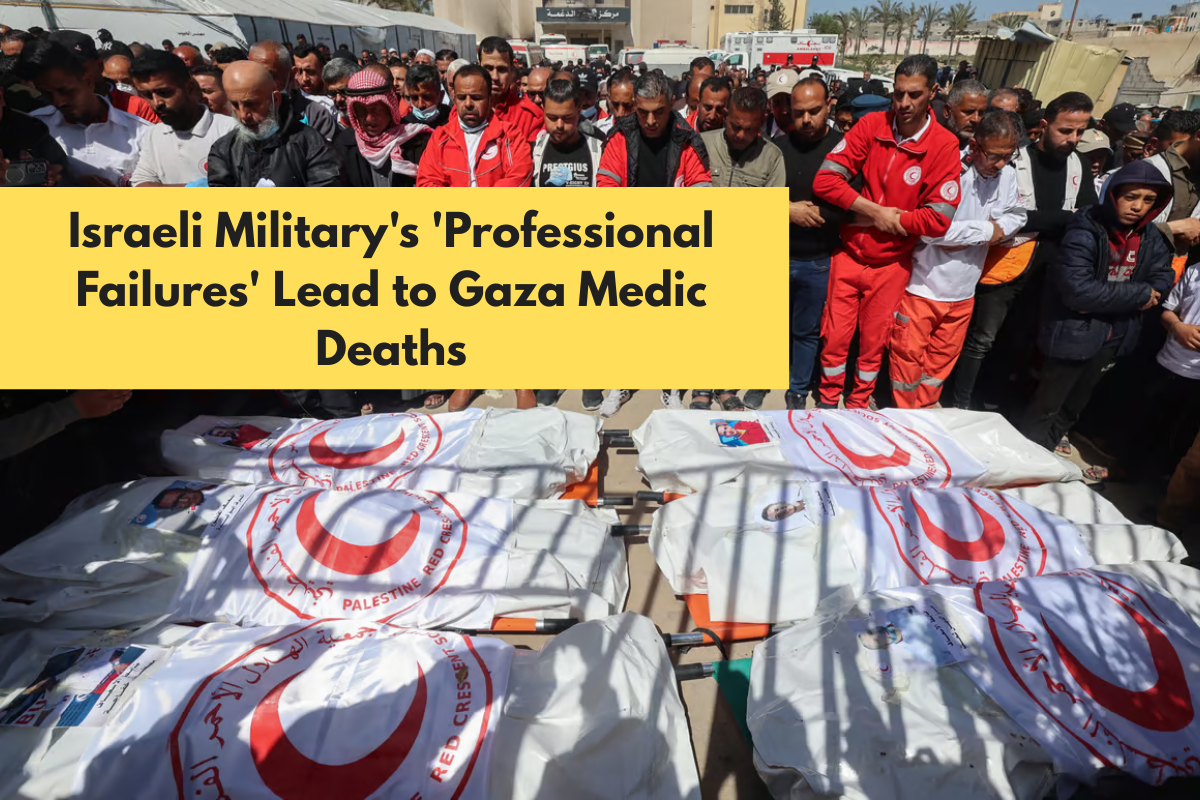
Israeli Gaza medics  On March 23, 2025, tragedy struck Gaza when Israeli military operations led to the deaths of 15 Palestinian medics and aid workers. An internal investigation by the Israel Defense Forces (IDF) later blamed the incident on a series of “professional failures.” Humanitarian organizations, including the Palestine Red Crescent Society (PRCS) and the United Nations, strongly criticized the findings. This article examines what happened, the conclusions of the military inquiry, and the global reaction.   The Incident: A Timeline of Events That evening, Israeli troops operating in Gaza fired on a convoy of ambulances and aid vehicles. The convoy carried PRCS members, civil defense workers, and a United Nations staffer. The IDF initially claimed the vehicles acted suspiciously, citing missing emergency signals and no headlights. However, video footage later contradicted this, clearly showing flashing lights and visible aid organization logos. ​The Guardian+1AP News+1AP News Israeli Military Investigation Findings The IDF’s investigation admitted several operational errors. Troops failed to follow orders, misidentified the convoy as hostile, and underreported the incident. As a result, military leadership enforced disciplinary measures. The 14th Brigade’s commanding officer received an official reprimand, while the deputy commander of the Golani Reconnaissance Battalion was dismissed. IFRC condemns the killing of eight Palestine Red Crescent medics in Gaza Despite acknowledging mistakes, the IDF claimed its soldiers reacted to what they believed was a tangible threat. Officials stated the troops did not engage in indiscriminate fire. The investigation pointed to a chain of errors but found no evidence of ethical or moral misconduct. Humanitarian Organizations’ Response Humanitarian organizations strongly criticized the Israeli military’s findings. The Palestine Red Crescent Society (PRCS) called the investigation a “fabricated” attempt to shift blame. They stressed that the convoy was clearly marked and posed no danger. The PRCS also noted contradictions in the IDF’s statements, especially regarding the visibility of emergency signals. The United Nations and other aid agencies demanded an independent international inquiry. They argued that the IDF’s internal probe lacked transparency and failed to ensure accountability. These organizations called for impartial investigations to uphold humanitarian law and protect medical workers in conflict zones. Postmortems of rescue workers killed in Gaza show ‘gunshots to head and torso’ International Humanitarian Law and the Protection of Medical Personnel Under international humanitarian law, medical personnel and facilities are granted special protection during armed conflicts. The Geneva Conventions explicitly prohibit attacks on medical units and require all parties to a conflict to respect and protect medical services. The killing of clearly marked medical personnel, as in the March 23 incident, raises serious concerns about violations of these laws   Calls for Accountability and Further Investigation In light of the incident and the subsequent investigation, there is a growing demand for accountability and further scrutiny. Humanitarian organizations are urging the international community to conduct an independent investigation to ascertain the facts and hold those responsible accountable. Such measures are deemed essential to prevent future violations and to uphold the principles of international humanitarian law. The March 23, 2025, incident in Gaza, resulting in the deaths of 15 Palestinian medics and aid workers, has highlighted significant concerns regarding the conduct of military operations in conflict zones and the protection of medical personnel. While the Israeli military’s internal investigation acknowledges ‘professional failures,’ the lack of accountability and transparency has led to widespread criticism and calls for independent inquiries. Ensuring the safety of medical workers and adherence to international humanitarian law remains a pressing issue that demands immediate and sustained attention from the global community. Read more  

Read More