

Hadera Shark Attack: Swimmer Missing in Rare Incident
China executes Japanese killer, fueling diplomatic tension and fear as xenophobic attacks raise concern among foreign communities.
It is a remarkable celestial body with diverse ecosystems, vast oceans, towering mountains, and a dynamic atmosphere.
China executes Japanese killer, fueling diplomatic tension and fear as xenophobic attacks raise concern among foreign communities.
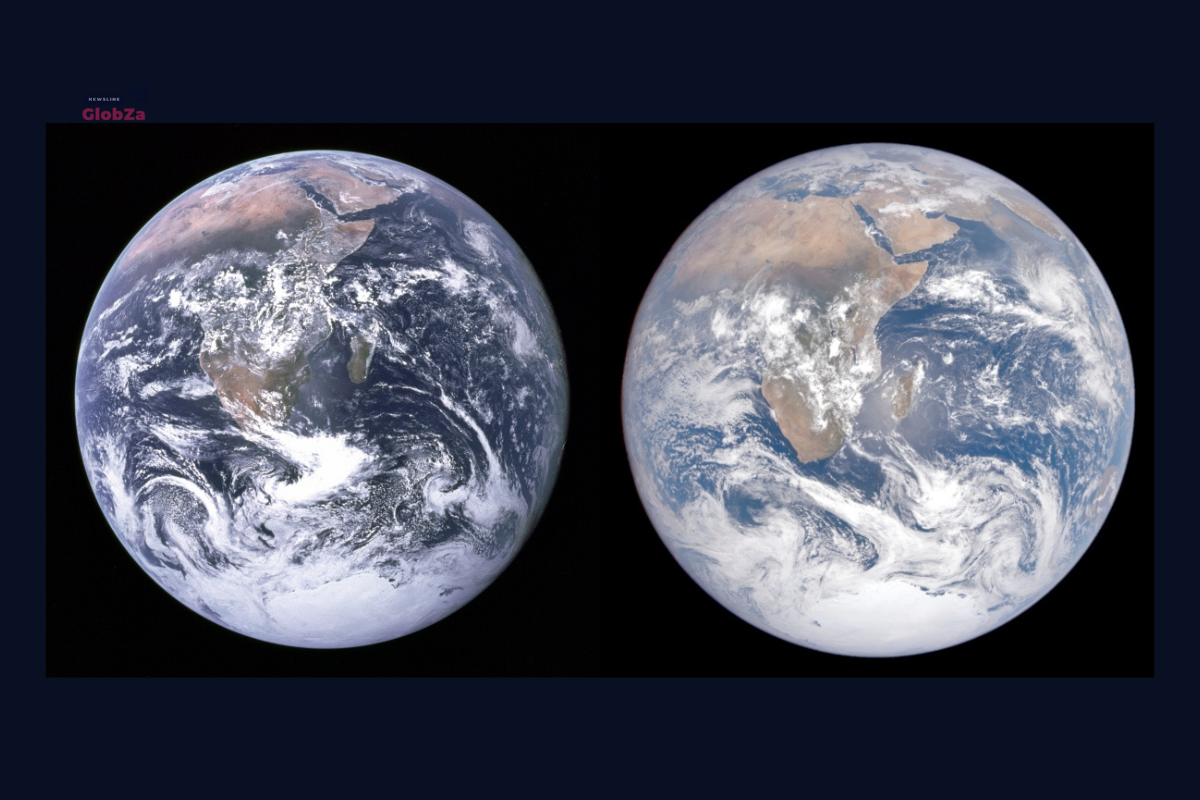
A Timeless Image: The Birth of the Blue Marble The Apollo 17 mission didn’t just close out the Moon landings. It gave humanity its first complete view of Earth fully illuminated by sunlight. Floating 29,000 kilometers away, astronauts Eugene Cernan, Ronald Evans, and Harrison Schmitt captured the now-iconic photo using a hand-held Hasselblad camera. Astronaut Schmitt reflected, “Right now, Earth looks like the most delicate shade of blue floating in space—truly fragile in appearance.” Today, thanks to satellite imagery, we can see how climate change from space has visibly transformed that same blue marble over the past 50 years. From Film to Satellite: How Earth Imaging Has Evolved In 1972, astronauts captured Earth manually. Today, satellites like NASA’s Earth Polychromatic Imaging Camera (EPIC) do it automatically — every 60 to 120 minutes. Operating across 10 spectral bands, these cameras provide detailed insights into the planet’s atmosphere, vegetation, and water systems. The shift from analog to hyperspectral technology has made tracking climate change from space more accurate than ever. Ice Loss in Polar Regions: A Visible Crisis One of the most striking differences between the original photo and current images is the noticeable retreat of polar ice. The Cryosphere in DeclineAntarctica is currently losing approximately 150 billion tons of ice annually. The Arctic is melting even faster — about 280 billion tons annually. Permafrost thaw and glacial melt contribute to rising sea levels and disrupted ocean currents. These transformations are clearly visible in satellite images.many of which are publicly available through the NASA Earth Observatory.” Vegetation Loss: From Green to Brown Satellite comparisons show vast changes in vegetation, especially in the Amazon and African Sahel. Deserts Expanding, Forests ShrinkingThe Sahara Desert continues to spread southward. The Amazon Rainforest, once lush and dense, now shows visible signs of deforestation and fire damage. NASA confirms declining tree cover and biodiversity in equatorial zones. What was once green from space is now turning brown. Urbanization: Cities Lighting Up the Night While the Blue Marble shows Earth during the day, nighttime satellite images from the VIIRS system reveal something new — rapid urban sprawl. A World That GlowsCities like New Delhi, Lagos, and São Paulo have tripled in area. Rural areas now sparkle with new infrastructure and dense populations. From orbit, the human footprint is increasingly bright and unmistakable. Climate Patterns and Clouds: Weather in Flux Satellites also show changes in cloud structures, a key indicator of climate behavior. Signs of a Changing SkyIncreased storm activity, especially in tropical regions. Higher cloud heights linked to warming. Jet stream shifts causing unusual droughts and cold waves. These changes are no longer hidden — they are visible through real-time space imagery. Oceans from Above: A Change in Color Ocean color reflects health. Chlorophyll levels — visible from space — help gauge the vitality of marine ecosystems. Oceans Losing LifePhytoplankton levels are dropping in some equatorial zones. Ocean warming and acidification are threatening marine biodiversity. Coral bleaching, including in the Great Barrier Reef, can now be seen from space. These are not abstract data points — they are visible environmental shifts. The Atmospheric Lens: Aerosols and Ozone Modern technology allows satellites to detect atmospheric changes invisible in 1972.Pollution in the Air High aerosol concentrations over South Asia, China, and parts of Africa indicate pollution and biomass burning.Though ozone levels are improving due to the Montreal Protocol, depletion persists over Antarctica.The atmosphere appears hazier — visibly altered by human activity. Natural Disasters from Orbit: Fires and Floods EPIC and other satellites monitor real-time disasters, offering a clear view of their growing intensity. Disasters on DisplayMassive wildfires in Australia, California, and the Amazon are visible from orbit. Floodplains in South Asia have expanded, leaving lasting marks on landscapes. Heatwaves create distinct patterns in surface temperatures and visibly impact vegetation health, often leading to scorched landscapes and reduced plant vitality. These aren’t isolated events. They contribute to a larger climate feedback loop, where rising temperatures trigger environmental changes that, in turn, intensify global warming. NASA’s EPIC camera, positioned a million miles from Earth, captures stunning full-disk images of our planet. It helps scientists monitor climate, weather, and pollution—while reminding us of Earth’s beauty and fragility.NASA’s DSCOVR satellite orbits at Lagrange Point 1, about 1 million miles from Earth. From there, EPIC delivers uninterrupted images of the planet’s sunlit side. A New Way to See HomeHigh-res images every 15 minutes Data used for climate models, storm prediction, and even global movement tracking A powerful tool in understanding climate change from space Conclusion: The Blue Marble, Then and Now The original Blue Marble showed us a whole, beautiful planet. Now, satellite imagery reveals a planet in flux: Ice caps are shrinking Deserts are growing Forests are disappearing Seas are rising Cities are sprawling The atmosphere is changing These shifts are no longer theoretical. We can see climate change from space — and it’s a clear call to action. As astronaut Cernan once said, “It’s out there all by itself.” Just like Earth — alone, and clearly calling for urgent change. China’s Ghost Network: The Truth Behind the First 10G Internet

Pope Francis’ final days showed his deep faith as he defied doctors’ advice to join Easter crowds, offering one last public blessing.

In Canadian Politics 2025, fossil fuels are back in favor despite climate goals. Learn why political leaders are shifting energy priorities and what it means for Canada’s future.

Scientists are studying Santorini’s volcanic risk to understand if a major eruption could endanger this iconic Greek island paradise.

Life on Exoplanet K2-18b: Breakthrough Led by Indian Scientist A Groundbreaking Discovery in the Search for Alien Life The confirmed detection of life on exoplanet K2-18b may soon shift our understanding of the cosmos. Led by Indian-origin astrophysicist Dr. Nikku Madhusudhan from the University of Cambridge, a scientific team used NASA’s James Webb Space Telescope to detect potential biosignatures on a planet more than 120 light-years from Earth. How NASA’s Webb Telescope Detected Life-Related Compounds The James Webb Space Telescope (JWST) uses its infrared instruments to analyze starlight filtered through distant planetary atmospheres. This technique allows scientists to identify the molecular makeup of those atmospheres — including gases like methane (CH₄), carbon dioxide (CO₂), and possibly dimethyl sulfide (DMS), all of which were observed in exoplanet K2-18b’s atmosphere. https://youtu.be/j6a-2wZc-UM?si=ib9S30KLL2vaDMJd What Is Exoplanet K2-18b and Why Is It Special? Orbiting the red dwarf star K2-18 in the Leo constellation, K2-18b resides in the habitable zone — where temperatures may permit liquid water. This planet is categorized as a sub-Neptune, approximately 2.6 times the radius of Earth and 8.6 times its mass, possibly harboring hydrogen-rich atmospheres and global oceans, favorable for microbial life. Top exoplanets found in the habitable zone Hycean Worlds: A New Model for Habitable Planets Dr. Madhusudhan introduced the Hycean world model — planets with thick hydrogen atmospheres and liquid oceans — broadening the scope of habitability beyond rocky Earth-like planets. Hydrogen-dominant atmosphere High-pressure liquid oceans Stable climate for microbial life Biosignature-friendly environments What are Hycean planets? Learn more Chemical Signs Supporting Life on Exoplanet K2-18b Atmospheric Composition Hints at Life-Friendly Conditions JWST’s NIRISS and NIRSpec instruments revealed: Presence of Methane and Carbon Dioxide: Strong indicators of organic or biogeochemical processes. Absence of Ammonia: Matches predictions for Hycean environments. Possible Dimethyl Sulfide (DMS): A compound produced on Earth solely by biological organisms. These findings support the idea that life on exoplanet K2-18b may exist, especially in its hypothetical ocean layer. Who Is Dr. Nikku Madhusudhan? Dr. Nikku Madhusudhan is a Cambridge-based astrophysicist who has reshaped the search for extraterrestrial life. An alumnus of IIT-BHU and MIT, his work emphasizes extending life detection models to new planet types. Institute of Astronomy – University of Cambridge Former roles at Yale, Princeton, and MIT 2019 MERAC Prize in Theoretical Astrophysics Developed Hycean world framework Explore more discoveries by Indian scientists https://youtu.be/0whpla7sDwM?si=WUh8xM-XlIOLGh-F Is This Definitive Proof of Life on Exoplanet K2-18b? While the signs are promising, NASA emphasizes that further analysis is necessary. The next cycle of Webb observations aims to verify the presence of DMS and enhance atmospheric models. “This is the strongest evidence yet there is possibly life out there,” said Dr. Madhusudhan. “We can realistically confirm this signal within one to two years.” Read about the James Webb Telescope’s previous finds What’s Next? Ariel Mission and Beyond The European Space Agency (ESA) is preparing the Ariel mission, launching in 2029, to study exoplanet atmospheres, including K2-18b. This mission will validate current findings and expand the inventory of planets with possible biosignatures. ESA – Ariel Mission Overview Future Missions to Strengthen the Search Multi-Step Strategy Ahead: Additional JWST observations Ground-based telescope support Atmospheric modeling upgrades Enhanced spectral libraries for biosignatures The potential life on exoplanet K2-18b marks an inflection point in space science. With Indian scientist Dr. Madhusudhan at the helm, this study is not just a personal triumph but a global scientific milestone. As next-gen telescopes and missions explore deeper into space, the idea that life exists beyond Earth inches closer to fact than fiction.
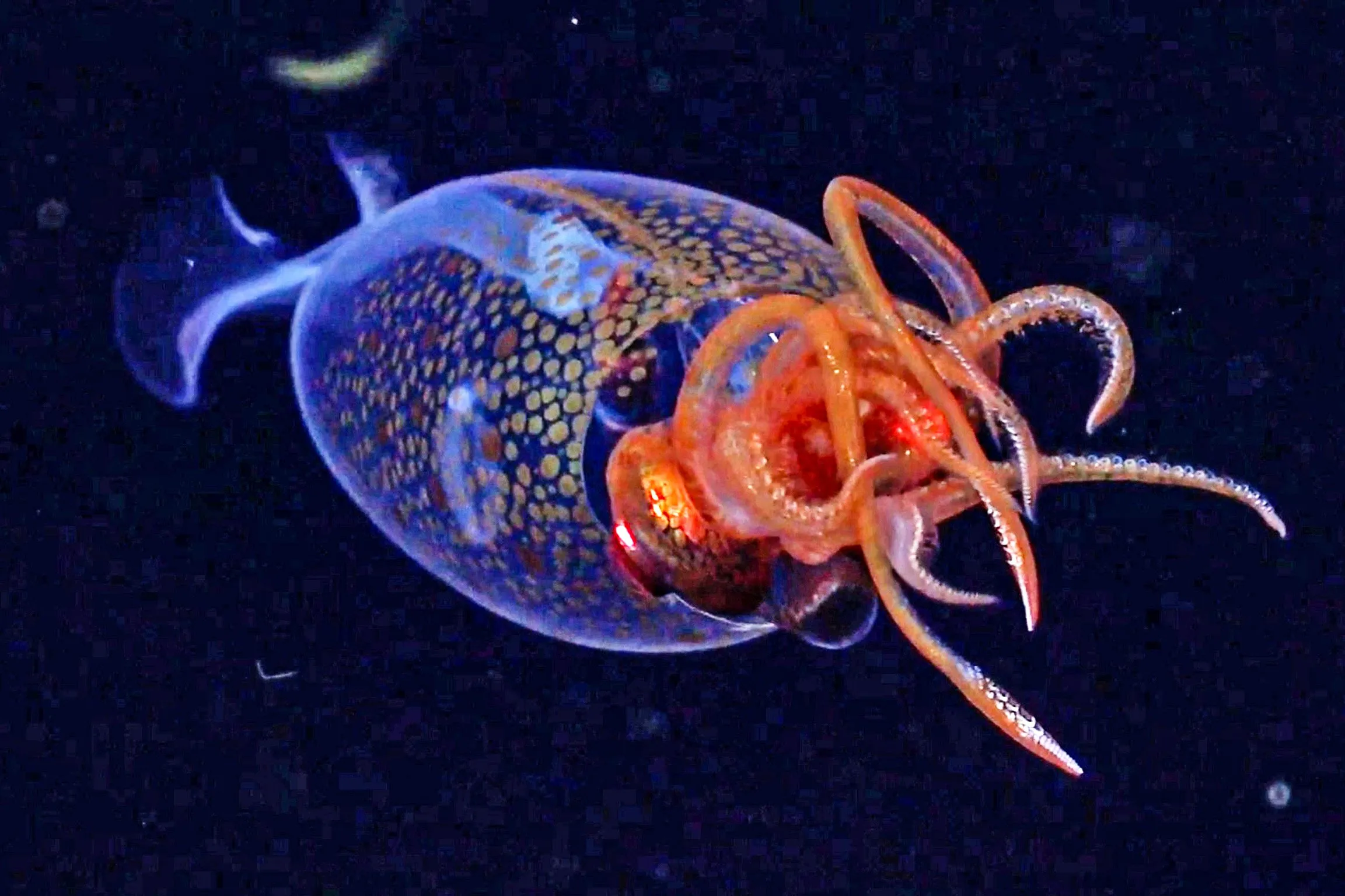
Into the Void – A Breakthrough in Deep-Sea Discovery In a historic colossal squid discovery, marine researchers have captured the first-ever in-situ footage of this elusive deep-sea giant in its natural habitat. Aboard the Schmidt Ocean Institute’s vessel, Falkor (too), scientists documented the momentous event. For centuries, the colossal squid has fueled myths of sea monsters, as it was only known through washed-up carcasses and sailor tales. Now, witnessing it alive marks a major breakthrough in understanding this mysterious creature. The inquire about group captured the film amid a 35-day undertaking close the South Sandwich Islands in the Southern Sea. These farther volcanic islands posture challenges for investigation, which made them perfect for deep-sea investigate. Whereas the group anticipated unused discoveries, they didn’t envision such a momentous discovery. The film was taken amid a 35-day undertaking close the South Sandwich Islands in the Southern Sea. These inaccessible volcanic islands are troublesome to investigate, making them culminate for deep-sea investigate. Whereas the group trusted to discover something unused, they did not anticipate a minute this monumental. Expedition Driven by College of Essex in March ✅Adolescent shot utilizing a deep-sea ROV ✅Area: South Atlantic, close South Sandwich Islands✅Revelation marks 100 a long time since species’ to begin with identification This breakthrough gives analysts a uncommon see at the squid’s behavior and living space. It moreover highlights how much of the profound ocean remains unexplored. A Uncommon See of the Colossal Squid This colossal squid discovery has transformed how researchers view deep-sea life.At about 600 meters (1,968 feet) underneath the surface, the group spotted a adolescent colossal squid. The animal measured as it were 30 centimeters, showed up nearly straightforward, and shined delicately in the dull waters. Until presently, researchers had watched such characteristics as it were in dead squids or by means of sonar scans. Although this one was little, specialists accept grown-ups can develop up to 7 meters (23 feet) and weigh more than 500 kilograms (1,100 pounds), making them the biggest spineless creatures on Earth. “To at long last see it in its common living space is like observing a myth ended up reality.” – Dr. Michelle Taylor, Lead Scientist ✅Shot utilizing a deep-sea ROV ✅Driven by the College of Essex in March ✅Area: Close South Sandwich Islands ✅Marks 100 a long time since the squid’s to begin with identification The Colossal Squid’s Special Anatomy The colossal squid varies from the mammoth squid by one frightening characteristic: pivoting snares at the center of its eight arms. These snares offer assistance the squid get prey with momentous constrain. Combined with a sharp nose and effective body, it gets to be a solid deep-sea predator. Although the adolescent showed up sensitive, grown-up colossal squids create strong mantles and have gigantic eyes—the biggest in the creature kingdom. These highlights offer assistance them chase and survive in the cruel, deep-sea environment. “It’s lowering to know these animals exist without indeed being mindful of us.” – Dr. Kat Bolstad ✅ Squids have snares on their limbs ✅Adolescents are straightforward; grown-ups are not ✅Life cycle remains ineffectively understood ✅Likely trap predators Why This Colossal Squid Discovery Matters Before presently, most revelations of colossal squids came from remains in predator stomachs. These parts never uncovered how the squid looked or moved when lively. That restricted our understanding of their behavior and part in the ecosystem. This footage marks a groundbreaking colossal squid discovery, offering scientists a rare behavioral glimpse.This film changes everything. It appears a solid, free-swimming adolescent in its normal world. Researchers can presently watch how it moves, reacts to light, and interatomic with its environment. These experiences might open answers almost its development, behavior, and survival strategies. Living Myths – The Profound Still Holds Secrets Even after decades of sea investigation, the profound proceeds to shock analysts. The film of the colossal squid is one such astonish. Fair weeks prior, the same group captured the to begin with video of a frosty glass squid—an ethereal animal that takes after a square of ice floating through the dim ocean. These revelations emphasize how small we know around the sea. Over 80% of it remains unexplored. Each unused revelation—like these deep-sea squids—adds to our information and demonstrates that numerous sea riddles are still holding up to be solved. “These exceptional minutes remind us the sea is brimming with insider facts however to be solved.” – Dr. Jyotika Virmani, Schmidt Sea Institute ✅First-ever cold glass squid video ✅Sea is still 80% unexplored ✅ Legends like the Kraken may reflect genuine creatures ✅Colossal squid once in a while seen alive Final Contemplations – What Lies Beneath This remarkable colossal squid discovery is a powerful reminder of the mysteries still lurking beneath the ocean’s surface. For centuries, tales of monstrous sea creatures echoed through sailors’ stories, with the colossal squid dismissed as mere myth. Today, it stands as a real, living creature—captured on camera in its natural habitat. This revelation goes beyond scientific curiosity; it underscores how much of our own planet remains unexplored. In an age dominated by satellites and digital technology, the deep sea continues to be a wild frontier. Discoveries like this one ignite curiosity and inspire future exploration. To learn more about other fascinating marine life encounters, check out our article on deep sea exploration breakthroughs. https://youtu.be/k_–y3XatAY?feature=shared

Babanango Game Reserve Rewilding: From Hush to Safari and the Return of the Big Five Babanango Game Reserve Rewilding, located in KwaZulu-Natal, represents a bold conservation effort that has transformed a once-silent valley into a vibrant sanctuary for Africa’s iconic wildlife. This rewilding project has successfully reintroduced lions, elephants, rhinos, leopards, and buffalos to their ancestral lands, revitalizing the region’s biodiversity. At the heart of this initiative is the reintroduction of the Big Five—lion, elephant, rhino, buffalo, and leopard—reclaiming a rich ecosystem that had been lost for centuries. Moreover, the project doesn’t simply restore wildlife; it rekindles social pride, reestablishes ecological balance, and ensures a sustainable future for local communities. “We found a scene that was amazingly curious – wild, untainted, and full of potential.” – Hellmuth Weisser Key Conservation Highlights of Babanango Game Reserve Rewilding 20,000-hectare reserve rewilded Over 5,000 wild creatures now thriving Big Five reintroduced after 150+ years As a result of this comprehensive approach, both nature and human dignity are being restored. Learn more about the rewilding process at the African Habitat Conservancy or explore the IUCN guide on rewilding in Africa. Zulu-Led Success: Community-Driven Babanango Game Reserve Rewilding The success of this rewilding initiative extends beyond ecological recovery—it’s also deeply cultural. Local Zulu communities have been at the forefront, playing an active role not just as participants but as co-owners and visionaries. Through community trusts like Emcakwini, Esibongweni, and Kwa Ngono, ancestral lands were leased to the conservation effort, creating an inclusive model for shared prosperity. These trusts are now stakeholders in both the land and the tourism revenue it generates. This empowerment is about more than economic benefits; it symbolizes a return of dignity, autonomy, and cultural heritage to communities that have long been marginalized. “It’s not just about animals returning, but about communities reclaiming their heritage.” – Thina Nyathi Cultural Impact Highlights of the Babanango Rewilding Effort Community trusts co-own land 25% of park profits go to local trusts Dozens of long-term jobs created Overcoming Challenges in Babanango Game Reserve Wildlife Rewilding Reintroducing apex predators and large herbivores to the reserve was a complex process that required careful planning and precision. Initially, the team constructed 81 kilometers of fencing to ensure safety and coexistence. In addition, animals were held in bomas (temporary enclosures) to help them acclimate before their release. Naturally, some resistance arose. Local ranchers expressed concerns about predator threats to livestock. As a result, project leaders engaged in open dialogue and community outreach to address these fears and foster trust. By mid-2023, the final member of the Big Five—elephants—arrived, marking a major milestone in the project’s success and establishing Babanango as a leading example in conservation. “Everything we had to do to get to that point had been done correctly.” – Chris Galliers Wildlife Management Successes at Babanango Game Reserve 81 km perimeter fence constructed All rhinos dehorned for anti-poaching protection Predators monitored using GPS tracking Expanding Impact: How Babanango Game Reserve Rewilding Empowers Communities Through the African Habitat Conservancy Foundation, the Babanango initiative ensures the benefits extend far beyond the reserve. Surrounding towns have experienced transformative changes, including improvements in infrastructure, clean water access, education, and employment. For example, 17 solar-powered boreholes have been introduced, providing secure water to communities that previously lacked reliable access. Additionally, vocational training in hospitality, mechanics, and conservation prepares local people for careers in South Africa’s rapidly growing eco-tourism industry. The reserve also supports cultural conservation through initiatives in Zulu beadwork, ceramics, and environmental education. These efforts not only provide income but also ensure the transmission of traditional knowledge to younger generations. Ongoing environmental projects focus on removing invasive plant species, restoring native vegetation, and improving soil health to further boost biodiversity. “It’s about teaching someone to fish, not just giving them the fish.” – Thina Nyathi Community Empowerment Achievements of Babanango Rewilding 17 solar-powered boreholes installed Social and vocational programs launched Local water streams and vegetation restored Conclusion: Babanango Game Reserve Rewilding as a Conservation Blueprint Babanango Game Reserve Rewilding is more than just a success in ecological restoration—it’s a powerful symbol of resilience, cooperation, and hope. By combining environmental recovery with social equity, it offers a blueprint for the future of African conservation. The valley that once echoed silence now thrives with life, proving that when people and nature rise together, revival is not only possible, but inevitable. Thanks to this remarkable project, Babanango has become a thriving hub of eco-tourism and biodiversity. https://youtu.be/3DGfOydwsqM?si=6huhfDxQjHqQjMOK
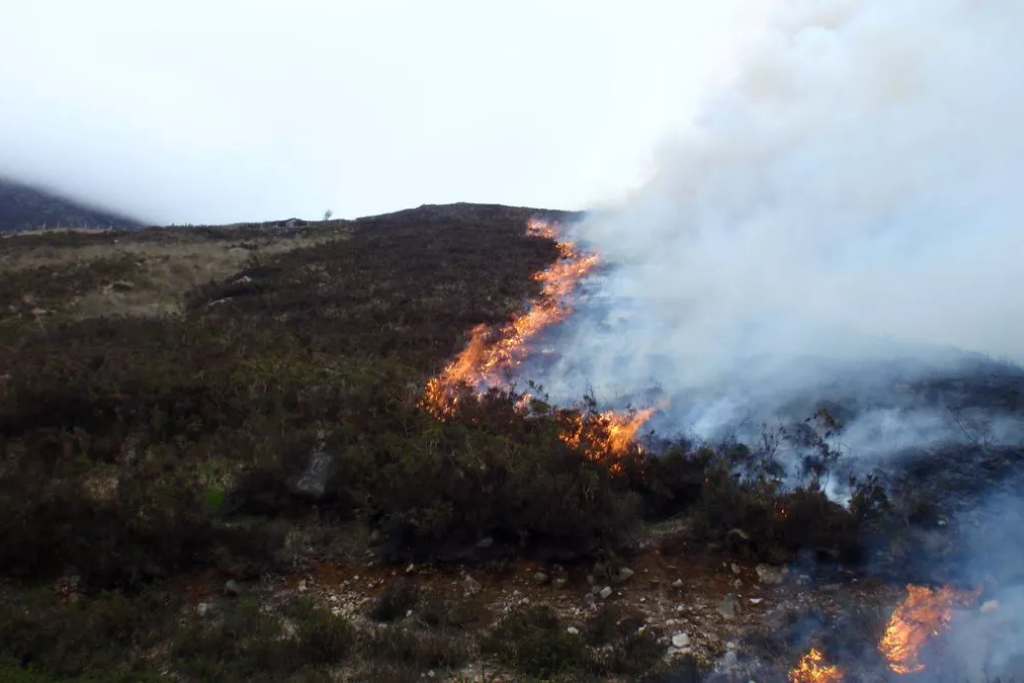
The Obliterating Affect of Fierce blazes on Mourne Wildlife The later surge of fierce blazes in the Mourne Mountains has wreaked destruction on the region’s sensitive and one of a kind biodiversity. Since 3 April, Northern Ireland has experienced about 300 fierce blazes, with numerous accepted to have been intentioned set. These fires have had a obliterating affect on the neighborhood biological system, pulverizing environments and undermining the survival of different species. Eminently, the fires have caused noteworthy hurt to neighborhood natural life, counting butterflies, feathered creatures, creepy crawlies, and lizards—species that are necessarily to the mountain’s delicate environmental adjust. The quick spread of the fires has cleared out nearby protectionists and natural bunches profoundly concerned, as numerous of these species are as of now defenseless and depend on the Mourne Mountains for survival. With basic environments presently decreased or totally devastated, there are fears of long-term biological harm that seem take a long time to recuperate from. The ponder nature of numerous of the fires has encourage fueled calls for more grounded requirement and more prominent assurance of Northern Ireland’s characteristic heritage. James Fisher, lead officer for the National Believe, has issued a stark caution that a few species may never return to the Mourne Mountains taking after the later rapidly spreading fires. Concurring to Fisher, the fires have demolished crucial territories that are domestic to a few uncommon and imperiled species, raising concerns almost the long-term affect on the region’s biodiversity. The devastation of these territories may have irreversible impacts on the neighborhood biological system, debilitating the survival of species that depend on these zones for shield, nourishment, and breeding grounds. Fisher’s comments reflect developing alert among protectionists, who fear that the harm caused by the fires may not be effortlessly repaired, and a few species may be misplaced until the end of time. The interesting biodiversity of the Mourne Mountains, as of now defenseless due to climate alter and other natural weights, presently faces an extra, destroying challenge. The long-term results of these fires might change the biological scene of the locale for eras to come. “Some species may not return after the rapidly spreading fires.” – James Fisher, Lead Officer, National Trust Key Points: 300 fierce blazes in Northern Ireland since April 3 Rare species like Grayling butterflies and Little Heath butterflies hit hardest Widespread environment pulverization How Rapidly spreading fires Disturb Complex Ecosystems The Mourne Mountains are a crucial biological fortress, containing over 50% of Northern Ireland’s upland heath habitat—a uncommon and delicate environment that bolsters a differing extend of species. Among its eminent occupants are the viviparous reptile, the as it were local reptile species in Ireland, as well as ground-nesting fowls such as skylarks and knoll pipits. These species are profoundly subordinate on the interesting mosaic of vegetation found in the locale, counting heather, gorse, and grasses, which give basic nourishment sources, settling grounds, and shield. In any case, the expanding recurrence and escalated of fierce blazes are quickly disintegrating this fragile biological system. The repeating bursts are not as it were crushing vegetation but too disturbing breeding cycles and uprooting natural life. Specialists caution that without prompt intercession and long-term preservation techniques, the harm seem gotten to be permanent—pushing helpless species toward nearby termination and altogether changing the character of one of Northern Ireland’s most notorious landscapes. In 2021, a major fierce blaze activated a emotional change in the plant life of the Mourne Mountains, stamping a turning point for the region’s biological system. The seriously warm and broad pulverization cleared the way for purple field grass to overwhelm the scene, whereas local heather—crucial to the upland heathland habitat—failed to recover. This biological move has successfully changed over huge segments of the region from upland heathland to meadow or corrosive meadow, a alter that specialists caution may be irreversible. The misfortune of heather has significant results for biodiversity, as it is a cornerstone species in this environment, supporting a wide assortment of creepy crawlies, feathered creatures, and reptiles. With its decay, the complicated web of life that once flourished in the heathland is starting to unwind. This vegetation alter not as it were modifies the visual character of the Mournes but moreover essentially debilitates the ecosystem’s versatility to future climate and fire-related stresses. “It truly changed the entire community from upland heathland to upland meadow or corrosive meadow.” – James Fisher, Lead Officer, National Trust Key Points: Over 50% of Northern Ireland’s upland heath territory is in the Mournes Loss of heather and other imperative plants Shift in plant life disturbs nourishment sources for nearby natural life The Vulnerability of Ground-Nesting Birds Ground-nesting birds like skylarks and meadow pipits are particularly vulnerable to the devastation caused by the recent wildfires in the Mourne Mountains. These species depend heavily on the region’s low-lying vegetation for both breeding and foraging. However, with large swathes of land scorched and stripped of plant cover, many birds have already lost their nests and eggs—interrupting critical breeding cycles during a pivotal time of year. Conservationist Andy Carden, who regularly conducts bird surveys in the area, has voiced serious concerns about the long-term impacts. “We’re not just looking at one bad season,” he warns. “We could be witnessing the start of a slow disappearance of these species from the region if their habitat doesn’t recover.” The repeated destruction of nesting grounds threatens to cause a steady decline in local bird populations, potentially leading to a broader ecological imbalance in this already fragile upland environment. Without a healthy insect population and intact ground cover, migratory birds arriving from Africa will find few suitable places to nest in the Mourne Mountains. This fire season, already one of the most destructive in recent memory, poses a severe threat to the survival of these birds. The fires have disrupted essential ecological processes, wiping out the insects that serve as a primary food source and leaving the soil barren and inhospitable for nesting. One of the hardest-hit…
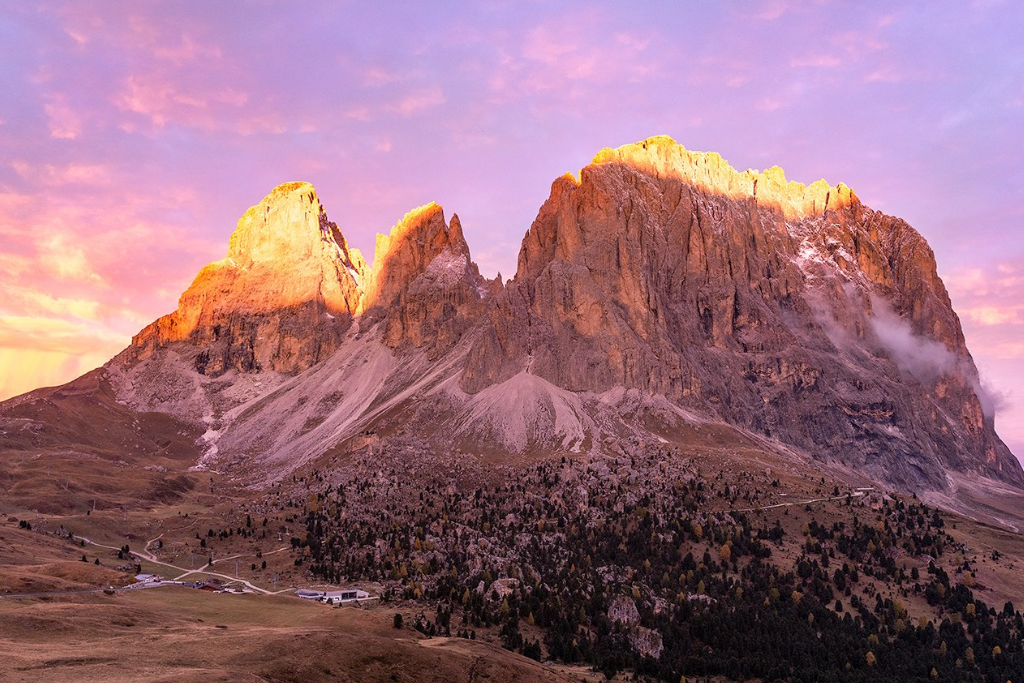
Where the Mountains Glow: The Tale of Enrosadira Each daybreak and sunset in the Italian Dolomites feels like stepping into a living fable. As the sun crests the horizon or slips behind the jagged peaks, its radiant light brushes the rugged limestone summits, igniting them in a symphony of pinks, fiery oranges, and deep crimson reds. This daily transformation—called enrosadira, a Ladin word meaning “turning pink”—isn’t just a visual marvel. It’s a moment suspended in time, where the landscape glows as if lit from within, wrapped in the hush of ancient myth and mountain lore. For those who witness it, the scene feels almost sacred. The sharp edges of the cliffs soften, the sky seems to hold its breath, and the colors dance in quiet harmony with the soul of the land. In that brief, enchanted window, the Dolomites become more than mountains—they become storytellers, whispering tales of timeless beauty and wonder in the language of light. “It’s as if the mountains are exhaling a secret in color before sleeping,” — Elena Marcella, mountain lodge owner in Val di Fassa. For a few enchanted minutes, the sharp, rugged cliffs seem to soften into a dreamscape—as if the Alps themselves are drawing a long, quiet breath at the fragile edge of night and day. Shadows stretch like silk across the valleys, and the shifting hues of pink and gold move like brushstrokes across the stone, wrapping the world in a charmed hush. Locals pause. Travelers fall silent, caught in the moment. Cameras rise, eager to capture the magic, yet always fall just short—because what unfolds is more than a sight. It’s a daily rite of wonder, where nature, legend, and light come together in a fleeting, spellbinding harmony that lives best in memory, not in pixels. Legends in the Limestone: A Rose Cultivate Misplaced to Time The science of enrosadira is dazzling—sunlight refracting off dolomite minerals to make a sparkling magnum creation over the peaks. But the legend? That’s where the mountains truly come alive. In the heart of Ladin old stories, the story talks of Ruler Laurin, a pitiful mythical person who ruled a wonderful rose cultivate covered up in the tall Dolomites. When he misplaced his adored girl, he reviled the cultivate in his melancholy, vowing it would never be seen again—neither by day nor night. However in his anguish, he overlooked the in-between: day break and sunset. And so, each morning and evening, the mountains burst with the memory of those charmed roses—an interminable resound of excellence, misfortune, and enchantment painted over the crests. “The mountains are storytellers – they talk in colors, in wind, in legends passed through generations,” — Nicole Dorigo, Alta Badia neighborhood. According to nearby fables, the wonder began with a heartbroken elf king who once ruled an enchanted rose garden high in the Dolomites. After losing his beloved daughter, he cast the garden into eternal shadow, hoping to bury his sorrow deep beneath the peaks. But in his despair, he forgot about the twilight hours—those quiet in-between moments when light still manages to slip through the cracks. And so, each dawn and dusk, his hidden roses bloom once more, blazing briefly to life and setting the mountains alight in hues of memory and mourning. It’s said that enrosadira is not just light on stone, but love that refused to be forgotten. Behind the Redden: Science Underneath the Spell The Dolomites aren’t fair magical—they’re topographical magnum opuses formed by time and tectonics. Not at all like most mountain ranges shaped of limestone, these crests are composed fundamentally of dolomite, a uncommon carbonate shake wealthy in magnesium. Once antiquated coral reefs lying underneath a primordial ocean, the Dolomites were pushed skyward over millions of a long time, etched by icy masses, wind, and rain into the spiked towers we see today. Their special composition not as it were characterizes their sensational shape but too gives rise to the captivating phenomenon of enrosadira. As the sun rises or sets, light refracts off the dolomite’s mineral-rich surface, coloring the mountains in splendid shades of pink, orange, and ruddy. It’s a day by day suggestion that these old stones, once buried underneath oceans, still hold the enchantment of their origins—etched in light and time. “Millions of a long time back, angle and coral formed these crests. Presently, they shape our sunsets,” — Andrea Milani, mountain guide. It’s this exceptionally mineral composition that gives rise to enrosadira—dolomite reflects and refracts daylight in a unique and enchanting way, setting the mountains ablaze with breathtaking hues during dawn and dusk. Unlike ordinary limestone, dolomite’s higher magnesium content and crystalline structure allow it to catch the light just right, transforming craggy peaks into fiery beacons. It’s nature’s own alchemy: stone, light, and time blending together in a daily ritual of living color. In those fleeting moments, the mountains don’t just glow—they remember. They echo with ancient oceans, old legends, and the unspoken magic of a world still deeply wild. Ski the Blush: Where Powder Meets Pink Skies Domestic to the sprawling Dolomiti Superski—one of the world’s biggest interconnected ski networks—this elevated wonderland changes into more than fair a winter play area. By day, it’s lively with the excite of skiing over unending fine trails, weaving through snow-draped timberlands and past solidified lakes. But as sunshine starts to slip absent, something shifts. The slants drop noiseless, the murmur of ski lifts moderates, and the final brilliant beams start to extend over the spiked horizon. At that point, nearly as if on prompt, the mountains light. Their towering faces become flushed with delicate pinks and red hot reds, catching fire in the wonder of enrosadira. In that minute, skiers ended up onlookers, looking up at the gleaming cliffs as if observing nature take its last bow for the day. With the sun dipping behind the jagged skyline, the landscape transforms into an open-air theatre for enrosadira. Skiers pause mid-descent, lift lines stall, and conversations soften as…