
Outkast Honored, Oasis Snubbed in Rock Hall Debate

A New Chapter in Rock Legacy The Rock & Roll Hall of Fame Outkast Oasis controversy has reignited age-old debates about what truly defines “rock and roll.” With Outkast receiving the prestigious honor and Oasis left overlooked, questions about legacy, innovation, and cultural influence are once again at the forefront. Moreover, as music evolves beyond traditional boundaries, so too must the institutions tasked with preserving its history. Learn about the Hall of Fame’s evolving criteria at RockHall.com This year’s choices serve as a cultural milestone, symbolizing how rock’s spirit is no longer confined to guitars and leather jackets but embraces innovation across genres. Outkast’s Induction: Redefining Rock Excellence Outkast’s induction sends a powerful message: innovation is the new rebellion. From their early days in Atlanta to their Grammy-winning album Speakerboxxx/The Love Below, André 3000 and Big Boi shattered norms. They proved that musical genius transcends genre labels. Explore Outkast’s groundbreaking career timeline on Billboard.com Consequently, their recognition by the Hall highlights the organization’s evolving understanding of what constitutes influence and artistry in rock’s broader culture. Oasis: Britpop Legends Left in the Cold On the other hand, Oasis’s omission left many fans outraged. Known for massive hits like Wonderwall, Champagne Supernova, and Live Forever, the Gallagher brothers became voices of a generation disillusioned yet defiantly hopeful. Read Oasis’ musical impact study on NME.com Despite commercial success and critical acclaim, their absence hints at a bias favoring musical evolution over traditional success. Nevertheless, Oasis’s influence on Britpop and the broader global rock scene remains undeniable. Shifting Standards: What the Hall of Fame Values Now Traditionally, the Rock & Roll Hall of Fame prioritized bands that embodied the “sex, drugs, and rock & roll” lifestyle. However, in recent years, the definition of “rock” has expanded dramatically to include soul, hip-hop, pop, and alternative genres. Therefore, inductees like Outkast illustrate how the Hall increasingly values cultural impact, innovation, and musical diversity over rigid genre classifications. Fan Reactions: Joy, Outrage, and Everything Between Across platforms like Twitter, Instagram, and Reddit, fan reactions have been polarizing. While many celebrated Outkast’s overdue induction, Oasis fans lamented what they perceived as a snub of one of Britain’s greatest rock exports. Furthermore, music forums overflowed with heated debates, comparing Outkast’s genre-blurring excellence against Oasis’s undeniable mainstream domination. Criteria for Induction: An Evolving Landscape Artists become eligible 25 years after their first commercial recording. However, eligibility does not guarantee induction. The committee reportedly weighs factors like innovation, influence, and career longevity more heavily today than simple record sales. Consequently, Outkast’s barrier-breaking musical style was prioritized over Oasis’s straightforward, albeit massively successful, rock offerings. Cultural Context: Outkast’s Broader Influence Outkast’s success cannot be separated from their cultural significance. As Black artists operating within a traditionally white-dominated genre classification, their success challenged stereotypes about what “rock” could mean. Study Outkast’s cultural legacy on NPR Music Moreover, their genre-blending opened doors for artists like Childish Gambino, Tyler, the Creator, and Lizzo, broadening the Hall’s future eligibility pool even further. Oasis: Victims of Shifting Priorities? Although Oasis achieved phenomenal commercial success, some argue they remained musically conservative compared to Outkast’s fearless experimentation. As a result, their snub could reflect a Hall increasingly emphasizing innovation over mass appeal. Nonetheless, many predict Oasis will eventually find their rightful place in the Hall — after all, iconic anthems rarely stay ignored for long. Conclusion: Rock’s Evolving Legacy The Rock Hall Outkast Oasis debate highlights a shift in how influence and legacy are measured. Outkast’s induction marks a bold step toward embracing innovation across all genres, while Oasis’s exclusion reminds us that popularity alone no longer defines rock greatness. Nevertheless, the spirit of rock—rebellion, reinvention, and impact—lives on in both groups’ contributions. As the Rock Hall continues evolving, fans should recognize that musical greatness today means pushing boundaries rather than fitting into traditional molds. Ultimately, whether celebrating Outkast’s visionary genius or anticipating Oasis’s future induction, one truth remains clear: rock and roll’s soul endures through constant change.

Read More

Pope Francis Burial: Final Journey and Rome Ceremony

Honoring Pope Francis’ Legacy Pope Francis burial at St. Peter’s Basilica drew massive crowds in Rome, marking the end of a transformative era in the Catholic Church. His final journey through the ancient streets witnessed emotional tributes, heartfelt prayers, and a profound sense of loss. In this article, we explore the full story of the Pope’s funeral rites, the impact on the global Catholic community, and the lasting legacy of his leadership. The Life and Contributions of Pope Francis Pope Francis, born Jorge Mario Bergoglio, was the first pope from the Americas and the Southern Hemisphere. Throughout his papacy, he emphasized compassion, environmental stewardship, and social justice. Moreover, his efforts to modernize Church teachings while maintaining core Catholic principles reshaped religious dialogue worldwide. Preparations for the Burial Ceremony In the days leading up to Pope Francis’ burial, the Vatican and the city of Rome coordinated a range of logistical operations. As a result, banners adorned the streets, authorities set up security checkpoints, and masses of pilgrims flocked to the Eternal City to pay their respects. ​ The Journey to St. Peter’s Basilica Crowds lined the cobbled streets as Pope Francis’ coffin, crafted from cypress wood in traditional Vatican style, made its solemn journey through Rome. The Pope Francis burial procession through Rome was not merely a formal ritual but a historic spiritual event that moved millions around the world. The Burial Ceremony at St. Peter’s Basilica Under the iconic dome of St. Peter’s Basilica, the burial ceremony unfolded with deep reverence and grandeur. The Mass, led by Cardinal Giovanni Battista Re, was marked by traditional Latin hymns, the Liturgy of the Eucharist, and heartfelt tributes to Pope Francis’ teachings and humility. Public Reactions to Pope Francis’ Burial Faithful pilgrims, dignitaries, and world leaders shared emotional responses to the Pope’s final farewell. Many remarked on his unwavering advocacy for the poor, his progressive social stances, and his commitment to healing divisions within the Church. How Pope Francis Changed the Modern Catholic Church Pope Francis challenged traditionalist perspectives and introduced a more inclusive, pastoral approach. His support for marginalized communities, including refugees and the LGBTQ+ population, redefined the Church’s global image. Global Leaders Pay Tribute to Pope Francis From President Sergio Mattarella of Italy to UN Secretary-General António Guterres, tributes poured in recognizing Pope Francis as a champion of peace, dialogue, and human dignity. Key Rituals During a Papal Burial The burial ceremony followed ancient Vatican traditions. The Rogito, a detailed biography document, was placed within the coffin. Additionally, the triple casket system reflected centuries-old customs preserved for papal funerals. Symbolic Elements in Pope Francis’ Funeral A simple wooden coffin was used, and extravagant jewels were absent. The scriptures chosen during the Mass echoed Pope Francis’ lifelong embrace of humility and service over opulence. Pilgrims’ Experiences: A Spiritual Journey to Rome Pilgrims from around the world traveled to Rome. They described the experience as a once-in-a-lifetime opportunity to connect with a spiritual leader who profoundly impacted their lives. The Media’s Role in Covering Pope Francis’ Burial Major outlets like CNN, The Guardian, and Vatican News provided extensive coverage. They broadcast every step of the funeral rites to a global audience eager for glimpses of the beloved Pope. A Look Back: How Previous Popes Were Laid to Rest Comparisons drew attention to the differences between Pope Francis’ burial and the ceremonies of past popes like John Paul II and Benedict XVI. These comparisons highlighted the differences in tone, attendance, and ritual choices. People made comparisons between Pope Francis’ burial and the ceremonies of past popes, like John Paul II and Benedict XVI. These comparisons highlighted differences in tone, attendance, and ritual choices. Future Leadership: What’s Next for the Catholic Church? As the Church enters a new chapter, attention shifts to the College of Cardinals. They will play a crucial role in sustaining Pope Francis’ progressive legacy while addressing the challenges of a rapidly changing world. Conclusion: Pope Francis’ Enduring Influence Even as the world said goodbye, Pope Francis’ teachings continue to inspire. His legacy of compassion, humility, and unwavering dedication to social justice cements his place as one of the most transformative leaders in modern religious history.

Read More

Airtel Adani 5G Spectrum Deal: Airtel Buys for Rs 155 Crore

In a significant move, Bharti Airtel has announced its acquisition of Adani Group’s 5G spectrum holdings, marking the exit of Adani from the telecom spectrum business almost three years after its surprise entry into 5G spectrum auctions. Airtel will purchase 400 MHz of spectrum in the 26 GHz band from Adani Data Networks, a deal valued at approximately Rs 155 crore. Adani Group had originally acquired the 400 MHz spectrum in the 26 GHz band during the July 2022 spectrum auctions. Adani Exits 5G Spectrum Business After Inactivity and Penalties Almost three years after entering the 5G spectrum auctions, the Adani Group is selling its sole telecom spectrum holding to Bharti Airtel. In a deal announced on Tuesday, Airtel and its subsidiary Bharti Hexacom entered into definitive agreements to acquire rights to use 400 MHz of spectrum in the 26 GHz band from Adani Enterprises-owned Adani Data Networks. Although neither Airtel nor Adani has disclosed the financial specifics, industry insiders estimate the value of the transaction to be around Rs 155 crore. Under DoT spectrum trading rules, Airtel must also pay the remaining government dues linked to the spectrum. Adani had acquired the spectrum in July 2022 for Rs 212 crore, paying an upfront sum of Rs 18.9 crore and agreeing to pay the remaining balance over 20 years. Reports suggest Adani has already paid about Rs 55 crore, not counting penalties for missing rollout deadlines. Adani’s 5G Spectrum Plans: Intentions, Struggles, and Challenges Adani planned to use the spectrum for private networks across ports, airports, logistics, and energy operations. The company had clearly stated it had no intentions to enter the consumer mobility market. Adani secured 100 MHz each in Gujarat and Mumbai, along with 50 MHz each in Andhra Pradesh, Rajasthan, Karnataka, and Tamil Nadu. However, despite holding a unified telecom license, Adani Data Networks failed to roll out any commercial services. The failure triggered penalties because the company didn’t meet the minimum rollout requirements. DoT guidelines require spectrum holders to launch services in at least one area per licensed circle during the first year. Though the benchmarks are minimal, especially in non-metro circles, Adani’s failure to meet these targets resulted in penalties. Why Adani Exited the 5G Spectrum Market: Struggles and Strategy Late last year, Adani had informed the Telecom Regulatory Authority of India (Trai) that it struggled to find practical use cases for its limited spectrum and requested more time to meet its rollout obligations. Analysts expressed surprise that Adani couldn’t even launch basic services like enterprise broadband or localized 5G at airports or ports. Despite this, Adani continued to pay its annual dues. Since DoT rules ban spectrum surrender before 10 years, and Adani had no use for it, the company chose trading as the only way out Telecom trading rules permit spectrum transfers between operators after two years of holding. Airtel Acquires Adani’s 5G Spectrum: Strengthening Its 5G Strategy Airtel plans to use the new spectrum to boost fixed wireless access (FWA) services, a key 5G use case for consumers Both Airtel and Reliance Jio have been deploying FWA solutions in select cities, and the acquisition will allow Airtel to strengthen its position in critical markets, particularly in enterprise and home broadband solutions tied to 5G. For Adani, this transaction represents a quiet exit from its telecom foray, underscoring the complexities of achieving commercial viability in the capital-intensive 5G sector.

Read More

Trump’s Tariffs: IMF Warns of Slower US & Global Growth in 2025

IMF Downgrades Global Economic Growth Forecast for 2025 “The International Monetary Fund (IMF) has lowered its global economic growth prediction for 2025, largely due to the ongoing trade tensions fueled by Trump’s tariffs. The IMF now expects global growth to be just 2.8% in 2025, down from the previous forecast of 3.3%. For 2026, growth is expected to drop to 3%, reflecting growing concerns about the economic fallout from these escalating trade wars.” Trump’s Tariffs:Global Economic Impact of Tariffs The US economy is expected to grow at a modest 1.8% in 2025, a significant drop from the 2.7% growth projected for 2024. The revision is largely due to escalating trade tensions and tariffs placed on imports from nearly 60 countries, particularly between the US and China. The IMF attributes the slowdown to the uncertainty caused by tariffs, which disrupt global supply chains and discourage investment. Pierre-Olivier Gourinchas, the IMF’s chief economist, remarked, “We are entering a new era, as the global economic system that has functioned for the past eighty years is undergoing a reset.” The US economy is already feeling the impact. The IMF’s forecast signals a significant downturn for the world’s largest economy. Higher input costs, reduced demand, and increased uncertainty are now affecting businesses. This results in slower economic growth. The rise of protectionist policies is further destabilizing the global trade system. US Recession Risks and Business Uncertainty Alongside slower growth, the IMF has increased the likelihood of a US recession in 2025 to 37%, citing Trump’s tariffs as a major factor. This rise in recession risk stems from the broader economic effects of tariff policies and uncertainty about future trade decisions. Private economists at JPMorgan predict a 60% chance of recession, highlighting the severity of the situation. Businesses, especially in manufacturing and trade-dependent sectors, may delay investments or expansion plans due to uncertainty in the trade environment. Uncertainty surrounding tariffs and future trade policies will likely undermine business confidence. This may contribute to an additional deceleration of the US economy. The uncertainty also reduces corporate earnings, directly impacting job creation and wage growth. China’s Economic Slowdown China is also facing significant challenges due to the tariff war with the US. The IMF expects China’s growth to slow to 4% in both 2025 and 2026, which is 0.5% lower than previous estimates. This slowdown is mainly due to falling demand from US buyers, which has negatively impacted Chinese exports. The trade war has disrupted the flow of goods between the two largest economies, putting additional strain on China’s export-driven growth model. Slower growth in China, partly due to Trump’s tariffs, is expected to disrupt global supply chains. Reduced demand for foreign goods, along with tariffs on Chinese products, could lead to disruptions that affect economies worldwide. The economic impact will continue to reverberate globally, compounded by weakened consumer confidence in both countries. Trump’s Tariffs:Concerns Over Inflation and Economic Expansion in the United States Inflation in the US is projected to reach approximately 3% by the close of 2025. This increase is largely due to higher production costs from tariffs on imported goods. As a result, consumers will likely face higher prices for everyday items. Businesses may raise prices to maintain profitability. This will contribute to inflationary pressures, putting additional strain on consumers and businesses. In China, inflation is expected to remain stable. The Chinese government has managed to keep tight control over its economy. However, global trade dynamics, including tariffs, will still influence China’s inflation rate and manufacturing sector. Trump’s Tariffs:The Impact on the Eurozone and Japan The eurozone is expected to see weaker growth, with 0.8% growth in 2025 and 1.2% in 2026. Although this is a downgrade from earlier projections, the region is less impacted by US tariffs than other economies. Tariffs between the EU and US are lower than those between the US and other trading partners. Countries like Germany are increasing government spending to support economic activity. However, the slowdown in the US and China is likely to affect European exporters and reduce demand for European products. Japan is also feeling the effects of global trade tensions. The IMF has revised Japan’s growth forecast to 0.6% for both 2025 and 2026. This reflects a broader slowdown in global trade. Japan’s export-dependent economy will face reduced demand, particularly from China and the US, leading to slower economic growth. Despite this, Japan remains resilient, with the government expected to continue stimulus measures to support domestic growth. Conclusion The IMF’s warning highlights the global economic risks caused by Trump’s tariffs, including slower growth and rising inflation. These tariffs have disrupted global trade and contributed to the uncertainty businesses now face. As a result, both the US and global economies are expected to grow more slowly than anticipated. The increased likelihood of a US recession, combined with weaker growth in China and other major economies, suggests a prolonged period of economic adjustment. If trade tensions continue, the global economic landscape may face additional challenges in the coming years.

Read More

Baba Ramdev Removes Controversial Ads About Rival Drink

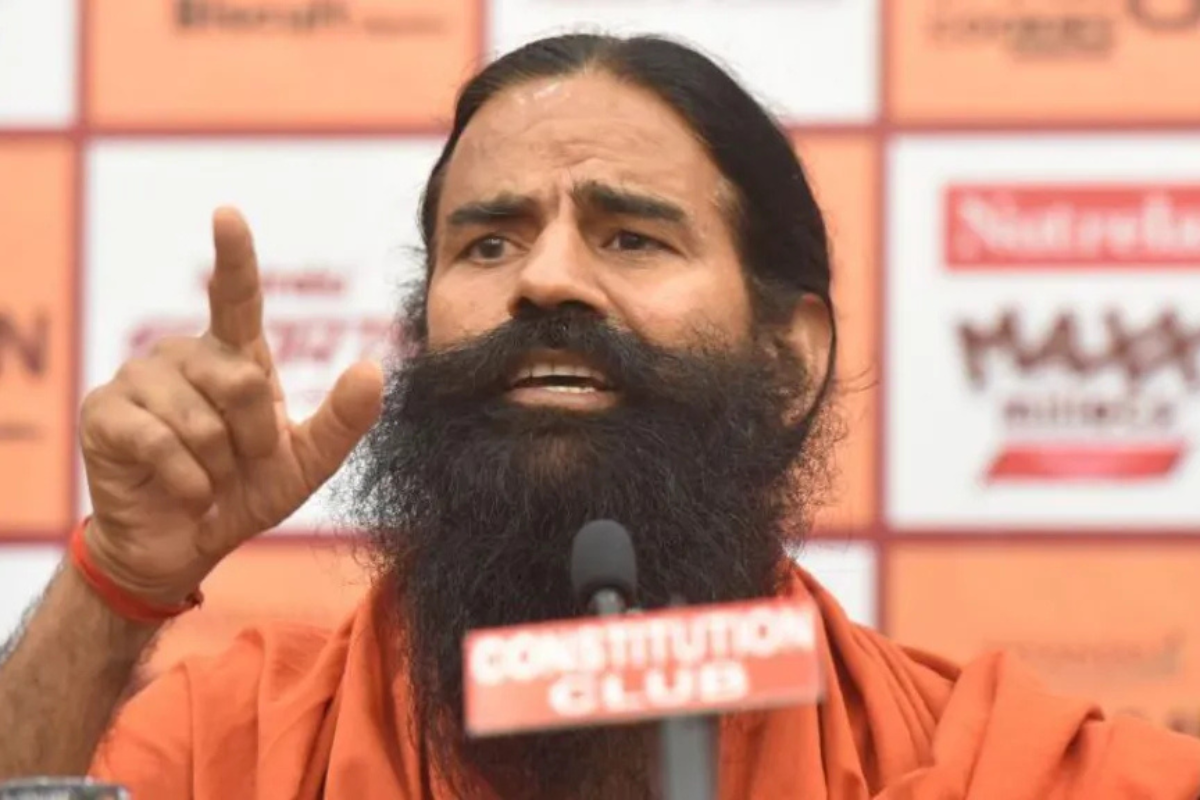
Indian Yoga Guru Baba Ramdev Agrees to Withdraw Disputed Advertisements Targeting Competing Beverage Baba Ramdev, a well-known Indian yoga guru, agreed to withdraw ads that stirred controversy over a rival sweet beverage. Ramdev made these statements in a videotape, which caught the attention of both the media and the public., leading to a legal battle. A Delhi court blamed his commentary, describing them as” unpardonable.” In this composition, we will dive into the details of Baba Ramdev’s controversial reflections, the legal impacts, the history of the rival drink, and his rise to fame. This article explores all sides of the issue, helping you understand the legal conflict surrounding Ramdev and his statements. The Contestation Unfolds Baba Ramdev, known for his yoga training and the heartiness brand Patanjali Ayurveda, stirred up contestation in a recent videotape. The videotape featured Ramdev professing that certain companies used their gains to fund religious conditioning similar as kirks and madrassas. Ramdev didn’t name the rival drink, but many believed he referred to Rooh Afza, made by Hamdard Laboratories. Rooh Afza has been a chief in South Asian homes, especially during the holy month of Ramadan. An Islamic charitable association produced the drink, which many people cherish, which added energy to the fire. Ramdev’s comments were viewed as a critique of Hamdard’s business practices and were widely criticized for being inflammatory. Baba Ramdev :Rooh Afza The Rival Drink Rooh Afza is a sweet, non-alcoholic beverage. Rooh Afza, created by Hamdard Laboratories in 1906, has been a beloved part of South Asian culture for over a century. Often mixed with milk or water, this refreshing drink is especially popular during the holy month of Ramadan, when many Muslims use it to break their fast. The drink has gained recognition not only in India but also in Pakistan and Bangladesh. Its long- standing tradition and association with Ramadan make it a artistic symbol. Despite its widespread popularity, Rooh Afza has sparked religious and cultural debates—particularly after Ramdev’s video highlighted its ties to Muslim-owned businesses. Ramdev’s Remark” Sherbet Jihad” One of the most controversial aspects of Ramdev’s videotape was his use of the expression” sherbet jihad.” The term” jihad” has long been a contentious word, and its use in this environment only boosted the outrage.” The term “Sherbet jihad” appeared to be a variation of “love jihad,” a phrase used by some radical Hindu groups to accuse Muslim men of attempting to convert Hindu women through marriage. Ramdev’s comment suggested that Muslim businesses were benefiting from the spending of Hindus, fueling pressures between communities. Many people saw the use of such language as divisive and communal, farther inflaming the situation. Baba Ramdev :The Delhi Court’s Response The public and the media quickly noticed the remarks. On Tuesday, a judge in the Delhi High Court, Amit Bansal, blamed Ramdev’s statements, calling them “ unpardonable. ” The judge emphasized that similar commentary could lead to division among different religious groups in India, a country known for its different and pluralistic society. Judge Amit Bansal of the Delhi High Court ordered Baba Ramdev to submit an affidavit within five days, confirming that he would refrain from making similar statements, declarations, or social media posts going forward. This order highlights the soberness of the situation and the growing enterprises about hate speech and collaborative harmony in India. The Legal Battle Communal Divide and detest Speech The controversy escalated when Hamdard Laboratories filed a case… demanding the removal of the offensive advertisements.. Hamdard Laboratories argued that Ramdev crossed the line from product criticism into inciting communal tension, suggesting that they contributed to a collaborative peak. Hamdard’s lawyer, Mukul Rohatgi, called the remarks “hate speech.” He argued they fueled division in India’s sensitive, multi-religious society. On the other hand, Rajiv Nayar, representing Ramdev and Patanjali, defended his customer, stating that Ramdev did n’t intend to target any particular religion. Nayar assured the court they would promptly remove the disputed advertisements. However, the damage had already been done. Baba Ramdev’s Rise to Fame Baba Ramdev’s trip from a small- city boy to a global yoga sensation is nothing short of inspiring. He first gained public attention in the early 2000s through his televised yoga classes. His training on physical fitness and holistic health reverberated with millions of people across India. Ramdev’s fame soared as he came a symbol of heartiness and tone- enhancement. His yoga classes reached millions of observers, and his capability to connect with the millions made him one of the most influential numbers in India’s health and fitness geography. In 2006, Baba Ramdev broadened his reach by partnering with his close associate Acharya Balkrishna to establish Patanjali Ayurveda.The company began with the thing of offering herbal drugs and natural products to help people lead healthier lives. Over time, Patanjali has come one of the largest Ayurvedic product manufacturers in India, with a wide range of immolations from flour to toothpaste and indeed instant polls. former Legal Issues with Baba Ramdev Baba Ramdev’s trip has not been without contestation. In 2024, the Indian Supreme Court ordered him to apologize for falsely claiming that Patanjali products could” cure” serious ails. The court also banned the announcements that made these unwarranted claims, ruling that they misled consumers and violated the principles of fair advertising. This is n’t the first time Baba Ramdev has faced legal action. His bold statements and controversial views have frequently sparked legal battles, drawing attention to his business practices and marketing strategies.

Read More

First Millennial Saint Carlo Acutis: Canonization Delayed

  The world was on the brink of witnessing a spiritual and cultural milestone: the canonization of the first millennial saint. Carlo Acutis, known globally as “God’s Influencer,” was scheduled to be canonized on April 27, 2025, before the unexpected death of Pope Francis halted the sacred ceremony. This young British-Italian computer prodigy and devout Catholic had already touched millions of lives through his digital evangelization. His story is not just about sainthood but about how youth, technology, and faith can intersect to inspire a generation.   Who Is Carlo Acutis? Carlo Acutis was born in London in 1991 and raised in Milan, Italy. From a very young age, he exhibited a profound spiritual depth that stood out among his peers. While most children were concerned with games and cartoons, Carlo developed an intense devotion to the Eucharist and the Virgin Mary. His deep faith, combined with his love for computers, would eventually shape his life’s mission. His family described him as gentle, funny, and extraordinarily empathetic. Carlo often went out of his way to support classmates being bullied or those struggling with disabilities. Childhood of a Digital Disciple Carlo learned to code at the age of nine. By the time he was 11, he was building websites for his parish and cataloging miracles related to the Eucharist. He used his digital skills to compile over 100 cases of Eucharistic miracles into a multimedia presentation that has been displayed in thousands of churches around the world. His combination of piety and digital fluency led to his nickname: God’s Influencer. Rather than chasing followers on social media, he focused on connecting people with their faith through the internet. ✅ Learn more about his Eucharistic miracles exhibition here. Merging Faith and Technology As a digital native, Carlo exemplified how millennial tools could be used for spiritual purposes. While many view technology as a distraction from faith, Carlo demonstrated its potential as a vessel for evangelization. He created apps, programmed religious websites, and edited Catholic videos that went viral in spiritual communities. Through his efforts, many young Catholics began to see technology not as a barrier to holiness but as a bridge to a deeper relationship with God. The Journey Toward Canonization In 2020, Pope Francis beatified Carlo after recognizing the first miracle attributed to him—a young Brazilian boy cured of a pancreatic disease. In 2023, a second miracle was verified by the Vatican. A Costa Rican student who suffered from a traumatic brain injury made a complete recovery after his mother prayed at Carlo’s tomb. These miracles set the stage for canonization, making Carlo eligible to become the first millennial saint. ✅ Read the Vatican’s announcement of the second miracle. What Makes Him the First Millennial Saint? Being born in 1991, Carlo Acutis represents the first saint from the millennial generation—a demographic marked by the rise of the internet, social media, and globalization. While saints of the past were often cloistered monks, martyrs, or missionaries, Carlo reflects a more contemporary expression of holiness: one that’s deeply personal, digital, and relevant to today’s youth. Youth Pilgrimages and Global Devotion Every year, thousands travel to Assisi to visit Carlo’s resting place. In 2024 alone, over 1 million pilgrims made the journey. The tomb is especially popular among teenagers, who see Carlo not just as a religious figure but as a role model who lived a life similar to their own. This pilgrimage trend shows how the first millennial saint bridges the gap between traditional Catholicism and contemporary youth culture. ✅ Details about pilgrimages to Carlo’s tomb.     Verified Miracles and Vatican Recognition Carlo’s verified miracles underscore the Vatican’s rigorous process of sainthood. For canonization, a second miracle was required—and duly recognized in 2023. The process involves medical reviews, theological analysis, and spiritual testimonies. His rapid path to sainthood is almost unprecedented in the modern era and highlights the Church’s acknowledgment of his exceptional impact. Carlo Acutis and Gen Z Catholicism Carlo has become an emblem for Gen Z Catholics around the world. His memes, digital content, and relatable image (jeans, sneakers, and a backpack) make him more accessible than traditional religious figures. Religious educators increasingly use his story to connect with young people and inspire digital faith-based projects. Impact of Pope Francis’ Death The canonization was scheduled for April 27, 2025, during the Vatican’s Jubilee of Teenagers. However, Pope Francis passed away on April 21, delaying the event indefinitely. The Vatican Press Office announced that all canonization ceremonies are suspended until a new pontiff is elected. This unforeseen delay has only intensified public interest in Carlo’s story. What Happens Next for Canonization? Canonization ceremonies can only be presided over by a reigning pope. Once the next Pope is elected, one of the new pontiff’s earliest ceremonial roles could be to resume the canonization of Carlo Acutis. Given the already completed paperwork and approval of miracles, there are no administrative hurdles remaining—only liturgical. Global Reactions and Pilgrimage Trends Since the postponement, the number of visitors to Assisi has surged. From India to the Philippines, Catholic youth groups are organizing special prayers and fasts, hoping to witness the long-awaited moment soon. The digital world has also responded, with hashtags like #FirstMillennialSaint and #CanonizeCarlo trending globally. Millennials and the Future of the Church The potential canonization of a millennial marks a turning point. It shows the Church’s willingness to engage with contemporary life and embrace saints who lived in the age of smartphones and streaming. This could open the door for more modern saints—those who reflect today’s social, ethical, and digital challenges. The Significance of Being the First Millennial Saint Carlo’s canonization isn’t just a spiritual event—it’s a cultural statement. It confirms that sainthood is not restricted to past centuries. Modern life, with all its distractions and complexities, can still produce saints who inspire and transform. Carlo proves that sanctity doesn’t require isolation from the world. It can thrive in the heart of it. Digital Legacy of Carlo Acutis Today, Carlo’s online platforms continue to…

Read More