Kenton Cool 19th Summit Sets Everest Record

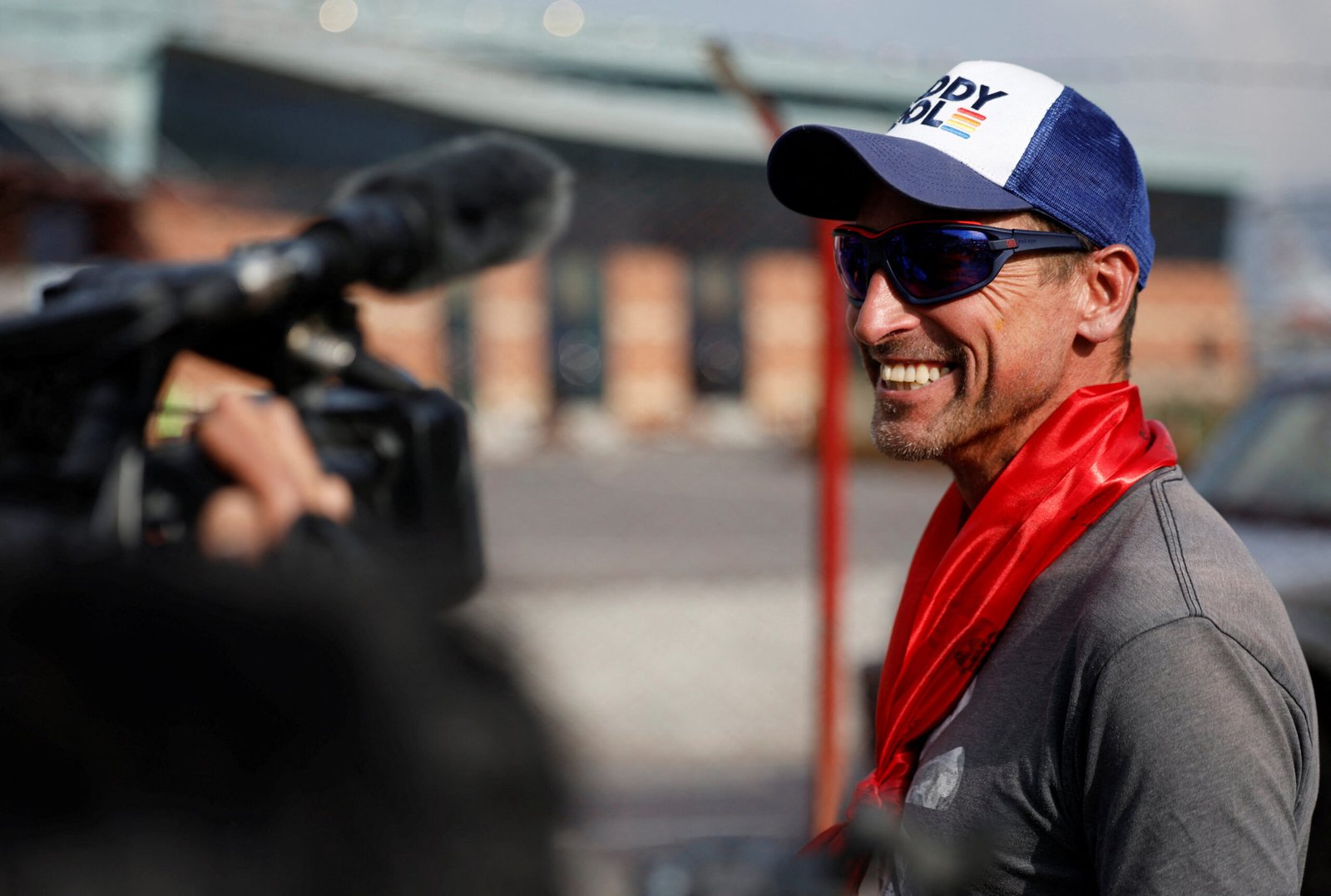
British climber Kenton Cool has made history by reaching the summit of Mount Everest for the 19th time, establishing himself as the non-Sherpa with the most ascents of the world’s tallest peak. At 51 years old, Cool, accompanied by Nepali Sherpa Dorji Gyaljen, stood atop the 8,849-meter (29,000 feet) summit on Sunday at 11:00 a.m. local time (04:15 GMT), adding two more climbs since his last recorded ascent in 2023. Kenton Cool 19th Summit: A Two-Decade Everest Climbing Journey Kenton Cool 19th Everest summit achievement marks nearly two decades of climbing the world’s highest peak. Since first conquering Everest in 2004, Kenton Cool 19th Everest summit has become a symbol of his enduring skill and dedication to high-altitude mountaineering. During this latest expedition, Dorji Gyaljen, his Sherpa guide, completed his 23rd summit of Everest. While Kenton Cool holds the record among non-Sherpa climbers, it is worth noting that Nepali Sherpa Kami Rita still maintains the overall record with 30 Everest ascents and is currently on the mountain aiming to extend this milestone. Reflecting on Kenton Cool’s 19th Everest Summit Achievement Following his 16th summit in 2022, Kenton Cool 19th Everest summit achievement was still ahead, but at that time he humbly acknowledged the many Sherpa climbers who have surpassed his record. “I’m surprised by the attention this gets, given how many Sherpas have far more ascents,” Kenton Cool said in an interview with AFP. Just days before his latest climb, Cool shared an optimistic weather forecast on Instagram, expressing hope for a safe and enjoyable ascent amid the typical challenges of crowded climbing seasons. Tributes from the Mountaineering Community Kenton Cool’s record has been widely praised by fellow climbers. American adventurer Adrian Ballinger described him as a valuable member of the Everest community, highlighting his experience and charisma. Jordanian mountaineer Mostafa Salameh, known for climbing the highest peaks on all seven continents and reaching both poles, also congratulated Cool, calling his achievement “amazing.” Beyond Everest: Guiding Legendary Expeditions In addition to his climbing feats, Kenton Cool has built a reputation as a skilled mountain guide. He has led several significant expeditions, including guiding British explorer Sir Ranulph Fiennes on Everest and other major peaks.

Read More

How Australia’s Deadliest Animals Help Save Human Lives

Harvesting Venom: How Australia’s Deadliest Animals Save Lives Australia’s deadliest animals play a surprising role in saving lives through a vital antivenom program. At the Australian Reptile Park, Emma Teni carefully coaxes a large Sydney funnel-web spider into a defensive stance. Using a tiny pipette, she extracts venom from its fangs—an essential step in producing effective antivenoms. This groundbreaking program relies on venom from spiders, snakes, and other toxic species. Despite their fearsome reputation, Australia’s deadliest animals provide critical ingredients that support a nationally and globally recognized lifesaving initiative. This important program relies on venom from spiders, snakes, and other dangerous species. Despite their fearsome reputation, Australia’s venomous animals provide vital components for a globally recognized antivenom initiative. Spider Venom from Australia’s Deadliest Animals: A Deadly Bite with Healing Potential Experts rank Sydney funnel-web spiders among the most dangerous spiders in the world. One bite can be fatal within 15 minutes, yet since the antivenom programme began in 1981, there have been no deaths. Emma, known by some as “Spider Girl,” milks venom from up to 80 spiders a day. The park relies on public donations—citizens carefully capturing these creatures and submitting them to collection points, such as vet clinics. “These spiders, though deadly, become heroes once milked,” says Emma. “Thanks to people who catch and hand them in, we can produce antivenom and save lives.” Male funnel-webs are particularly valuable, being significantly more toxic than females. Staff milk the male spiders every two weeks after sorting them. It takes venom from around 200 spiders to create just one vial of antivenom. From Venom to Vial: The Journey of Antivenom from Australia’s Deadliest Animals CSL Seqirus in Melbourne receives the extracted venom and begins a complex antivenom production process. Scientists inject rabbits with controlled doses of spider venom to stimulate antibody production. They then extract the antibodies from the rabbits’ plasma and refine them into life-saving antivenom. Snake venom follows a similar process, with horses used instead due to their size and immune resilience. The final product, once packaged, can take up to 18 months to prepare and is valid for three years. Snakes: Silent Saviors in Australia’s Bushland At the same park, Billy Collett, operations manager, milks snakes like the King Brown—one of Australia’s most venomous species. Handling them without gloves, he collects venom as it drips into shot glasses covered in cling film. “That venom could kill everyone in the room multiple times over,” Collett says. “But they don’t want to bite humans. Bites usually happen when someone tries to kill or handle them.” Technicians meticulously label each snake antivenom vial—“Taipan,” “Tiger Snake,” “Eastern Brown”—before freeze-drying and processing the venom for emergency medical use. Australia’s Lifesaving Antivenom System Australia’s antivenom programme is renowned globally. While WHO reports up to 140,000 snakebite deaths worldwide each year, Australia records only one to four annually, thanks to early intervention and readily available antivenom. CSL Seqirus manufactures 7,000 vials of antivenom annually and strategically distributes them across Australia. The Royal Flying Doctor Service, navy vessels, and even remote clinics all receive tailored supplies based on local wildlife. Beyond Borders: Antivenom Diplomacy in Papua New Guinea Australia also sends 600 vials annually to Papua New Guinea, a country still facing high death rates from snakebites. The initiative, described by some as “venom diplomacy,” underscores Australia’s commitment to regional health. “In some ways, our antivenom has more impact in Papua New Guinea than here,” says Chris Larkin of CSL Seqirus. So far, their donations have saved over 2,000 lives abroad. Fear Meets Fascination: Changing Public Perception Despite the inherent dangers, Emma and Billy work to shift the narrative around venomous creatures. “They’re not monsters,” Emma says. “They’re crucial to medicine. With respect and caution, they’re helping us survive nature’s deadliest encounters.” Billy adds with a smile, “If you’re going to be bitten by a venomous snake, Australia’s the best place for it—we’ve got the best antivenom in the world.”

Read More

Strawther Shines as Nuggets Force Game 7 vs Thunder

Nuggets vs Thunder Game 7 Set After Denver’s Crucial Game 6 Win The high-stakes Nuggets vs Thunder Game 7 is officially set after Denver’s 119-107 victory in Game 6, powered by a gutsy performance from Julian Strawther—who not only delivered 15 crucial points off the bench but even lost a tooth in the process. Julian Strawther Ignites Bench in Nuggets vs Thunder Game 6 Thriller Given his first major opportunity in the series, second-year guard Julian Strawther came off the bench with intensity, scoring all 15 of his points in the second half. His clutch performance powered the Nuggets to a 119-107 win over the Oklahoma City Thunder, forcing a decisive Nuggets vs Thunder Game 7 showdown on Sunday in O “That’s the kind of moment you dream about as a kid,” Strawther said. “To go out there, have your teammates believe in you, and impact the game—that’s everything.” Strawther Loses a Tooth but Sparks Nuggets vs Thunder Game 6 Victory Strawther’s effort was so intense, it cost him a prosthetic tooth. In the fourth quarter, he took a hit from a Thunder player that knocked it loose. While he motioned to the officials to pause the game so he could retrieve it, play continued. Fortunately, a ball boy recovered the tooth and returned it to the Nuggets’ bench. Strawther later explained that the tooth—next to his front one—was a prosthetic placed after he lost his baby tooth as a child and never developed a permanent replacement. “We got it back,” he joked after the game. Denver Bench Finally Delivers Aside from Strawther, Denver also benefited from solid bench contributions by Russell Westbrook (8 points) and Peyton Watson (4 points). Although the Thunder reserves still outscored Denver’s bench 32-27, the Nuggets’ second unit brought crucial energy and rhythm, especially in the absence of their starters during stretches of the second half. Until Game 6, Oklahoma City’s bench had held a scoring advantage through five games, averaging 34 points to Denver’s 22. Jokic Praises Strawther’s Poise Under Pressure Reigning MVP Nikola Jokic, who tallied 29 points, 14 rebounds, and eight assists, praised Strawther’s performance. “Julian was amazing,” Jokic said. “He stepped up in the big moments, made big plays, and gave us that energy off the bench when we needed it most.” Strawther finished 3-of-4 from beyond the arc and was a perfect 4-of-4 from the free-throw line. He played nearly 20 minutes—his most in the postseason so far—after being limited to just 14 minutes over the previous three games, including a complete benching in Game 3. Adelman’s Trust Pays Off Interim head coach David Adelman had advised Strawther to be ready for his opportunity. That trust paid off in a must-win game. “There are nights I don’t know if I’ll play,” Strawther said. “And then there are nights like this when the coach decides to ride with me. I’m thankful for that trust.” Strawther also credited his transparent relationship with Adelman for helping him stay mentally prepared through the series. Injury Updates: Gordon and Porter Jr. Denver’s rotation could shift again heading into Game 7, depending on the status of forward Aaron Gordon, who exited late in Game 6 with a hamstring strain. “I feel okay,” Gordon said. “I’m starting recovery right away to try and be ready for Sunday.” Meanwhile, Michael Porter Jr. continues to play through a sprained left shoulder. He scored 10 points on 4-of-9 shooting and revealed he took a lidocaine injection before Game 6. He plans to take another before the next game. “I haven’t been able to get into a rhythm like I want to,” Porter admitted. “But I’m doing what I can—spacing the floor, shooting when I get the chance, and staying confident.” Game 7 Awaits in Oklahoma City With the series tied 3-3, everything now hinges on Nuggets vs Thunder Game 7. Denver’s bench has found its stride, Jokic continues to lead with authority, and Strawther has emerged as a wild-card contributor when it matters most. The showdown in Oklahoma City promises to be a fierce battle between two hungry teams—and only one will move on.

Read More

Earth-Like Weather on Titan Spotted by Webb Telescope

Webb Telescope Uncovers Earth-Like Weather on Titan On May 14, NASA announced a groundbreaking discovery. The James Webb Space Telescope (JWST) detected Earth-like weather on Titan, Saturn’s largest moon. Scientists observed cloud convection in Titan’s northern hemisphere for the first time. This finding could transform how we understand atmospheres beyond Earth. Methane Clouds and Rain: Titan’s Earth-Like Climate Unfolds Scientists regard Titan as one of the most Earth-like worlds in the solar system, thanks to its dense, nitrogen-rich atmosphere. But unlike Earth—where water drives the weather—Titan’s climate runs on methane. Methane evaporates, forms clouds, and rains down on the moon’s icy, solid surface. Conor Nixon, lead author and planetary scientist at NASA’s Goddard Space Flight Center, said, “This is the only other place in our solar system with weather like Earth.” “It has clouds, rainfall, and weather patterns, albeit based on methane instead of water.” A First Glimpse at Titan’s Earth-Like Weather Patterns Until now, scientists had only seen atmospheric convection—rising air that forms clouds and precipitation—in Titan’s southern hemisphere. Using advanced infrared data, JWST detected this activity in Titan’s northern regions for the first time. This signals a seasonal shift on the moon. Although researchers didn’t directly observe precipitation, they confirmed convection in Titan’s troposphere—the lowest atmospheric layer. Titan’s troposphere extends up to 45 kilometers. For comparison, Earth’s troposphere reaches about 12 kilometers. Detecting Methyl Radicals: A Window into Titan’s Chemistry In addition to identifying cloud convection, the Webb Telescope captured another exciting signal—the presence of methyl radicals (CH₃). Sunlight breaks apart methane molecules on Titan, creating intermediates that play a crucial role in the moon’s complex atmospheric chemistry. “For the first time, we’re seeing the chemical cake rise in the oven,” said co-author Stefanie Milam. “Before, we only saw the ingredients and the final product.” A Step Closer to Understanding Life’s Origins The discovery is more than just a meteorological milestone. Titan’s methane-based climate and complex organic chemistry make it a prime candidate in the search for prebiotic chemical processes similar to those that may have sparked life on early Earth. To further investigate, NASA plans to launch the Dragonfly mission in 2028—a rotorcraft lander that will explore Titan’s surface and study its rich organic compounds. The goal is to better understand the building blocks of life and the potential habitability of distant moons like Titan. A Collaborative Breakthrough Scientists made this historic detection of Earth-like weather on Titan by combining James Webb Space Telescope data with observations from Hawaii’s Keck II telescope. They analyzed images captured in November 2022 and July 2023, and recently published their findings in Nature Astronomy. With its advanced capabilities, the James Webb Space Telescope continues to expand humanity’s view of the cosmos, unraveling mysteries not just about other planets—but potentially, about life itself.

Read More

Dipika Kakar Liver Tumour: Diagnosis Shocks Fans

Dipika Kakar Liver Tumour Diagnosis Leaves Fans in Shock Television star Dipika Kakar has been diagnosed with a serious health condition—a liver tumour, shocking her fans across the country. Her husband, actor Shoaib Ibrahim, revealed the news through a heartfelt vlog titled “Need Your Prayers,” where he detailed her symptoms, diagnosis, and upcoming surgery. From Stomach Pain to Liver Tumour: Dipika Kakar’s Health Scare Shoaib explained that Dipika began experiencing severe stomach pain while he was away for work in Chandigarh. “We initially thought it was acidity,” he said in Hindi. After initial treatment failed, their family doctor prescribed antibiotics and recommended blood tests. However, when the pain returned, further testing revealed an infection, prompting a CT scan. The scan unveiled a shocking discovery—a Dipika Kakar liver tumour located in the left lobe. Measuring almost the size of a tennis ball, the tumour came as an emotional blow to the couple. Hospitalization and Surgery Await Dipika was immediately admitted to the hospital for further tests to determine whether the tumour is cancerous. Although most reports suggest it might not be malignant, the final and most crucial test results are still pending. In the meantime, Shoaib confirmed that Dipika Kakar’s liver tumour will need to be surgically removed. “She is currently resting at home,” Shoaib added, “but she will be hospitalized again soon for surgery.” The couple has been visibly worried, not only about Dipika’s health but also about their young son, Ruhaan. Shoaib revealed that doctors immediately hospitalised Dipika for further tests to determine if the tumour is cancerous. Although she has returned home for now, Dipika will be admitted again soon for surgery to remove the liver tumour. He also mentioned that, while most test results so far don’t suggest cancer, they are awaiting additional reports for confirmation. A crucial test result is expected later this week. Shoaib confirmed that the upcoming surgery will focus on removing the tumour from her liver. A Mother’s Fear: Being Away from Her Child “Dipika started crying when she got the report—not for herself, but for our son,” Shoaib shared. Ruhaan is not used to being away from his mother, and the thought of separation has deeply affected both parents. Shoaib concluded the video by requesting prayers from fans and even critics, saying, “You can hate us or troll us, but right now, we need your blessings.” Fans and Colleagues Send Support Messages of love and support have been pouring in for the couple. Dipika and Shoaib, who fell in love on the sets of Sasural Simar Ka, got married in 2018 and welcomed their first child in 2023. The news of the Dipika Kakar liver tumour has deeply moved fans who have followed the couple’s journey through television and social media.

Read More

Camera Tech in TV Shows: How It Transformed Adolescence

Camera Tech in TV Shows: A Game-Changing Opening with Seamless One-Takes Camera tech in TV shows has reached new heights, enabling breathtaking sequences that drop viewers directly into the action. Three loud bangs from a police battering ram break the silence. The front door crashes open. Chaos erupts. Armed officers rush in. As the handheld camera swiftly pivots — a hallmark of the cutting-edge camera tech in TV shows like Adolescence — we see a woman hit the ground, then glide past a man on the stairs, his hands raised in vain protest. In mere moments, a 13-year-old boy is handcuffed and escorted outside into the morning light, while his family screams in disbelief. We return to a dimly lit police van where the boy now sits in stunned silence. One-Take Wonders: How Camera Tech in TV Shows is Raising the Bar Each of the four hour-long episodes of Adolescence was filmed using a continuous “oner” — a one-take shot that moves fluidly through various scenes and perspectives. The camera tracks characters through unpredictable, high-energy situations, switching seamlessly from handheld mode to being mounted on vehicles and drones. The show’s visual fluidity is largely thanks to new-generation lightweight, self-stabilizing cameras that adapt in real-time to shifting light and movement. One key device: the DJI Ronin 4D — a compact, high-resolution camera with motion sensors that detect ground surfaces and nearby objects. These built-in sensors enable internal mechanisms to stabilize shots, even during high-speed chases or sudden directional shifts. Camera Tech in TV Shows: A Revolution in Cinematic Storytelling One unforgettable scene in Episode 2 begins with an interior car shot. The camera then exits the vehicle, crosses a busy street, ascends above rooftops using a drone, and returns to ground level in a single flow. Apart from a tiny wobble during the drone-to-handheld transition, the sequence feels entirely seamless to the viewer. This degree of visual storytelling marks a turning point for TV cinematography. From Clunky to Cutting-Edge: Camera Tech in TV Shows Through a Filmmaker’s Eyes Boston University film professor Tim Palmer admits he was initially skeptical of the show’s single-take claim. “But when I saw it, I knew it was authentic,” he says. “There are no cheats. It’s just brilliant camerawork.” Palmer, who previously worked on the BBC hospital drama Critical in 2014, recalls using joystick-controlled pan-and-tilt cameras that lacked finesse. “The tech just wasn’t precise enough back then,” he says. He also points out that while gimbals have existed for years, only recently have the mechanisms for remote control and stabilization reached cinematic standards. Today’s systems allow filmmakers to activate or deactivate filters and stabilizers remotely — a breakthrough for dynamic storytelling. A Legacy of Long Takes — And a Leap Forward Long, unbroken shots have existed in cinema for decades. The 2015 German thriller Victoria is one standout — a two-hour, 20-minute feature filmed entirely in a single take. Cinematographer Sturla Brandth Grøvlen insists, “There are no edits or cuts.” He used a Canon C300, a modest motion picture camera tailored to documentary-style realism. To execute Victoria’s intense, real-time feel, Brandth Grøvlen stripped the camera down to essential components and rehearsed each scene meticulously. “When the actors suddenly start running, I switch grips mid-shot,” he explains. “That small change reduces shake and keeps it grounded.” DJI Ronin 4D: Redefining Camera Capabilities According to Brett Halladay, DJI’s product education manager, the Ronin 4D is the company’s first dedicated cinema camera. It streams high-resolution footage wirelessly to on-set monitors and intelligently selects the best available signal frequency. However, Halladay admits the device isn’t optimized for vertical filming — a growing necessity in the era of TikTok and Instagram Reels. Still, cropping from landscape is possible if needed. Competition Heats Up: Canon’s Lightweight Cinema EOS Series Canon, another major player in the camera market, promotes its Cinema EOS line as a solution for both filmmakers and content creators. Barry Griffin, a Canon manager, notes that these compact yet powerful cameras are popular in podcasting and live-stream environments — offering TV-level quality in small spaces. Storytelling First: Why Camera Tech Must Serve the Narrative Filmmaker and University of Georgia professor Booker T. Mattison emphasizes that camera perspective is a crucial storytelling tool. “The camera’s point of view shapes the audience’s emotional response,” he says. “These new tools allow for more immersive, dynamic narratives.” Still, experts warn against prioritizing technical stunts over substance. Carey Duffy of Cooke Optics, whose lightweight lenses were used in Adolescence, acknowledges that while “oners” are visually impressive, they should serve the story, not overshadow it. “A seamless take is exciting, yes,” adds Prof. Palmer. “But ultimately, audiences stay for the story — not just the camera wor The Future of Cinematic TV Is Here From real-time stabilization to wireless streaming and drone integration, camera tech in TV shows like Adolescence is dramatically changing the way stories are filmed. The evolution of camera tech in TV shows allows creators to craft immersive, dynamic narratives that were once impossible to capture. As camera tech in TV shows continues to advance, directors and cinematographers are gaining new levels of creative control, enhancing both the production quality and emotional impact of each scene. As long as the tech serves the narrative — not replaces it — the possibilities for powerful, immersive storytelling are endless.

Read More