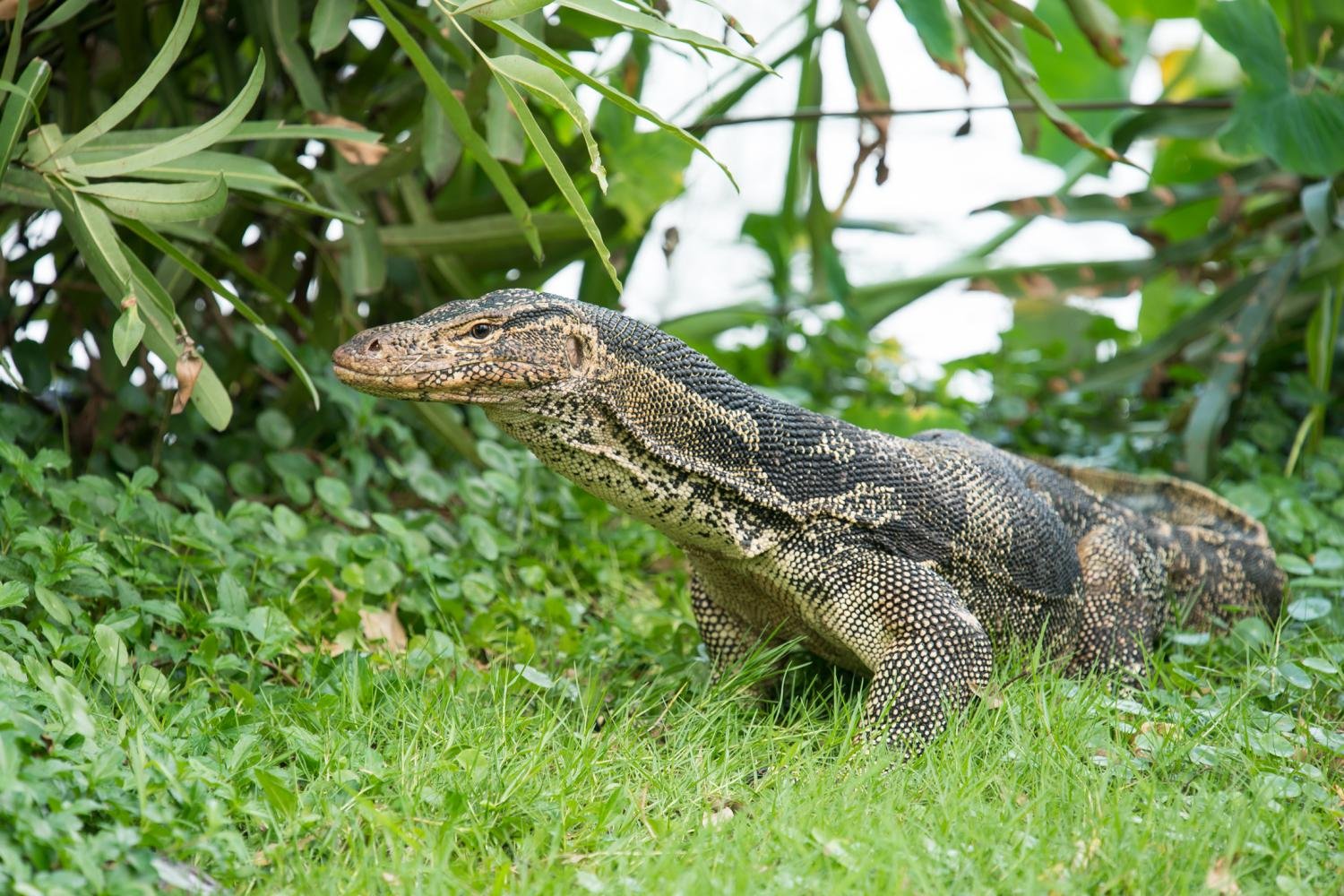
Bangkok Water Monitors: The Giant Lizards of the City
Once confined to the outskirts, Bangkok water monitors are now a common sight in the city’s parks and canals. These ancient reptiles, the world’s second-largest lizard after the Komodo dragon, are thriving in urban green spaces like Lumphini Park. For travellers, spotting them is a rare chance to see a prehistoric species living alongside a modern metropolis.
Encountering Bangkok’s Water Monitors in Lumphini Park
Before dawn, the still canals of Lumphini Park reflect the quiet city. As the sun rises, scaly snouts emerge: Asian water monitors slowly navigate the water, their movements revealing a link to Bangkok’s ecological past. The park, steps from hotels and shopping malls, provides visitors with a unique experience: no enclosures, no ticket, just a walk among giant lizards.
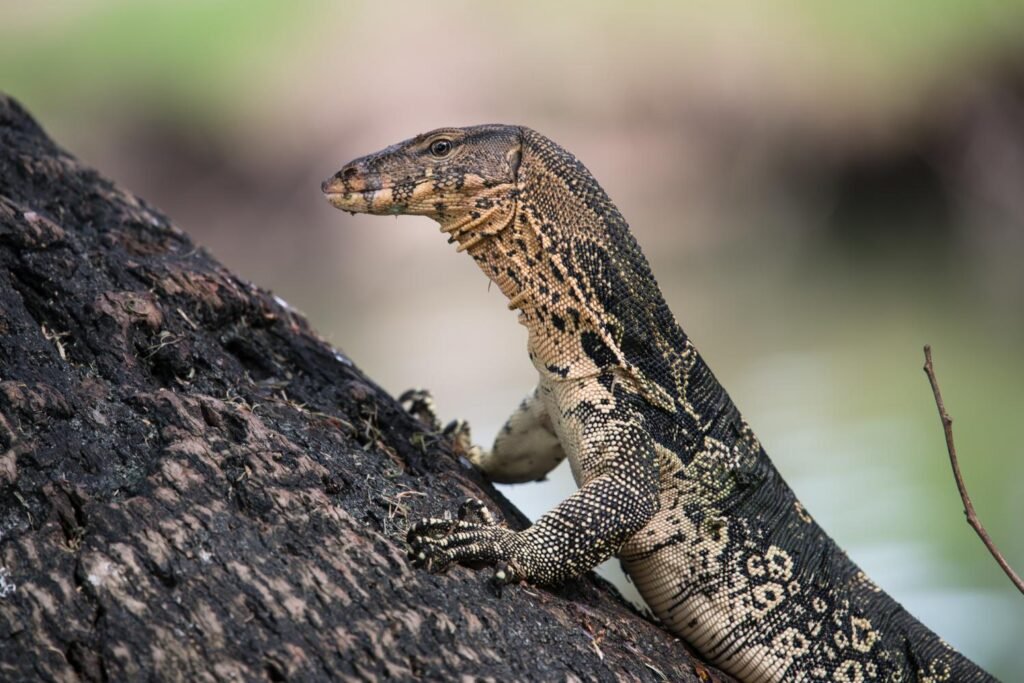
Several hundred water monitors live in and around Lumphini Park. They patrol canals, venture into commercial areas, and often interact indirectly with people. Observing them basking beside joggers, picnickers, and photographers is both unnerving and fascinating.
The Adaptability of Bangkok Water Monitors
Michael Cota, a retired associate at Thailand’s National Science Museum, explains that their success lies in adaptability. “They’ll eat anything, dead or alive,” he says. From food scraps to small animals, these extreme generalists have carved out a niche in Bangkok’s urban ecosystem. Their increasing visibility demonstrates nature’s persistence in the heart of a megacity.
Safety Tips for Observing Water Monitors
While Bangkok water monitors are accustomed to human presence, visitors should maintain a safe distance. Feeding them is strongly discouraged, and approaching them on land can provoke defensive behavior. Respecting their space protects both humans and the city’s fragile urban wildlife.
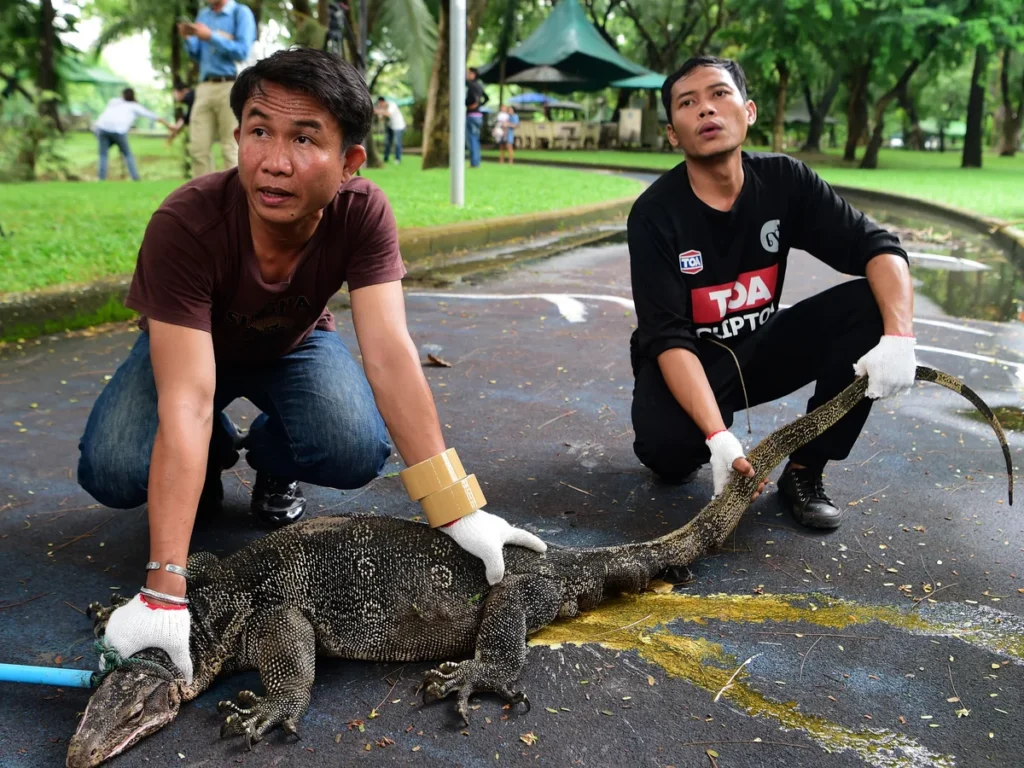
Firefighter S Ruengdach notes, “We get more calls about rescuing water monitors than fires. They venture out more when it rains.” With thousands estimated across the city, sightings are common, but caution remains essential.
From Stigma to Social Media Fame
Historically, the monitors had a bad reputation in Thailand. Known as hia, their name became a severe insult. Traditionally, they were associated with death and bad luck because they scavenged along waterways. Today, attitudes are changing. Younger generations, social media users, and tourists celebrate them as fascinating urban wildlife.
TikTok and Instagram feature clips of lizards clattering through parks, canals, and even shopping areas. Some locals consider them lucky, and authorities have embraced the shift, installing a giant water monitor statue in Lumphini Park to educate visitors.
The Future of Bangkok Water Monitors
Efforts to remove them, such as the 2016 Lumphini Park cull, have had limited long-term success. Experts like Cota argue for integrating the lizards into urban life: “Instead of pushing them out, make them part of the city’s future.” As Bangkok continues to grow, these resilient reptiles remain a living reminder of nature’s ability to adapt, survive, and even flourish in unexpected places.