

Jason Miller

Emma Raducanu British number one after Queen’s victory

Emma Raducanu British Number One: A Career-Defining Moment Emma Raducanu British number one – this title is more than a ranking; it’s the culmination of years of growth, struggle, and redemption.Achieving this milestone marks a defining chapter in her young career, proving that her success at the U.S. Open was no fluke.Her rise to the top of British women’s tennis is nothing short of phenomenal.With every match, she redefines what it means to be a modern tennis icon. At just 22 years old, Raducanu has carved a path that blends youthful exuberance with professional finesse. Her performance at Queen’s not only marked a return to elite-level form but also confirmed her new position as the British number one, replacing the long-time top player Katie Boulter. This ascent wasn’t merely a fluke or media-driven hype—it was the culmination of strategic shifts in training, psychological preparation, and tour consistency. Following a turbulent year filled with injuries and press scrutiny, Raducanu adopted a more disciplined schedule. She hired a new coach, restructured her off-court team, and intensified her physical training—all of which contributed to this milestone. “It’s about showing up every day with purpose. I’m proud to represent British tennis at the highest level again.” — Emma Raducanu, post-match interview at Queen’s Her victory at Queen’s symbolized far more than a match win; it was a return of belief. The confidence seen in her U.S. Open triumph returned—smarter, sharper, and more mature. The fact that this crowning moment happened on home turf added even more emotional weight. Raducanu, once seen as a one-hit wonder by some, has now reignited belief in her staying power. Statistically, Raducanu’s consistency over the grass-court season has outperformed all her British peers. Her return percentage, service hold rate, and average match duration have significantly improved since her comeback, showcasing a more tactical player. This milestone makes her a beacon for aspiring British players. As the British number one, she now takes on a new role—not only as a competitor but also as a leader and ambassador. Her transition from teenage sensation to national icon is not only inspiring but historic. Dominating Queen’s: How the New British Number One Excelled on Grass Emma Raducanu’s run at the Queen’s Club Championships was a tactical and psychological masterclass. Unlike her early performances post-U.S. Open, where nerves and inconsistency marred her play, Raducanu entered Queen’s with a renewed sense of clarity. Each match was executed with the calm intensity of someone who had truly learned from past failures. In the opening round, Raducanu dispatched the world number 38 with a commanding 6-2, 6-3 performance. Her serve was fluid and aggressive, clocking an 85% first-serve win rate, and her return game was relentless, breaking serve in over half of her return games. These are not just solid statistics; they reflect a player who has fine-tuned her rhythm for grass courts. “Raducanu’s footwork and anticipation were clinical. It was like watching poetry in motion.” — Tim Henman, Amazon Prime Sport Perhaps most impressive was her quarterfinal win against the top seed. It was a mentally grueling three-set match that saw Raducanu bounce back from a 4-0 deficit in the final set. What followed was a series of breathtaking rallies, punctuated by her signature backhand winners down the line—one of the most improved aspects of her game. What sets this performance apart from earlier in her career is control. She no longer aims to blast through opponents in a flurry of winners but rather constructs points with foresight and patience. Her net game, once hesitant, now features confidently executed drop shots and smooth volley finishes. At Queen’s, she didn’t just win; she dominated in phases that previously exposed her weaknesses. Each match was a testament to her growing tennis IQ and on-court composure. Her ability to adjust her game plan mid-match is what elevated her above her competitors. “Emma isn’t just a talent anymore—she’s becoming a tactician, which is far more dangerous.” — Chris Evert, ESPN The Queen’s tournament will be remembered as the moment Raducanu silenced critics and proved she can contend at the highest level again—not just with power, but with poise and brains. Her outstanding performance on grass courts at Queen’s showcased the poise and control that ultimately made Emma Raducanu British number one in 2025. Raducanu’s Mindset Shift: The Psychology Behind Britain’s New Tennis Leader Emma Raducanu’s journey has never been just physical; the mental landscape of her tennis life has been just as demanding. Following the historic U.S. Open win, the expectations and media frenzy formed an emotional weight that could have crushed even seasoned pros. But the Emma Raducanu we saw at Queen’s is mentally fortified. Her recent media appearances reveal a player who has embraced self-awareness. Raducanu took a deliberate break from the WTA tour in late 2024, during which she consulted sports psychologists and focused on mindfulness. This psychological reset appears to be the secret weapon behind her resurgence. “I realized I was playing for everyone else’s expectations. Now I just want to enjoy the game again.” — Emma Raducanu, Sky Sports interview At Queen’s, she exhibited traits rarely seen from her before: emotional detachment from setbacks, visible body language control, and a consistent internal rhythm regardless of match pressure. When facing breakpoints, she maintained eye contact with her team, took calculated breaths, and responded with measured aggression. Much of her mental toughness is credited to her training partnership with Dr. Anna Frey, a renowned cognitive coach. Frey introduced routines focused on cognitive performance during pressure situations, and it’s clearly working. Raducanu has reduced her unforced error count by over 30% in tight games, signaling a newfound clarity in her shot selection. Moreover, her post-match demeanor has evolved. Gone are the rushed, defensive interviews. Now, Raducanu speaks with measured confidence—reflecting a young athlete in control of her narrative. “Resilience is built, not born. Emma is laying the groundwork for a long, successful career.” — Martina Navratilova This transformation is not just commendable—it’s vital. Tennis careers are…

Read More

South Africa Cricket Victory: Belief Behind a Historic Win

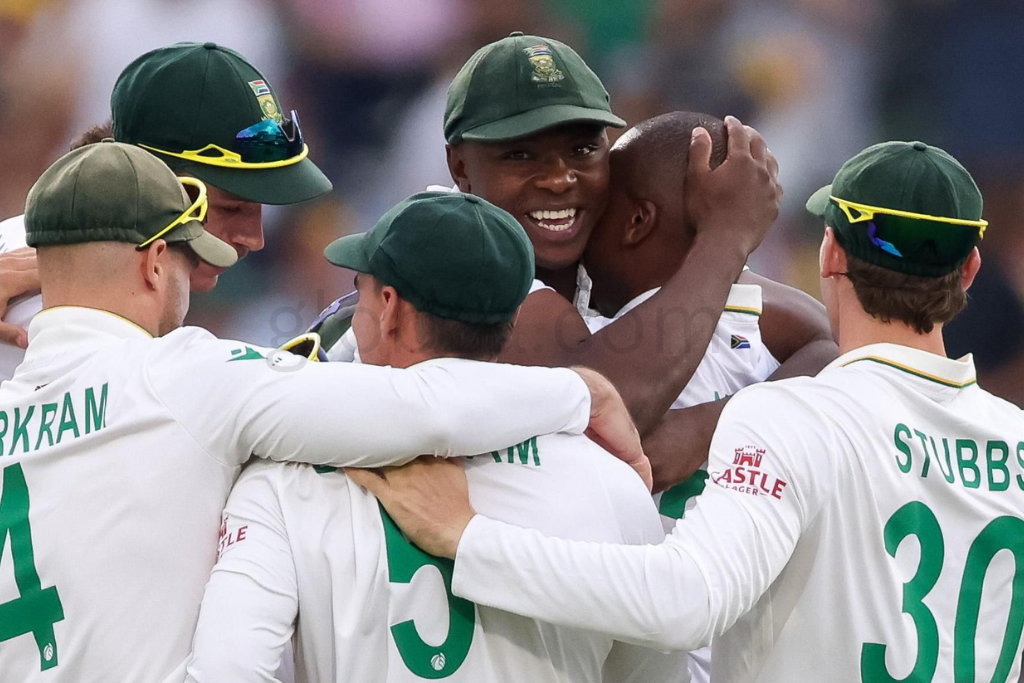
In one of the most defining moments in modern cricket, the South Africa cricket victory has electrified fans across the globe. More than just a scoreline, this monumental achievement is a testament to the grit, spirit, and unshakable belief that has come to define South African cricket. The world watched as the Proteas pulled off what many called an “impossible” result—a win that showcased not only talent but deep-seated confidence. “We believed, even when others didn’t. That belief carried us.” — Temba Bavuma, South African captain This blog explores how belief, strategy, and leadership converged to make the South Africa cricket victory a landmark moment. From years of heartbreak to a new era of confidence, this is the story of a team rewriting its legacy. South Africa Cricket Victory: Building the Foundation Through Near Misses and Belief The South Africa cricket victory didn’t happen overnight. For decades, the team was haunted by missed opportunities, World Cup heartbreaks, and a painful “chokers” label. However, behind the scenes, a quiet revolution was unfolding—one that emphasized mental strength as much as physical preparation. The victory represents a transformation. Years of planning, investment in sports psychology, and grooming a new generation of mentally tough cricketers finally paid off. Under coach Rob Walter, players were trained to believe in the process, not just the result. The team emphasized building an unbreakable mindset, which played a crucial role in the South Africa cricket victory. “You don’t win by hoping. You win by preparing, believing, and pushing beyond limits.” — Mark Boucher, former head coach Senior players like David Miller and Quinton de Kock nurtured emerging stars like Marco Jansen and Tristan Stubbs, ensuring a blend of maturity and hunger. Team retreats, reflective journaling, and a culture of honest dialogue fortified their mental framework. This shift is not just visible in the stats—it’s seen in how players carry themselves, how they respond to pressure, and how they talk about each other. The South Africa cricket victory symbolizes the triumph of belief over baggage, of a team rewriting its script with every over. Matchday Magic: Turning the Impossible into a South Africa Cricket Victory The day of the historic victory was more than just a cricket match—it was a theatre of resilience, character, and execution. From the toss to the final over, every decision made by the South African squad reflected meticulous planning and unshakeable confidence. This wasn’t a fluke win; it was the result of calculated risks and nerves of steel. Batting first, the team posted a defendable total despite early setbacks. Quinton de Kock, with his trademark aggression, laid the groundwork, while Rassie van der Dussen anchored the innings with poise. In the death overs, Miller’s explosive finishing provided the crucial boost. South Africa didn’t just post a score—they set a challenge. “We always knew that defending the total was possible if we backed our bowling unit.” — Mark Boucher, former coach and current cricket analyst The second innings was where the belief truly shone. Facing one of the most powerful batting lineups in the world, South Africa turned to its pacers and spinners with a plan tailored for every batter. Kagiso Rabada’s fiery spell broke the top order, while Tabraiz Shamsi’s crafty turn baffled the middle overs. Jansen’s nerveless final overs closed the game with surgical precision. Field placements were aggressive, and the body language never wavered. Even when the opposition threatened a comeback, South Africa refused to retreat. Each player’s commitment to the plan, to each other, and to the belief that victory was theirs made all the difference. Proteas Heroes Who Defined the South Africa Cricket Victory South Africa’s victory was a team effort, but certain individuals stood out as beacons of belief and execution. Their stories reveal not just technical brilliance but emotional journeys that make this triumph even more inspiring. Temba Bavuma led from the front, not always with the bat, but always with presence. His calm demeanor, tactical intelligence, and unifying spirit were instrumental. He often spoke about rising above doubt—both external and internal—and this win was validation of that vision. “I’ve had to fight harder than most. But every setback made me stronger. This win is for every South African who ever felt underestimated.” — Temba Bavuma Quinton de Kock, in what could be his final major tournament, played with the freedom of a man on a mission. His aggressive strokeplay and adaptability were key in setting up strong starts. Kagiso Rabada, always a pillar of strength, brought raw pace and emotional fire. He bowled like a man possessed, lifting his team when it mattered most. His leadership within the bowling unit was invisible but invaluable. David Miller quietly reinforced why he’s one of the best finishers in the game. More than that, his experience and composure under pressure were a calming force during crunch moments. These players, along with a deep bench of all-rounders and specialists, gave South Africa a multidimensional edge. More importantly, they played with belief—not arrogance, not desperation, but genuine belief that they belonged at the top. Tactical Brilliance That Powered the South African Cricket Win Belief alone doesn’t win matches—strategy does. What made South Africa’s performance truly “amazing” was how seamlessly belief translated into action. Every decision seemed backed by data, instincts, and an intimate understanding of opposition weaknesses. Before the match, the team held scenario-based sessions—simulating various challenges, including what to do if they lost early wickets or how to defend a low score. These sessions weren’t just technical—they were psychological conditioning exercises that equipped players for chaos. The field settings reflected an aggressive mindset. Bavuma wasn’t afraid to put catchers in for key batters, trusting his bowlers to hit the right areas. Bowlers weren’t rotated just by overs but by matchups. When a spinner looked more threatening to a particular batter, the captain backed him regardless of conventional patterns. “Our strategy was to stay unpredictable. Cricket is a mind game, and we played it beautifully.” — Tabraiz Shamsi South Africa’s use…

Read More

Illegal Fish Traps in Italy’s Mediterranean Threaten Life

1. Illegal Fish Traps in Italy’s Mediterranean: A Threat Hidden Beneath the Waves Beneath the serene surface of Italy’s Mediterranean coastline lies a silent, invisible menace—illegal fish traps. Fishermen and illegal operators scatter these clandestine devices—often made of barbed wire, nets, and sharp hooks—across the seabed, turning it into an invisible minefield. For decades, this hidden network has disrupted marine biodiversity, endangered diving expeditions, and fueled black-market economies in the fishing industry. The problem has escalated so dramatically that seasoned divers compare these zones to war zones, describing the seascape as “a battlefield of wires, death traps, and illegal ambition.” Illegal fishers heavily concentrate these traps around hotspots like the Aeolian Islands, Calabria, and parts of Sicily, prompting coast guards to pull hundreds of these devices from the sea every year. While traditional fishing practices in these regions date back centuries, the aggressive overfishing by illegal operators threatens to obliterate marine populations like groupers, sea bream, and bluefin tuna—already teetering on the brink due to climate change and commercial exploitation. Environmentalists argue that these traps are not only unethical but ecologically catastrophic. According to WWF Italy, “Each illegal trap isn’t just a threat to fish; it’s a hazard to the entire ecosystem. These traps entangle turtles, dolphins, and even seabirds, often leading to injury or death. Satellite tracking and marine surveillance drones have exposed vast networks of these traps extending over kilometers, often maintained by organized crime groups that profit from the unregulated marine harvest. “The sea is like a minefield. You never know when you’ll hit a line, snap a propeller, or lose a diver,” warns Marco Colombo, a marine conservationist working in Southern Italy. The unregulated nature of these operations makes enforcement extremely difficult. Italian Coast Guard officers conduct surprise raids, but the perpetrators often return within days. Despite international conventions and EU fisheries legislation, the problem persists, exacerbated by bureaucratic loopholes and limited patrol resources. The challenge lies not just in removing the traps but in dismantling the systems—social, economic, and criminal—that enable their continued use. 2. The Environmental Fallout: How Illegal Fish Traps Are Destroying Marine Biodiversity Illegal fish traps in Italy’s Mediterranean are having a profound and irreversible impact on marine biodiversity. What begins as an attempt to harvest fish outside legal quotas quickly spirals into an ecological disaster. These traps often target high-value species, but their indiscriminate design captures everything from endangered sea turtles to juvenile fish that are crucial for replenishing stocks. The traps’ designs are particularly cruel. Most consist of longline nets with barbed hooks or cages baited to attract unsuspecting marine animals. Once inside, escape is nearly impossible. Dead or injured animals become bait themselves, creating a grim cycle of death. Marine biologist Dr. Alessia Romano describes it as “an underwater ghost town. The traps kill more than they capture, and the damage they cause often goes unseen until it’s too late.” A study conducted by the University of Naples found that illegal traps contributed to a 30% decline in grouper and snapper populations in monitored zones. Even more alarming, illegal traps kill non-targeted species—like octopuses and cuttlefish—at similar rates through entanglement and stress. Aside from the direct loss of life, these traps cause mechanical damage to delicate ecosystems like seagrass meadows and coral reefs, which serve as essential breeding and feeding grounds. Each trap deployment displaces sand, crushes flora, and introduces synthetic materials into otherwise pristine environments. In turn, this affects the overall food chain, from microscopic plankton to apex predators. “Every time we remove one of these traps, it’s like unburying a piece of the ocean’s soul,” says Luca Brandi, a volunteer with Oceanus Italia. “But for every one we find, ten more are set.” The long-term implications are deeply concerning. As fish populations decline, illegal competition drives law-abiding artisanal fishers—who rely on the sea for sustenance—out of business. This shifts economic pressure to already-deprived coastal communities, many of which are witnessing an increase in youth migration and unemployment. Illegal traps inflict an incalculable cost—not just by wiping out marine life, but by collapsing entire marine systems. 3. Who’s Behind the Web: Organized Crime and the Illegal Fishing Economy The proliferation of illegal fish traps in Italy’s Mediterranean is not merely a tale of rogue fishermen—it is deeply entwined with organized crime syndicates. From the Camorra in Naples to the ‘Ndrangheta in Calabria, criminal networks have turned the sea into a lucrative black market, exploiting fisheries regulations and environmental blind spots. These groups deploy fleets of unregistered vessels equipped with GPS jammers, night-vision gear, and sonar systems to set and retrieve traps undetected. The fish caught are sold to underground markets or even funneled into the legitimate food supply through corrupt intermediaries. Restaurants and wholesalers who buy this fish often turn a blind eye, lured by cheaper prices and higher profits. “You’re not just buying a plate of fish—you’re feeding a criminal economy,” states journalist Fabrizio Gatti, who investigated seafood smuggling rings in southern Italy. There are also disturbing reports of human trafficking and forced labor tied to this illegal industry. Migrants and impoverished locals are recruited to do the dangerous work of setting traps, navigating unlit waters, and avoiding patrol boats—all for a pittance. They face harsh conditions and often receive threats if they try to leave. Despite a 2019 EU directive aimed at curbing illegal fishing, enforcement remains toothless. Legal loopholes, lack of transparency in seafood supply chains, and minimal funding for marine patrols have allowed these networks to flourish. Investigations into illicit fisheries often go cold due to corruption or fear of retaliation. The challenge is immense. Law enforcement needs technological upgrades, international coordination, and robust whistleblower protections. Until then, organized crime will continue to profit from the slow death of the Mediterranean’s ecological and economic vitality. 4. Voices from the Sea: Fishermen, Divers, and Conservationists Speak Out To truly understand the depth of this crisis, one must listen to those who live and work on the front lines. From veteran fishermen in Liguria to…

Read More

Stanley Cup Finals Breakdown: Teams, Stars, and Tactics

1. Stanley Cup Finals: The Pinnacle of Ice Hockey Glory The Stanley Cup Finals represent not only the crowning moment of the National Hockey League (NHL) season but also a deeply rooted tradition in North American sports culture. As the final showdown of the NHL playoffs, this series determines which team earns the honor of lifting the Stanley Cup — the oldest professional sports trophy in North America, first awarded in 1893. The Finals bring together the top teams from the Eastern and Western Conferences, but what sets the series apart is more than just its competitive edge — it’s the drama, legacy, and lore surrounding it. Every game in the Stanley Cup Finals is a spectacle of physical endurance, strategic brilliance, and raw emotion. It’s not uncommon for players to push through fractured bones, deep lacerations, and exhaustion in pursuit of this cherished trophy. The level of sacrifice is unparalleled in many other sports. The Cup itself is iconic, not just in appearance but in tradition. Each player on the winning team gets to spend a day with the Cup, creating personal memories that span continents and generations. It’s a moving symbol of hockey’s reach and personal impact. Television ratings for the Stanley Cup Finals surge annually, drawing millions of viewers not just from Canada and the U.S. but from across the globe. The Finals have become a cultural event, with pre-game shows, post-game analyses, fan celebrations, and social media buzzing with highlights and controversies. The intensity of the Finals often results in iconic moments: last-minute goals, dramatic overtime wins, and unexpected heroes rising to the occasion. These stories are etched in the memory of fans and become part of the sport’s oral history. “Every kid dreams of lifting the Stanley Cup. There’s no greater honor in our game.”— Sidney Crosby, 3-time Stanley Cup Champion 2. Historic Showdowns in the Battle for the Cup The Stanley Cup Finals have delivered some of the most memorable moments in sports history. Whether it’s the dominance of dynasties like the Montreal Canadiens of the 1970s or the miraculous runs of underdog teams, each era of the Finals has left a lasting imprint. Perhaps one of the most famous matchups occurred in 1994 when the New York Rangers ended a 54-year championship drought. The series went to Game 7, culminating in an unforgettable Madison Square Garden celebration. Then there’s the 2010 Chicago Blackhawks, who began a modern dynasty by winning their first Cup in 49 years. Their overtime victory in Game 6 against the Philadelphia Flyers was iconic — few can forget Patrick Kane’s bewildered celebration after scoring the winning goal that no one else initially saw cross the line. Go back even further, and you’ll find legends like Maurice “Rocket” Richard or Bobby Orr redefining the game. Orr’s airborne goal in 1970 during the Finals has become one of hockey’s most enduring images. These moments aren’t just replayed in highlight reels — they’re woven into the cultural fabric of the cities and teams involved. The Finals also shine when they stretch into seven-game sagas, where physical fatigue meets mental warfare. The 2009 Finals between the Pittsburgh Penguins and Detroit Red Wings serve as an example. The series went the distance, ending with Max Talbot’s clutch goals and Marc-André Fleury’s last-second save. “There’s something about Game 7 of the Stanley Cup Finals. You’re not just playing a game — you’re writing history.”— Wayne Gretzky 3. Playoff Legends and MVPs Who Shaped the Finals When the lights shine brightest in the Stanley Cup Finals, it’s often the superstars — and sometimes the unheralded players — who rise above the rest to define the series. The Conn Smythe Trophy, awarded to the playoff MVP, often reflects both brilliance and grit. Wayne Gretzky, Mario Lemieux, Jonathan Toews, and Martin Brodeur are just a few legendary names associated with this prestigious award. But not all heroes are household names. Consider Jean-Sébastien Giguère’s performance in 2003. Although the Anaheim Ducks lost the series to the New Jersey Devils, Giguère’s stellar goaltending throughout the playoffs earned him the Conn Smythe — a rare honor for a player on the losing team. His performance remains one of the greatest goaltending displays in Finals history. In contrast, Sidney Crosby’s leadership during the 2016 and 2017 back-to-back Stanley Cup wins for the Penguins showcased how consistency and experience shape a champion. His ability to deliver in key moments while elevating his teammates set a modern gold standard for playoff performance. Goaltenders, in particular, have often stolen the show in the Stanley Cup Finals. Think of Tim Thomas’s 2011 heroics, where he nearly single-handedly delivered the Cup to the Boston Bruins, or Andrei Vasilevskiy’s back-to-back shutouts to clinch titles for the Tampa Bay Lightning. “You win the Cup with your heart, not just your hands.”— Jonathan Toews 4. Coaching Tactics That Win Stanley Cup Titles Behind every Stanley Cup Finals-winning team stands a tactician pulling the strings. Coaching during the Stanley Cup Finals isn’t just about line changes — it’s a battle of systems, psychological warfare, and adaptability. Coaches like Scotty Bowman, Joel Quenneville, and Jon Cooper exemplify the leadership required to guide a team through the crucible of playoff hockey. Preparation for the Stanley Cup Finals starts long before Game 1. Coaches analyze opponent tendencies, power-play patterns, and defensive weaknesses. In-game, every shift matters. Line-matching becomes a chess game, where home-ice advantage plays a critical role in dictating tempo and strategy. Systems like the neutral zone trap, the 1-3-1 forecheck, or aggressive penalty killing are tailored to counter specific opponents. A great example is how Barry Trotz led the Washington Capitals to their 2018 Stanley Cup victory by instituting a structured, disciplined approach that contained elite opponents like the Tampa Bay Lightning and Vegas Golden Knights. In addition to tactics, emotional regulation is vital. Coaches must manage locker room dynamics, keep spirits high, and instill confidence during adversity. A single speech — like Herb Brooks’ legendary “Miracle” pep talk — can…

Read More

Ireland vs West Indies: ODI & T20 History Explained

1. Ireland vs West Indies: A Rivalry Forged on the International Stage The Ireland vs West Indies cricket encounters have evolved into one of the sport’s most captivating underdog stories. Traditionally, West Indies have been a powerhouse in international cricket, with a rich legacy dating back to the golden era of the 1970s and 1980s. In contrast, Ireland’s rise has been meteoric, stemming from associate status in the early 2000s to gaining Test recognition in 2017. Their meetings aren’t frequent, but each contest carries significant narrative weight, particularly in World Cups and T20 tournaments. The first notable showdown between Ireland and West Indies took place in the 2007 ICC Cricket World Cup, where Ireland shocked the cricketing world by defeating Pakistan and tying with Zimbabwe. Though they did not face the West Indies in that tournament, it was the beginning of Ireland’s campaign to challenge established cricketing nations. The actual rivalry sparked life in 2015, when Ireland beat the West Indies in their opening World Cup match. Chasing a formidable total of 304, the Irish batsmen cruised to victory, making headlines around the globe. Paul Stirling, Ed Joyce, and Niall O’Brien led the chase in a remarkable display of calm under pressure. “Beating the West Indies was a statement – we’re not here to make up the numbers,” – William Porterfield, former Ireland captain. This match was pivotal in changing global perceptions. The idea that “minnows” could topple giants became more accepted. West Indies, meanwhile, were undergoing an identity crisis, plagued with internal cricket board issues, loss of star players, and inconsistency. The limited number of bilateral series between the sides makes each game even more impactful. Despite the irregularity, every Ireland vs West Indies match carries emotional significance, as Ireland pushes for recognition while West Indies fights to reclaim their lost legacy. 2. Historic Showdowns That Shaped the Rivalry The cricketing encounters between Ireland and West Indies have been sporadic yet eventful, marked by dramatic chases, stunning collapses, and breakthrough performances. Let’s explore the most significant matches between these two sides and how they shaped their cricketing narratives. 2015 ICC Cricket World CupVenue: Saxton Oval, Nelson, New ZealandWest Indies: 304/7Ireland: 307/6 (Win by 4 wickets) This match was a turning point. Ireland’s run chase was anchored by Paul Stirling (92), Ed Joyce (84), and *Niall O’Brien (79)**. They made the West Indies bowling attack look ordinary. This match wasn’t just a win – it was a declaration that Ireland could play with the big boys. 2020 T20I Series – Ireland Tour of West IndiesWest Indies won the series 2–1 but not without a scare. Ireland pushed the home side in all matches, showing grit and skill. Kevin O’Brien and Paul Stirling once again proved key performers. 2022 ODI Series – Ireland in West IndiesIreland won the ODI series 2–1, a landmark achievement as it was one of their first overseas series wins against a full-member nation. The third ODI, where Ireland clinched the series, saw Andy McBrine star with both bat and ball. “This is huge for Irish cricket – we’ve shown we can win in tough conditions against a quality team,” – Andrew Balbirnie, Ireland captain. These matches offer clear signs of the narrowing gap between associate-to-full member nations like Ireland and traditional giants like West Indies. The evolution of Ireland’s bench strength and the decline in consistency from West Indies created a unique balance in this mini-rivalry. 3. Key Players Who Defined These Clashes The Ireland vs West Indies saga has produced individual moments of brilliance from players on both sides. Let’s profile some of the standout cricketers who have left a mark in these fixtures. Paul Stirling (Ireland)Arguably the most consistent Irish batsman in matches against West Indies. His aggressive approach at the top has repeatedly troubled Windies bowlers. In the 2015 World Cup, he scored 92, setting the tone for the famous Irish win. Kevin O’Brien (Ireland)Known for his explosive batting and powerful finishes, Kevin played a crucial role in many close contests. While he’s more famous for his century against England in 2011, his performances against West Indies highlight his value to Ireland. Jason Holder (West Indies)A consistent performer in both batting and bowling departments, Holder has often tried to hold the West Indies side together. His all-round abilities were on display during the 2022 ODI series, though Ireland eventually won the series. Shai Hope (West Indies)Hope’s reliability at the top order and calm demeanor have been pivotal. His century in the 2020 series ensured West Indies stayed competitive, even when their middle order struggled. “Cricket is about resilience and rhythm – both of which define matches between Ireland and West Indies,” – Ian Bishop, former West Indies pacer and commentator. These players exemplify the fighting spirit and individual flair that make every Ireland vs West Indies match unpredictable. Each contest has seen new heroes emerge, proving the unpredictable nature of this developing rivalry. 4. Tactical Contrasts: Ireland’s Discipline vs West Indies’ Flair From a tactical standpoint, the Ireland vs West Indies matchups offer a fascinating study of contrasts. West Indies, known for their flair, power-hitting, and raw pace, stand in stark opposition to Ireland’s emphasis on discipline, strategy, and team cohesion. Batting Approaches:West Indies tend to rely heavily on big hitters – players like Nicholas Pooran, Rovman Powell, and Shimron Hetmyer. This approach can produce fireworks but also collapses. Ireland, meanwhile, prefers a more methodical buildup, rotating strike and taking advantage of powerplays. Bowling Strategies:West Indies’ traditional strength has been fast bowling, though the consistency has waned in recent years. Ireland leans more on spinners like George Dockrell or accurate medium-pacers like Mark Adair to build pressure. Fielding Units:While both teams have improved fielding standards, Ireland is often seen as more reliable in the outfield. West Indies tends to rely on moments of brilliance rather than structured field setups. “In cricket, aggression wins moments; discipline wins matches,” – Nasser Hussain, former England captain and commentator. The contrasting philosophies often result in closely…

Read More

India Plane Crash Investigation : Aftermath & Safety

India Plane Crash: Investigation & Safety News of a London-bound passenger plane crash has shocked the world. The aircraft carried 242 people. Moreover, it crashed shortly after taking off from an Indian airport. This devastating event means an immense loss of life. Crucially, it also triggers a comprehensive India Plane Crash Investigation. This inquiry aims to find the precise reasons for such a catastrophic failure. The incident immediately grabbed international attention. Indeed, it highlighted inherent complexities and risks in modern air travel. This occurs despite air travel’s statistical safety. As the world mourns the victims, a meticulous inquiry begins. Investigators examine every facet of the flight. This includes maintenance records and air traffic control communications. This crucial phase lays the groundwork for understanding what happened. A prominent aviation expert once noted, “Every air disaster, though tragic, contributes to the collective knowledge base that continually improves global aviation safety standards.” The industry’s dedication to uncovering the truth underscores its commitment to preventing future recurrences. The Immediate Aftermath and Emergency Response A swift and extensive emergency response followed the harrowing incident. It began at the crash site. Local authorities quickly mobilized. National disaster relief teams and medical personnel supported them. Consequently, they secured the area and started search and rescue operations. The accident involved a large commercial aircraft. This posed significant logistical challenges for first responders. They worked urgently against time. Their immediate priorities were clear. They aimed to identify potential survivors and provide urgent medical aid. Containing any hazardous materials was also crucial. Various agencies coordinated their efforts. These included local police, fire services, and military units. This coordination proved vital in managing the chaotic scene. Eyewitness accounts provided initial perspectives. These were often distressed and fragmented. They described moments before and after the crash. A senior disaster management official remarked, “In the face of such overwhelming tragedy, the coordinated efforts of emergency services represent humanity’s collective will to mitigate suffering and save lives.” This highlights the incredible dedication and bravery displayed. This crucial phase always focuses on saving lives. Furthermore, it establishes preliminary control over a devastating situation. Then, deeper analytical work can begin. Launching the India Plane Crash Investigation The formal India Plane Crash Investigation began almost immediately. The Directorate General of Civil Aviation (DGCA) leads it. Other relevant international aviation bodies also participate. Expert teams arrived at the scene. They included accident investigators, engineers, and flight data specialists. Their exhaustive examination quickly commenced. Their primary objective is meticulous. They collect and preserve all evidence. This ranges from wreckage fragments to electronic data. The aircraft’s “black boxes” are key. These are the flight data recorder (FDR) and cockpit voice recorder (CVR). Significantly, these devices often hold the key to understanding. They show the aircraft’s performance, pilot actions, and cockpit environment. This covers critical moments before impact. The investigation follows strict international protocols. Organizations like the International Civil Aviation Organization (ICAO) set these. They ensure objectivity and thoroughness. A lead investigator from a past major air disaster stated, “Every piece of wreckage tells a story; our job is to listen intently and piece together the narrative of what happened.” This shows the forensic precision required. This methodical approach ensures no stone is left unturned. It seeks to determine the chain of events leading to the crash. This forms the backbone of the entire inquiry. Unraveling Potential Causes: Early Findings and Analysis As the India Plane Crash Investigation progresses, experts examine various potential contributing factors. Initial analyses cover a broad spectrum. They look at possibilities like mechanical failure. This includes engine issues or structural defects. Human error is another area. This involves pilot actions, air traffic control communication, or ground crew procedures. Environmental factors also get consideration. This includes adverse weather conditions or external interference. Investigators review maintenance logs and air traffic control recordings. Any anomalies are actively sought out. The aircraft’s history also receives consideration. It is vital to avoid premature conclusions. The cause of an aviation accident is rarely singular. Instead, it often involves a complex interplay of multiple factors. For example, a minor technical glitch might worsen. Specific weather or a pilot’s response could exacerbate it. A veteran aerospace engineer explained, “Aviation accidents are rarely caused by a single smoking gun; they are usually the tragic convergence of multiple contributing factors, each playing its part in the unfolding disaster.” This emphasizes the need for comprehensive analysis. This multi-faceted approach ensures all potential variables are considered. It provides a holistic understanding of the incident’s origins. The Human Cost: Supporting Victims and Their Families Beyond the technical aspects of the India Plane Crash Investigation, the human toll remains immense. The tragedy has caused the loss of 242 lives. This leaves an immeasurable void for countless families and communities. These families span multiple nations. Airlines activate specialized family assistance centers. They provide various types of support. This ranges from grief counseling to psychological aid. Logistical assistance for identification and repatriation of remains is also offered. Governments and humanitarian organizations also provide resources. They offer their support networks. The emotional and psychological trauma for victims’ families is profound. Moreover, it is long-lasting. This requires sustained compassion and comprehensive care. Supporting these families during their darkest hours is critical. It is a key component of disaster response. It recognizes the deep personal impact of such events. A prominent psychologist specializing in trauma recovery affirmed, “In moments of profound loss, empathy and sustained support for the bereaved are paramount; their healing journey is long and requires collective understanding.” This commitment to human dignity and care underscores the moral responsibility. It follows any major disaster. It ensures affected individuals receive necessary resources to navigate their grief. Enhancing Aviation Safety After the Crash Every aviation accident prompts re-evaluation. This tragic event is no exception. Indeed, it often leads to potential enhancement of global aviation safety protocols. Findings from the India Plane Crash Investigation will likely lead to new recommendations. They could also prompt policy changes and technological advancements. These aim to prevent similar incidents in…

Read More