
































Holocaust Comedy and Family Memory
Introduction Holocaust comedy is one of the most emotionally charged and controversial forms of storytelling, balancing respect for historical trauma with the messy realities of..

by
Read Time
Introduction
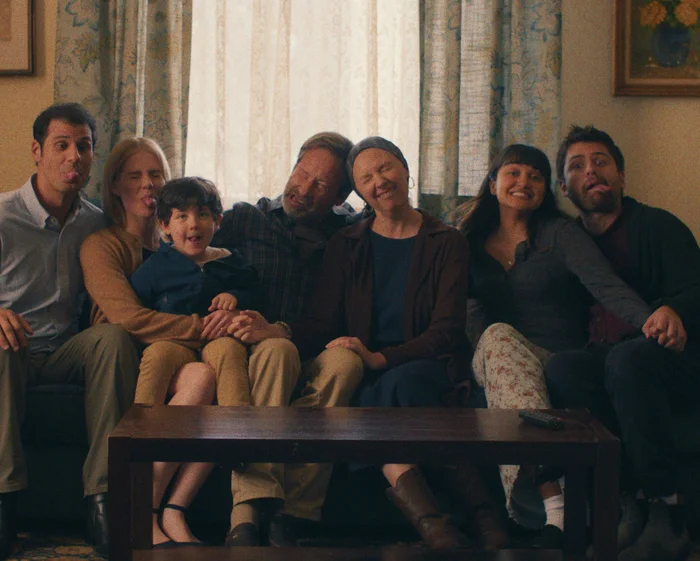
Holocaust comedy is one of the most emotionally charged and controversial forms of storytelling, balancing respect for historical trauma with the messy realities of family life. For many third-generation descendants of Holocaust survivors, humor has become a way to engage with inherited history without being consumed by it. By allowing space for absurdity, contradiction, and human flaws, this approach opens new ways of understanding the past while acknowledging the weight it still carries.
Family Stories Beyond Reverence
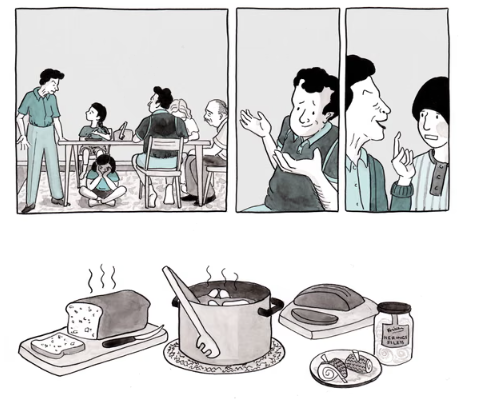
In many survivor families, memory is preserved through solemn narratives focused on endurance and loss. However, family life itself was rarely solemn. Survivors were parents, spouses, and deeply complicated individuals who carried trauma into everyday interactions. These dynamics often produced stories filled with stubbornness, dark humor, and emotional excess.
For later generations, recalling these moments does not diminish historical suffering. Instead, it restores humanity to figures who are often remembered only through tragedy. Humor becomes a way to portray survivors as whole people rather than symbols.https://www.youtube.com/watch?v=z74ep1-5bE8
Why the Third Generation Turns to Humor
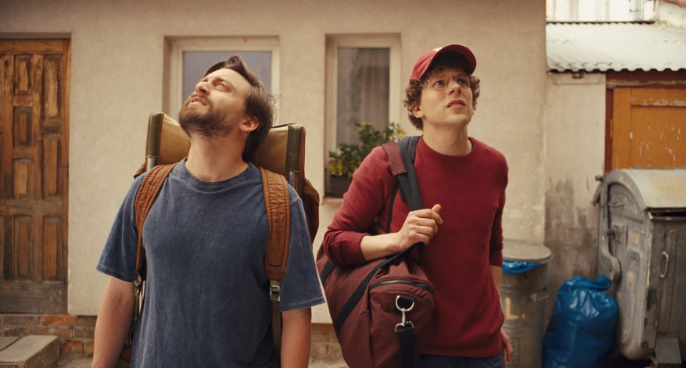
Distance matters. While children of survivors often grew up under the direct shadow of trauma, grandchildren experience history through stories, silences, and behaviors rather than lived terror. This separation creates space for reflection, questioning, and reinterpretation.
As a result, Holocaust comedy has emerged as a way for the third generation to reclaim narrative control. Rather than rejecting history, this approach reframes it, allowing irreverence to exist alongside reverence. Humor does not erase pain; it makes room to approach it without paralysis.
Humor as a Way Into Difficult History
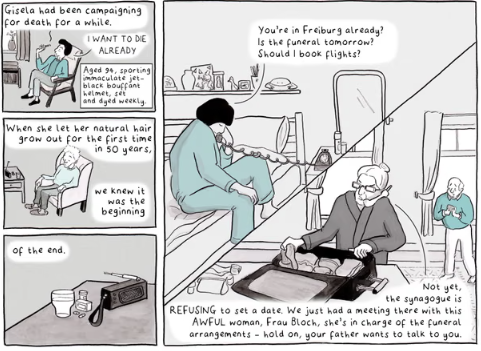
Across contemporary books, films, and graphic memoirs, humor frequently appears during moments of discomfort rather than triumph. Awkward family arguments, misplaced heirlooms, and generational misunderstandings highlight how trauma echoes through ordinary life.
This technique mirrors how memory actually works. Laughter often arrives uninvited, even in moments of grief. By acknowledging this, Holocaust comedy reflects emotional truth rather than undermining it.
The Risk of Making People Laugh
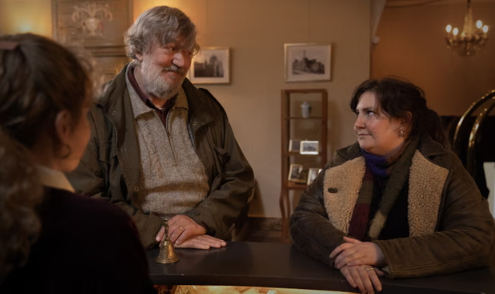
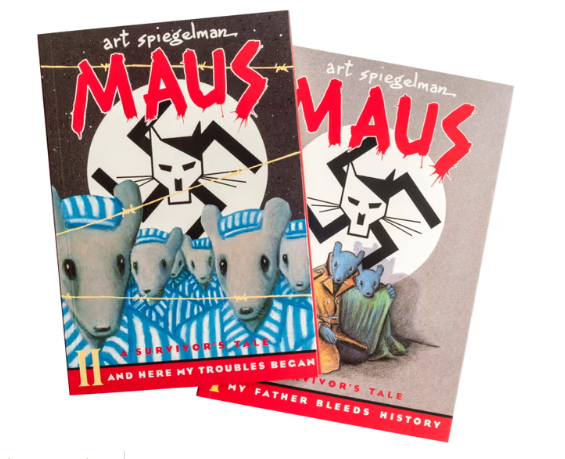
Making light of genocide remains deeply contentious. Critics often fear that humor may trivialize or disrespect victims. History shows that even groundbreaking works exploring Holocaust memory through unconventional forms faced backlash before eventual recognition.
However, intention and perspective matter. When humor arises from within survivor families rather than outside observation, it functions differently. It becomes an internal language — one shaped by survival, resilience, and irony.
Inheritance, Objects, and Absurdity
Family belongings often carry enormous symbolic weight. Objects saved from destruction become vessels for memory, conflict, and projection. Yet disputes over these items frequently reveal pettiness, rivalry, and exhaustion rather than dignity.
By depicting these moments honestly, Holocaust comedy exposes how trauma is transmitted through everyday interactions. The absurdity of inheritance disputes does not negate historical loss; instead, it shows how the past continues to intrude into the present in unexpected ways.
Reclaiming Jewish Humor
Before the Holocaust, Jewish humor was rooted in self-mockery, contradiction, and sharp observation. Much of this tradition was violently interrupted. Today, descendants in the diaspora are reviving it as a form of cultural continuity.
Through Holocaust comedy, humor becomes a bridge — reconnecting fractured traditions while confronting historical rupture. It allows storytellers to honor suffering without freezing it in sanctity.
Conclusion: Humor as a Doorway, Not a Shield
Holocaust comedy is not about making atrocity comfortable. Instead, it acknowledges that grief and laughter often coexist. By embracing contradiction, the third generation creates narratives that are emotionally honest, historically grounded, and deeply human.
Humor, in this context, is not a defense mechanism. It is an invitation — a way into stories that might otherwise feel inaccessible. Through it, inherited trauma becomes something that can be examined, questioned, and ultimately carried forward with clarity rather than silence.
Key Takeaways
Laughter and solemnity can coexist when confronting the past.
Holocaust comedy reflects a generational shift in how history is processed.
Humor allows space for complexity without erasing trauma.
Third-generation storytellers use comedy to reclaim narrative agency.
Author

About The Author

About the Author

Previous Post
Next Post
About


Latest News
Search the Archives
Access over the years of investigative journalism and breaking reports
You May Have Missed

Leave a Reply